
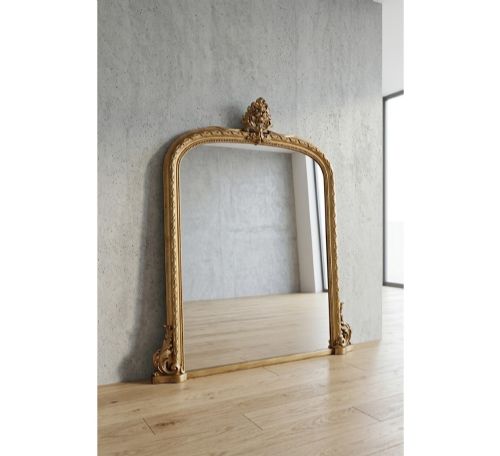
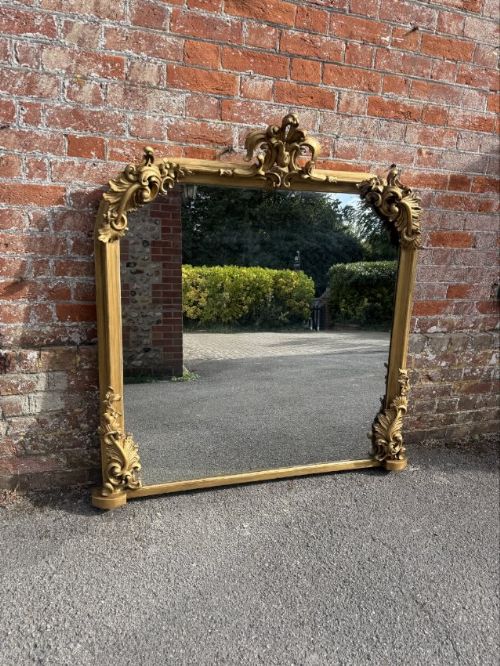
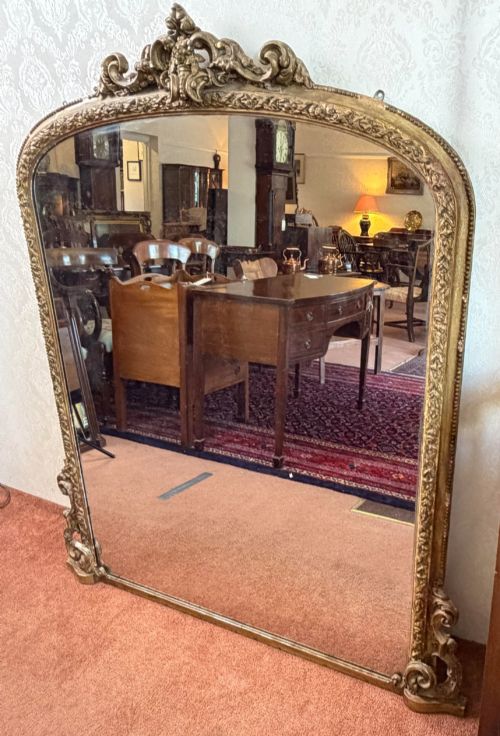
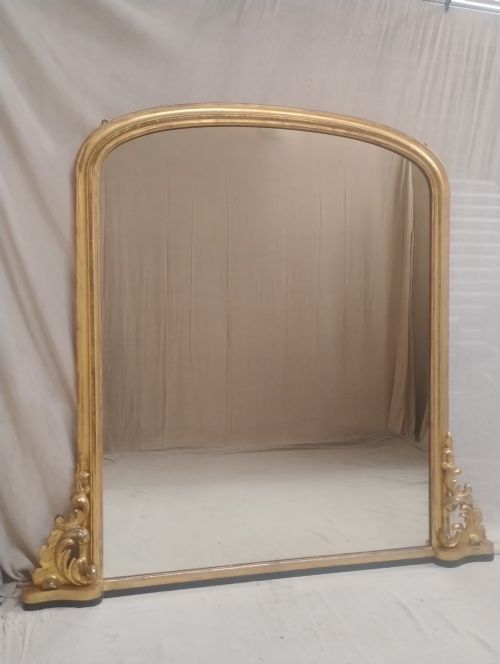


Ornate Mantelpiece Mirror
An ornate mantelpiece mirror brings immediate grandeur to a room, reflecting light and anchoring a fireplace with period presence.
Ornate Mantelpiece Mirror
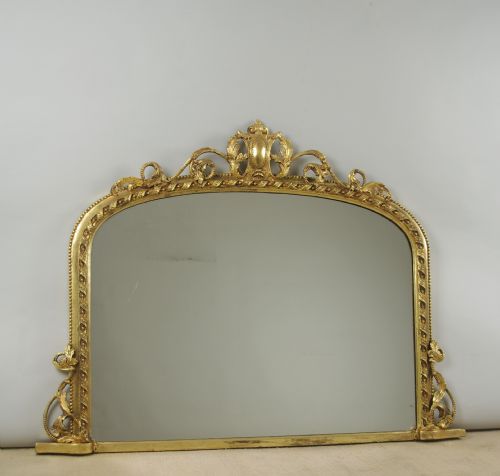
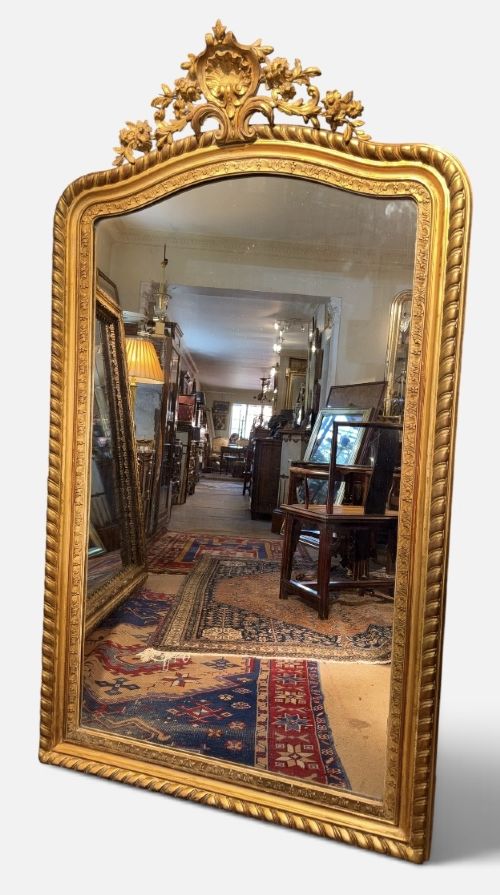
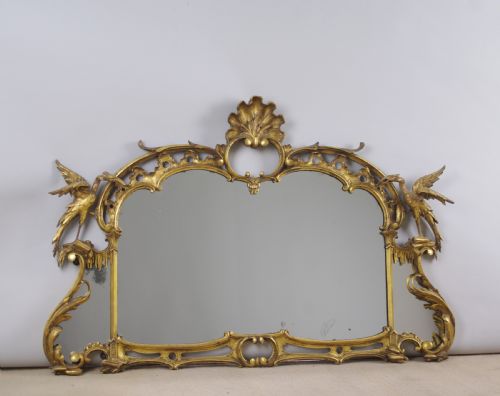
When you search for an ornate mantelpiece mirror, you encounter large horizontal looking glasses designed specifically to sit above a fireplace. The pieces seen here span the Victorian era, the nineteenth century, and into the early twentieth century, taking forms such as overmantels, wall mirrors, and cartouche or shield shapes. Most examples you meet on this page favour elaborate gilt finishes and substantial proportions intended to dominate the chimney breast.
Originating largely from British and French workshops, these frames reflect stylistic revivals including Rococo, Louis Philippe, and Chinese Chippendale. You find arched tops, shaped crests, and rectangular formats alongside carved wood and gesso constructions. These mirrors served both a practical purpose for reflecting candlelight and gaslight and a decorative function as the focal point of a formal room.
How they were made
Carved timber provides the primary structural foundation for these frames, often built from wood before receiving layers of gesso and composition ornaments. Artisans applied gold leaf or gilt finishes over these prepared surfaces to achieve a brilliant metallic sheen that catches the room's light. Mirrored glass forms the reflective surface, held securely within the heavy rebated frames.
Plaster and composition mouldings allowed makers to build up complex relief decorations, such as scrolls, foliage, and figural details like lions' heads, with high precision. The assembly combines traditional joinery for the wooden carcass with meticulous gilding techniques passed down through generations of frame makers.
Materials recorded on this page include giltwood, glass, gesso, composition, wood, gold leaf, plaster, and mirrored glass.
What varies in quality
The depth and crispness of the carving and moulding separate standard frames from superior examples, with hand-carved wooden details showing greater definition than moulded composition alone. The quality of the gilding, including the warmth of the gold leaf and the preservation of the original surface, dictates much of the visual impact.
Structural integrity of the heavy wooden carcass and the clarity of the original mirrored glass plate also influence the standing of a piece. Heavier, larger frames require robust internal bracing to support the substantial weight of the glass and plaster ornamentation over decades of wall hanging.
The Ornate Mantelpiece Mirror Glossary
- Giltwood
- Wood that has been coated with gold leaf or a gold-coloured metallic finish. This technique creates a luminous surface that defines many nineteenth-century frames.
- Gesso
- A plaster-like mixture applied to wood frames to create a smooth surface for gilding or to be moulded into relief decoration. It allows for intricate scrollwork and floral details.
- Overmantel mirror
- A large mirror specifically proportioned to hang on the wall directly above a fireplace mantelpiece. They often feature horizontal orientations and grand decorative crests.
- Cartouche
- An ornamental frame resembling a rolled-up piece of paper or parchment, often used as a central motif or overall shape for mirrors. It brings an asymmetrical, fluid movement typical of revival styles.
- Composition
- A mouldable mixture of whiting, resin, glue, and oil pressed into metal dies to form decorative ornaments. These ornaments are then applied to the wooden frame before gilding.
Ornate Mantelpiece Mirror: Frequently Asked Questions
How do I hang a heavy overmantel mirror safely?
These mirrors carry substantial weight from their wooden frames and glass plates, requiring secure attachment directly into structural wall studs or masonry.
Professional mirror fixings and heavy-duty wall brackets distribute the load safely, ensuring the piece remains stable above the fireplace.
Are these mirrors suitable for rooms without fireplaces?
Although designed primarily to sit above mantelpieces, many of these pieces function effectively as large wall or hall mirrors in other spaces.
Their generous scale and reflective glass help to brighten hallways and principal reception rooms while adding period character to plain walls.
How can I tell a Victorian mirror from a French 19th-century one?
Victorian frames often display heavier proportions and robust architectural styling, whereas French pieces from the same era frequently feature more fluid cartouche forms and refined Rococo Revival details.
Examining the underlying construction wood and the specific style of the gesso ornaments helps clarify the likely origin.
How do I clean an antique giltwood frame?
Dust gilt surfaces gently with a very soft, dry brush to prevent damage to the delicate gold leaf and composition mouldings.
Avoid using water, chemical cleaners, or abrasive cloths, as moisture and harsh agents can strip the historic gilt finish.