
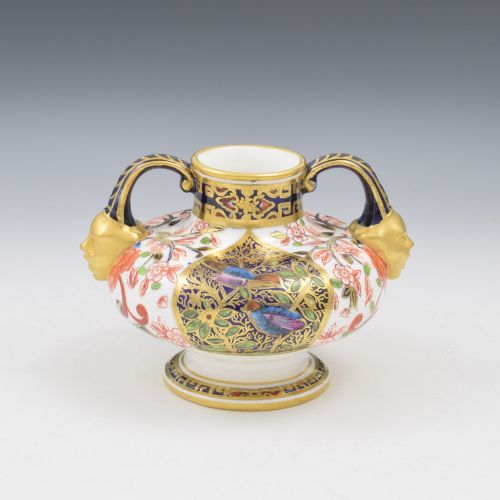
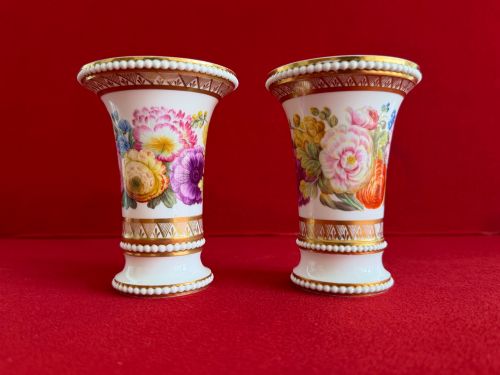
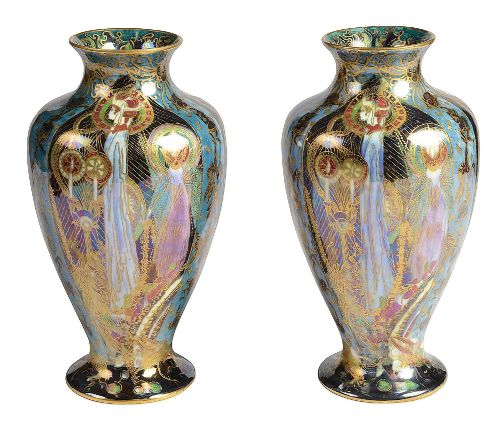




Gilt Decorated Urn Vase
These gilt decorated urn vases combine neoclassical forms with rich metallic embellishment, offering striking focal points for formal interiors.
Gilt Decorated Urn Vase
A gilt decorated urn vase provides a classical vessel format enriched with gold leaf or gilding, appearing frequently across the nineteenth century and into the early twentieth century. When searching for a gilt decorated urn vase, buyers encounter various ceramic and porcelain bodies, including bone china, earthenware, and ironstone, alongside glass examples.
The pieces on this page span several distinct periods, notably the Georgian, Regency, and Victorian eras, as well as the Meiji period and the early twentieth century. Forms range from lidded vases and pedestal urns to garnitures and decorative ewers, reflecting diverse stylistic influences from Rococo Revival and Art Nouveau to Chinoiserie and Japanese ceramic traditions.
Materials and construction
Makers shaped these vessels from fine porcelain, bone china, earthenware, and glass, applying surface details through hand painting, transfer printing, and enamel work. Gold leaf and specialised gilding techniques highlight handles, rims, and pictorial panels, creating high-contrast decorative effects.
Surface treatments frequently incorporate cobalt grounds, lustre glazes, and raised moriage decoration. Skilled painters rendered intricate botanical subjects, landscapes, figures, and exotic birds directly onto the ceramic or glass bodies before final firing.
Some nineteenth-century makers applied thick, textured clay dots just so the gold paint caught the drawing room candlelight.
Assessing quality and execution
Quality in these vessels rests upon the precision of the hand painting and the durability of the gilding. Finer pieces display meticulous brushwork by recognised artists, showing careful shading and refined detail in figurative or naturalistic scenes rather than generic stencilled patterns.
The weight and purity of the ceramic or glass body also determine standard, alongside the crispness of moulded details and pedestals. Well-preserved gold leaf retains its original lustre without rubbing, while balanced proportions define superior pairs and garnitures.
Wedgwood·Minton·Royal Worcester·Royal Crown Derby·Kinkozan
The Gilt Decorated Urn Vase Glossary
- Gilding
- The application of gold leaf or gold powder to the surface of ceramics, glass, or metal. This technique enhances architectural and figurative details on the vessel body.
- Moriage
- A Japanese ceramic technique using piped clay to create raised relief designs before glazing and gilding. It appears frequently on Satsuma wares from the Meiji period.
- Garniture
- A set of three or more matching vases or urns designed to be displayed together on a mantelpiece or sideboard. These matched groups often include a central lidded vessel flanked by smaller pieces.
- Baluster
- A vase form characterised by a swollen lower portion that tapers towards a narrow neck and flared rim. This classic silhouette provides stability and generous space for surface decoration.
- Ewer
- A large jug with a wide spout and arched handle, adapted into a decorative vase form. Ewers often feature elaborate handles and gilt-accented lips.
Gilt Decorated Urn Vase: Frequently Asked Questions
What periods do these vases come from?
The selection spans the Georgian and Regency eras, the nineteenth century and Victorian period, through to early twentieth-century production.
Japanese Satsuma pieces specifically reflect the Meiji period, while European factories contributed styles ranging from Rococo Revival to Art Deco.
How were these vases originally used?
Many served as formal decorative ornaments in drawing rooms and parlours, often arranged as matched pairs or larger garniture sets on mantelpieces.
Some lidded urns and pedestal forms were designed purely for display to showcase wealth and artistic taste through their painted and gilded surfaces.
How do I care for antique gilding?
Gilt surfaces require gentle handling and should only be dusted with a soft, dry cloth to prevent abrasion of the gold leaf. Avoid using chemical cleaners, water, or abrasive materials directly on the decorated areas.
Keep pieces away from direct sunlight and high humidity to preserve the integrity of both the glaze and the metallic finishes.
How do I distinguish Satsuma ware?
Satsuma ceramics typically feature a distinctive ivory-coloured, crackled earthenware glaze decorated with intricate polychrome enamels and raised gold leaf. Many pieces bear maker or artist signatures, such as Nanzan or work associated with Kinkozan.
Motifs often include court figures, samurai, and traditional Japanese landscapes executed during the Meiji period.