




Gilt Decorated Tea Table
A gilt decorated tea table brings painted lacquer, gold leaf, and Chinoiserie ornament together for formal service and display.
Gilt Decorated Tea Table
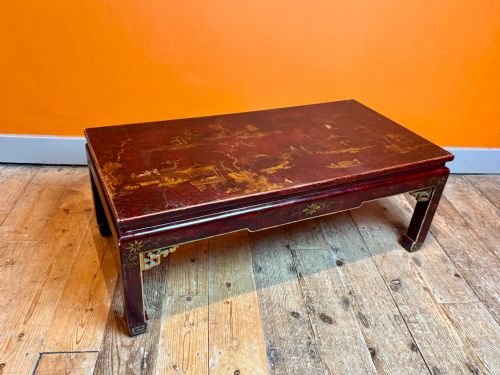
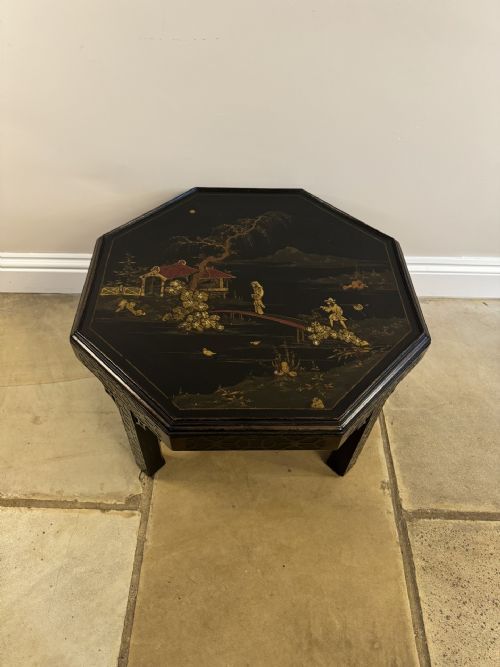
A gilt decorated tea table serves as a low or occasional surface, drawing upon Chinoiserie and Regency styles from the nineteenth and early twentieth centuries. These pieces appear most frequently as coffee tables, occasional tables, and low tables finished with black or red lacquer.
The form spans the Regency period up to the early twentieth century, including Edwardian interpretations of Chinese designs. Alongside tables, related forms such as occasional surfaces and low tea tables dominate the selection.
How they were made
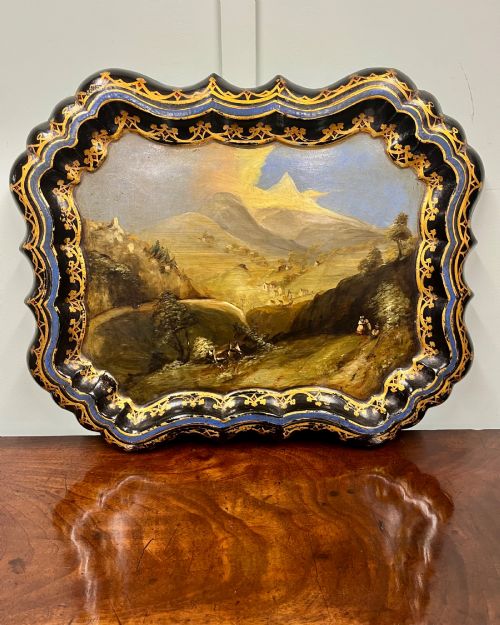
Craftsmen built these tables using wood, papier-mâché, and lacquer substrates before applying gesso and gold leaf. Surfaces received detailed paintwork, often depicting Chinoiserie motifs against dark or red backgrounds.
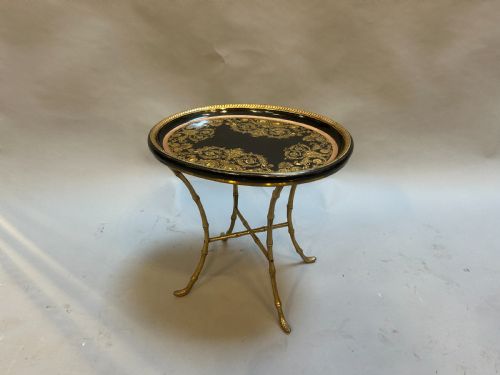
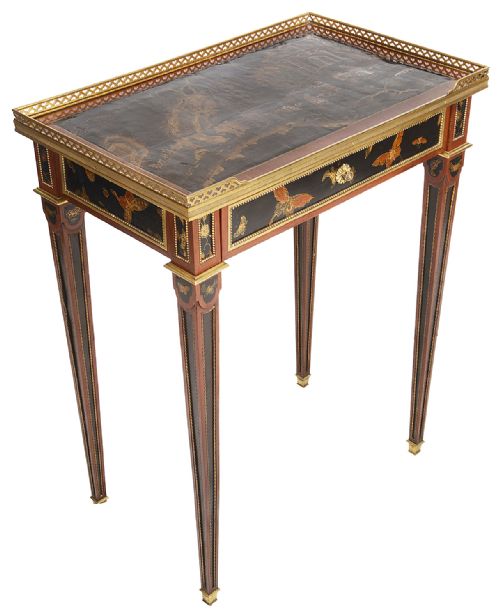
Makers utilised brass accents and gold leaf application to highlight the decorated edges and panels. Structural foundations combine traditional timber framing with specialised lacquer and paint layers.
Gilt Decorated Tea Table Retail Price Guide 2026
Typical asking prices for gilt decorated tea table among the pieces listed under this phrase on Sellingantiques today, from the lower quarter to the upper quarter. They describe what is for sale here now, not the wider market.
Styles across the selection range from Regency formal to Edwardian Chinoiserie and Chinese black and gilt lacquer.
What varies in quality
Quality rests in the execution of the hand-painted Chinoiserie scenes and the preservation of the original lacquer and gold leaf. Finer examples display crisp detail in the gesso work and deliberate control in the brushwork.
The integrity of the underlying wood or papier-mâché structure distinguishes superior pieces from heavier, less refined later alternatives. The depth of the lacquer finish and the brilliance of the gilding determine the visual hierarchy across the range.
The Gilt Decorated Tea Table Glossary
- Chinoiserie
- European interpretation and imitation of Chinese artistic traditions and motifs, frequently featuring figures, landscapes, and pavilions. This aesthetic dominates the decoration seen on these lacquer surfaces.
- Gesso
- A plaster-like mixture applied to wood or papier-mâché as a base for painting and gilding. It provides a smooth ground that accepts fine relief work.
- Lacquer
- A durable resin finish applied in multiple layers and polished to a hard sheen. It forms the protective and decorative surface characteristic of Asian-inspired European tables.
- Papier-mâché
- A composite material made from paper pulp or sheets mixed with glue and pressed into moulds. It offers a lightweight yet rigid foundation for occasional tables.
Gilt Decorated Tea Table: Frequently Asked Questions
What is a gilt decorated tea table?
A gilt decorated tea table is a low or occasional surface ornamented with gold leaf and painted motifs. These pieces typically incorporate lacquer work and draw on Chinoiserie or Regency aesthetics.
They function as display surfaces and coffee tables in traditional and eclectic interiors. Their decorated tops rely on painted scenes rather than plain wood.
How do I date a lacquer tea table?
Dating relies on examining the underlying construction materials, such as solid timber framing versus papier-mâché cores. Stylistic shifts between Regency classicism and Edwardian Chinoiserie provide further chronological markers.
Materials like brass fittings and the specific formulation of the gesso base also help determine the period. Early nineteenth-century examples differ perceptibly from those produced around nineteen-twenty.
Are these tables sturdy enough for daily use?
Most of these occasional and low tables suit normal placement for books and decorative objects. Papier-mâché and lacquer surfaces require gentle handling compared to utilitarian modern furniture.
Positioning them away from direct heat sources protects the lacquer and gold leaf finishes over time. Careful placement preserves the integrity of the painted decoration.
What styles are common in these tables?
Chinoiserie and Regency styles prevail among these pieces, often overlapping in Edwardian interpretations. Black and red lacquer finishes set against gold leaf define the visual vocabulary.
Occasional tables and low coffee tables showcase these decorative schemes across various twentieth-century and nineteenth-century dates. The design language consistently references Asian decorative arts interpreted through European workshops.