




Lacquer Cocktail Table
A lacquer cocktail table brings painted scenes and deep dark finishes into a room, offering a surface that holds a drink while anchoring a seating arrangement.
How they were made
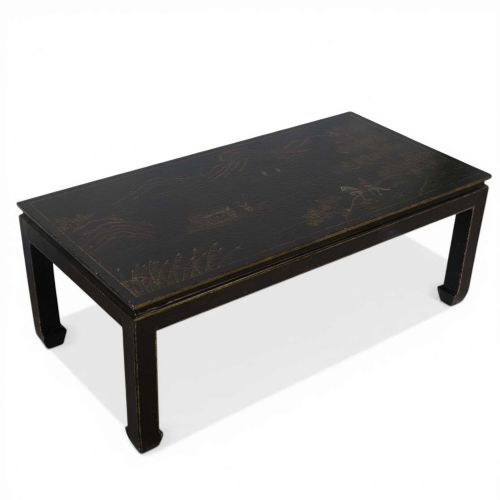
Construction relies upon solid wood foundations finished with layers of lacquer, paint, and gilt. Makers applied successive coats to achieve a deep, reflective ground before adding surface ornament.
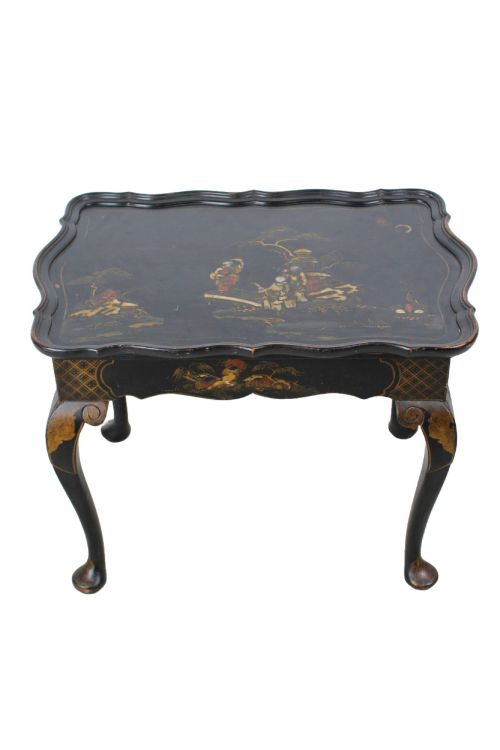
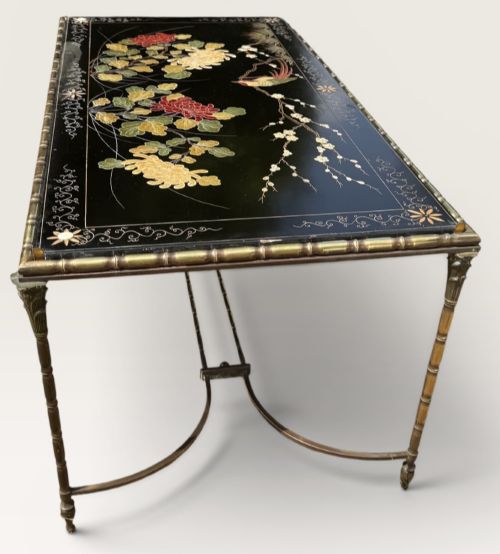
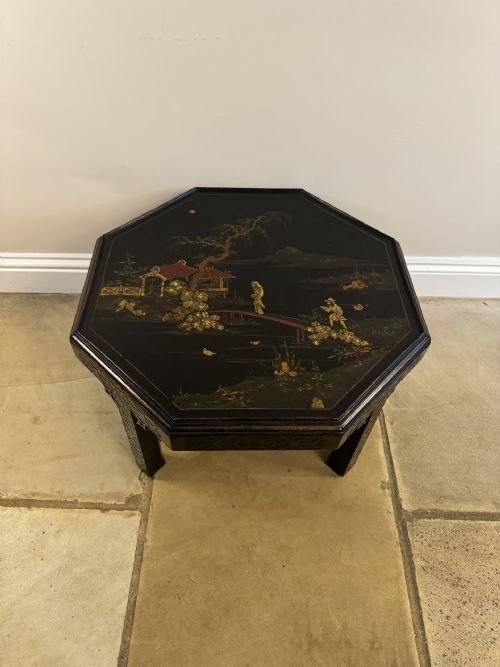
Painted scenes and raised relief work define the ornamentation across these pieces, frequently enhanced with gilt paint or soapstone details. Brass fittings appear on select examples, adding structural accent to the wooden frames.
What varies in quality
The depth and execution of the painted scenes separate the finer examples from simpler workshops. Crisp detailing in the Chinoiserie motifs and careful application of the gilt layers demonstrate the maker's hand.
The integrity of the wooden frames and the stability of the lacquered surface dictate the overall standard of a piece. Tables that retain their original painted scenes without excessive disturbance command attention.
Listings feature wood, lacquer, paint, and gilt, spanning periods from the nineteenth century through the Edwardian era to nineteen-thirty.
Maison Bagues
The Lacquer Cocktail Table Glossary
- Chinoiserie
- European decorative style reflecting Chinese artistic traditions, popular across the eighteenth, nineteenth, and early twentieth centuries. It relies on motifs of figures, landscapes, and pavilions rendered in paint and gilt.
- Japanning
- European imitation of Japanese and East India lacquer work, built up with layers of varnish and heat-dried. This technique created the dark, glossy finishes seen on many early twentieth-century tables.
- Tray top
- A removable or fixed tabletop with raised edges designed to contain items safely. These tops often sit upon folding or stable wooden bases.
- Soapstone
- A dense, soft metamorphic rock utilised for inlay work on decorative surfaces. It brings a subtle tactile dimension to relief decoration.
Lacquer Cocktail Table: Frequently Asked Questions
What is a lacquer cocktail table?
A lacquer cocktail table is a low surface finished with glossy varnish or paint, designed for use in front of a sofa or seating group.
These pieces often feature painted decorative scenes and draw upon Chinoiserie or period European styles.
How do I care for lacquer furniture?
Keep these tables out of direct sunlight and away from excessive heat sources to protect the finish. Dust gently with a soft dry cloth and avoid harsh chemical cleaners.
Use coasters to protect the surface from moisture and heat rings.
Are tray top tables removable?
Many tray top tables feature a surface that lifts entirely off the base, originally intended for serving drinks or food. Other examples secure the tray firmly to the frame.
Check the specific construction of each piece to understand how the top functions.
What periods do these tables come from?
The pieces available span the nineteenth century through the Edwardian era and into the nineteen-thirties. You will find early twentieth-century interpretations alongside nineteenth-century tray tables.
Each era brings distinct proportions and decorative treatments to the form.