



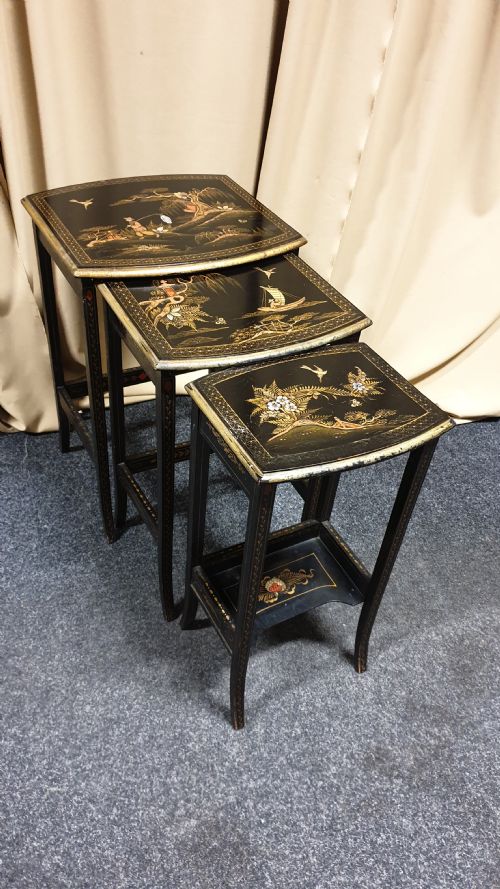

Black Japanned Coffee Table
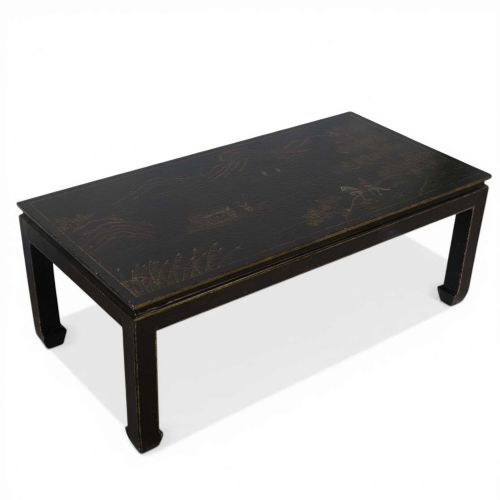
These black japanned coffee table examples bring oriental lacquer and Chinoiserie scenes directly into a modern sitting room.
Black Japanned Coffee Table
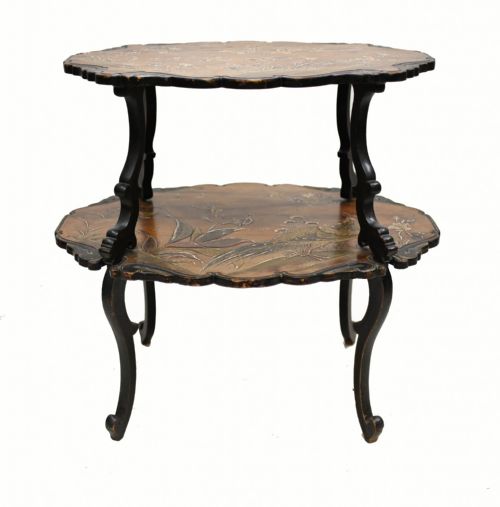
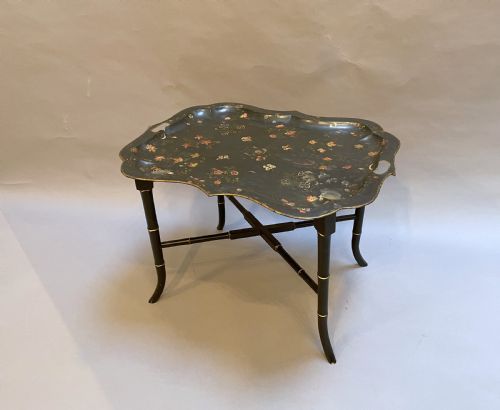
A black japanned coffee table typically takes the form of an occasional table, a nest of tables, or a conversion piece utilising an antique serving tray placed upon a later stand. The form bridges centuries of design, drawing on 18th century, Regency, and Victorian aesthetics through to 1930s interpretations.
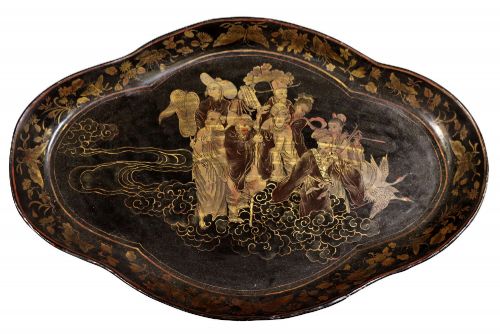
The surface decoration leans heavily into Chinoiserie and Japonisme motifs, displaying painted scenes, gold leaf accents, and occasionally mother-of-pearl inlay against dark grounds. Buyers will encounter both purpose-built low tables from the 20th century and traditional serving trays adapted for coffee table use.
Materials and construction methods
The foundational structures rely on wood, ebonised wood, papier-mâché, and toleware, which provide stable bases for the intricate surface finishes. Artisans applied layers of lacquer to build up a deep, glossy ground before adding hand-painted details.
Gold leaf and paint delineate the characteristic figures, pagodas, and landscapes associated with Chinoiserie decoration. Brass elements occasionally appear on stands, whilst mother-of-pearl enhances select papier-mâché trays with iridescent highlights.
The listings span from the 18th century through the Regency and Victorian periods up to 1930.
Distinguishing quality in japanned tables
Quality rests upon the crispness and depth of the hand-painted decoration, where superior examples display finely detailed figures and landscapes rendered in rich gold leaf. The integrity of the lacquer surface, free from heavy disruption or poor restoration, dictates the visual success of the piece.
The underlying form also matters, distinguishing purpose-made tables from later marriages where antique trays sit on replacement stands. Finer examples utilise robust materials like papier-mâché or solid wood, showing considered joinery and balanced proportions.
Jennens & Bettridge·Henry Clay
The Black Japanned Coffee Table Glossary
- Japanning
- European imitation of East Asian lacquerwork, developed in the 17th and 18th centuries using resin varnishes and metallic dust. It creates the dark, glossy finish seen on these pieces.
- Chinoiserie
- European artistic style reflecting Chinese motifs and cultural themes, popular across Georgian and Victorian design. It manifests in depictions of pagodas, figures, and exotic landscapes.
- Papier-mâché
- Composite material made from paper pulp or sheets mixed with glue, pressed and dried to form rigid objects. It served as a smooth, lightweight base for fine tray manufacture.
- Toleware
- Enamelled or japanned metalware, typically iron or tin, shaped into domestic items such as trays. The technique provides a durable metallic surface for painted decoration.
- Etagere
- Open tiered furniture designed for displaying small objects or serving. Examples in this tradition offer multiple surfaces for decorative display.
Black Japanned Coffee Table: Frequently Asked Questions
Are these tables sturdy enough for daily use?
Most pieces handle everyday items like books and cups comfortably, provided the surface has standard care.
Original papier-mâché trays and older lacquerwork require gentle treatment to preserve the painted details from moisture and heat.
How do I clean a japanned surface?
Dust the surface regularly with a soft, dry cloth to prevent abrasive particles from settling on the lacquer.
Avoid chemical polishes and water, using only a slightly damp cloth if necessary, followed immediately by dry buffing.
What is a tray on a stand?
Many coffee tables in this style combine an antique serving tray with a newly built or period-appropriate wooden base.
This practice rescues decorative trays from redundancy, turning portable serving pieces into functional low tables.
How do I date a japanned table?
Dating relies on the construction materials of the top, the style of the painted Chinoiserie motifs, and the woodwork of the base.
Papier-mâché trays often point to the Georgian or Victorian eras, while lighter occasional tables frequently date to the early 20th century.