



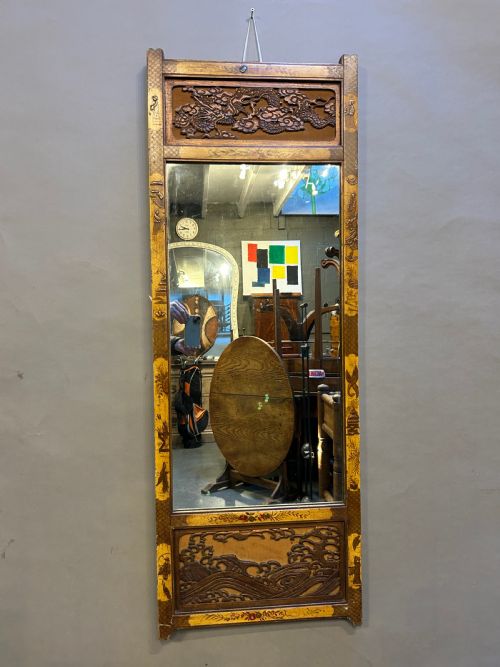


Gilt Chinoiserie Wall Mirror
A gilt chinoiserie wall mirror brings eighteenth-century fantasy and rich metallic detail into a room.
Gilt Chinoiserie Wall Mirror
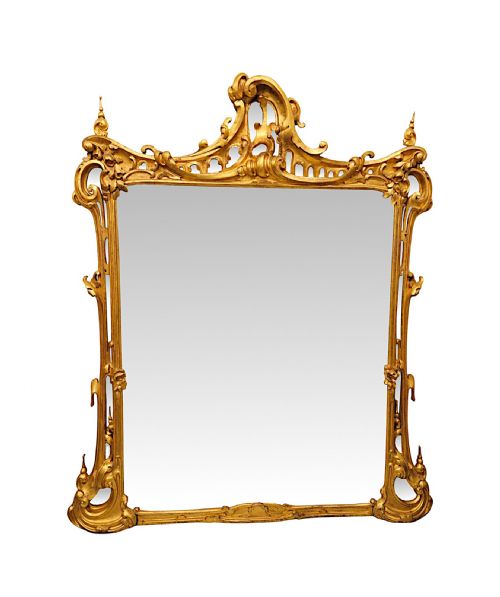
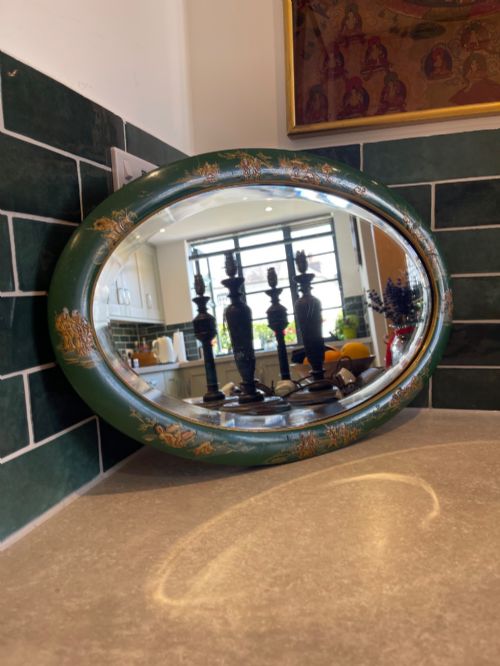
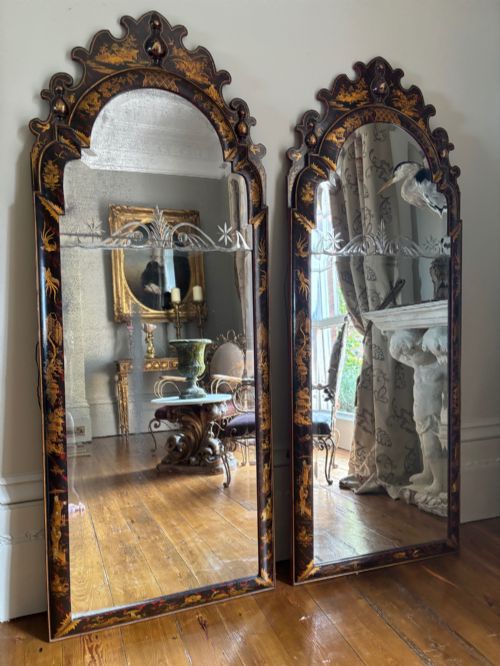
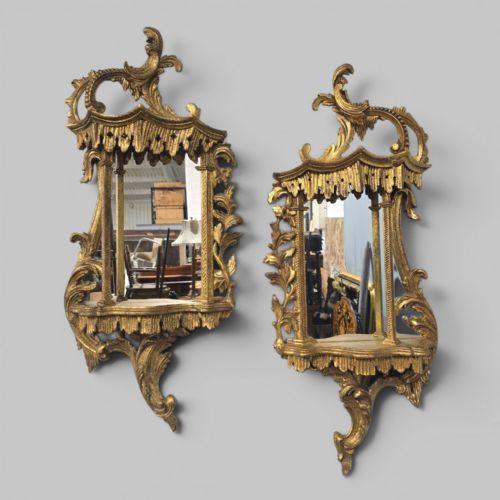
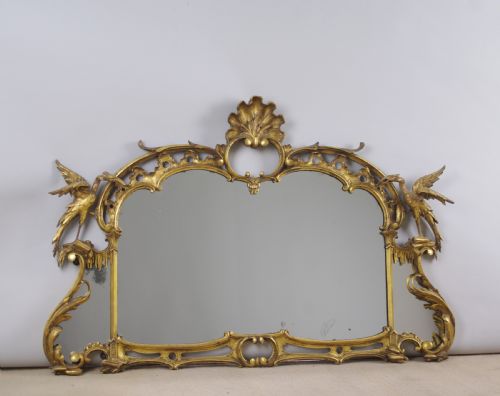
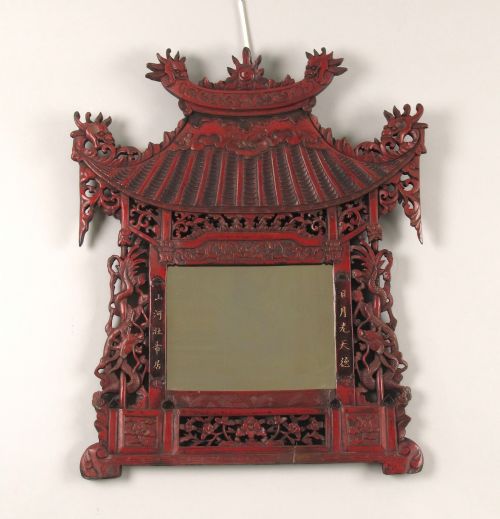
A gilt chinoiserie wall mirror is a decorative looking glass combining European framing styles with East Asian ornamental motifs. These pieces range from substantial overmantel formats to smaller wall-hung oval and pier shapes.
The pieces appearing most frequently on this page date from the nineteenth and early twentieth centuries, drawing heavily on earlier Georgian and Queen Anne revival aesthetics.
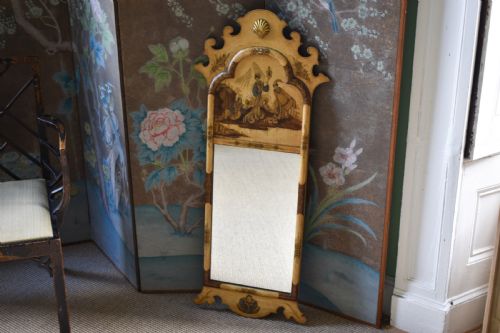
Makers drew on Chinese export designs, incorporating pagoda silhouettes, figurative scenes and floral patterns into carved wooden frames.
How they were made
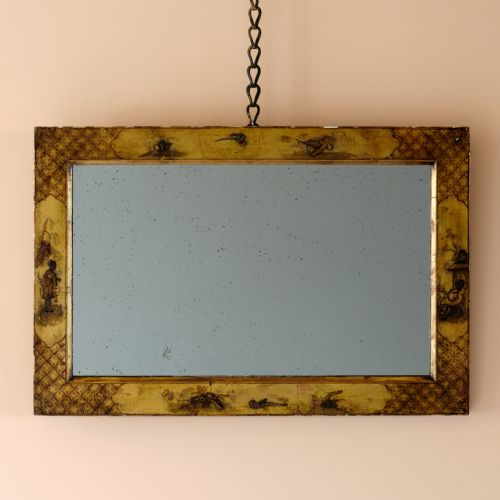
Frames rely on carved wood, often built from timber substrates that were then painted, lacquered or gilded with gold leaf. Artisans applied layers of lacquer in black, red or natural wood tones to create smooth, polished surfaces before adding metallic highlights.
Giltwood elements involve the application of thin gold leaf over a prepared gesso base on carved wooden mouldings. Reverse painting on glass also appears, embedding intricate imagery directly behind the mirror plate.
Many frames feature whimsical Ho-ho birds perched atop carved pagodas, watching over rooms for over a century.
What varies in quality
The depth and dexterity of the wood carving dictate the visual impact of the frame. Finer examples show crisp, undercut foliage, distinct bird motifs such as Ho-ho birds, and balanced asymmetry in the rococo or Chinese Chippendale manner.
Surface execution also separates standard production from superior work. Smooth, multi-layered lacquer with controlled hand-gilding displays greater longevity and refinement than flat, uniform modern paint applications.
The Gilt Chinoiserie Wall Mirror Glossary
- Chinoiserie
- European interpretation of Chinese and East Asian artistic traditions, popular in furniture and decorative arts during the eighteenth and nineteenth centuries. It relies on imaginative scenes of pavilions, figures and exotic flora.
- Giltwood
- Wood that has been covered with a thin layer of gold leaf or gold paint. This technique gives frames a brilliant, enduring metallic sheen.
- Overmantel mirror
- A large mirror designed specifically to be hung above a fireplace mantelpiece. These pieces often feature horizontal proportions and elaborate carved crestings.
- Japanning
- European imitation of East Asian lacquerwork developed during the seventeenth and eighteenth centuries. It involves building up layers of resin and varnish, often finished with metallic dust or painted decoration.
- Reverse painting on glass
- A technique where artists apply pigment directly to the back of a glass plate so the image is viewed through the front. This produces a glossy, deep finish popular in eighteenth- and nineteenth-century pieces.
Gilt Chinoiserie Wall Mirror: Frequently Asked Questions
Where should I hang a gilt chinoiserie wall mirror?
These mirrors suit principal reception rooms, hallways or above bedroom mantelpieces where they can catch natural light. Their decorative frames function as focal points on plain or panelled walls.
Ensure the wall construction can support heavier overmantel formats, using appropriate fixings for carved wood and giltwood frames.
How do I identify Chinese Chippendale style?
Chinese Chippendale frames incorporate fretwork, pagoda motifs, asymmetrical scrollwork and figures inspired by eighteenth-century pattern books. They frequently feature carved birds or lattice patterns.
Compare the carving depth and the integration of giltwood elements against documented examples from the Georgian revival periods.
What is the difference between lacquer and giltwood?
Lacquer involves layered resin finishes in colours like black or red, often decorated with gold painted scenes. Giltwood focuses on the application of gold leaf over carved wooden surfaces.
Many mirrors combine both techniques, using lacquered panels alongside gilded crests and borders.
How do I care for antique lacquer and gilt surfaces?
Dust surfaces gently with a soft, dry cloth and avoid chemical polishes that can lift delicate gold leaf or dull lacquer. Keep pieces away from direct sunlight and damp environments to protect the wood and gesso beneath.
Professional restoration is recommended if the giltwood or lacquer begins to flake or separate from the frame.