


Pair of Tall Mirrors
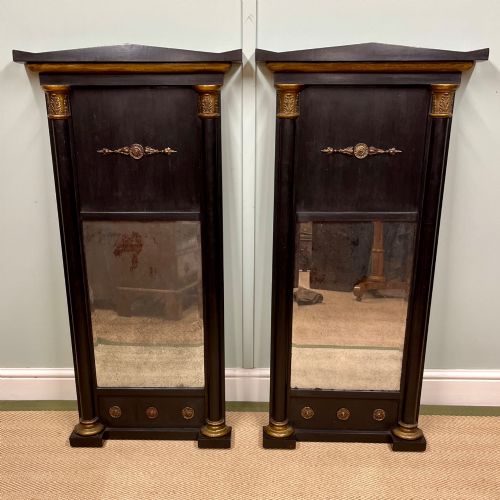
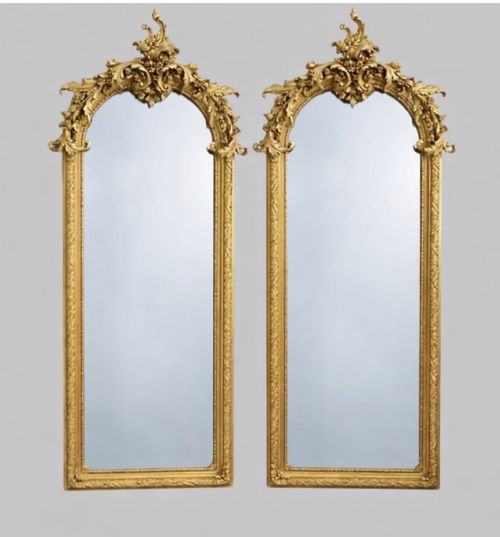
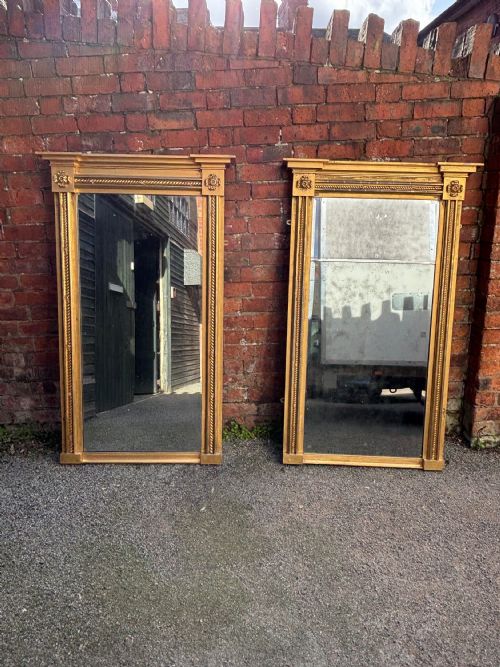
A pair of tall mirrors brings scale and light to a room, and the pieces listed here span Victorian, Regency, Edwardian, and nineteenth-century eras in giltwood, painted pine, and rosewood.
Pair of Tall Mirrors
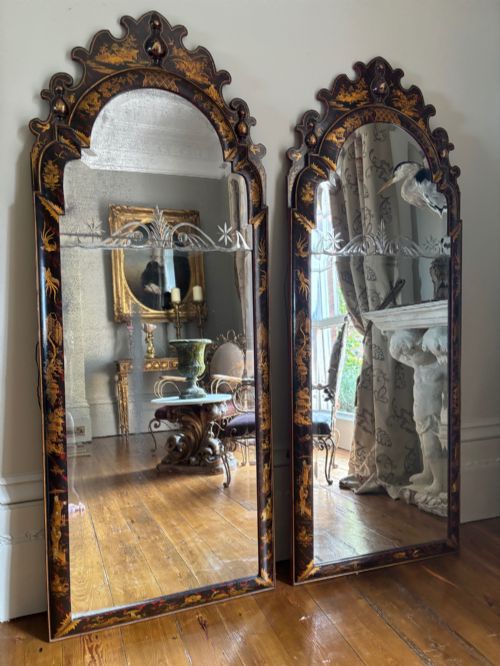
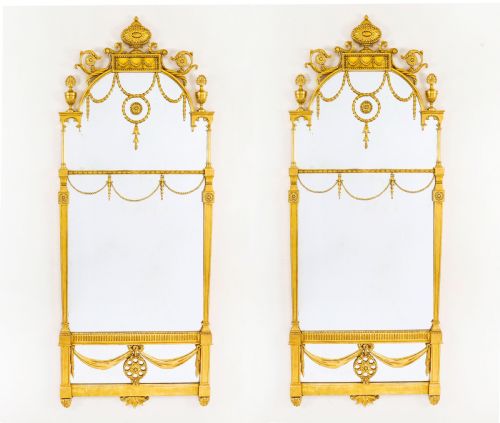
Buyers will encounter specific revivals and regional interpretations, ranging from Adam Revival and Queen Anne style chinoiserie to French Empire and Rococo forms. Materials span giltwood and gesso, rosewood, painted pine, and etched or engraved glass.
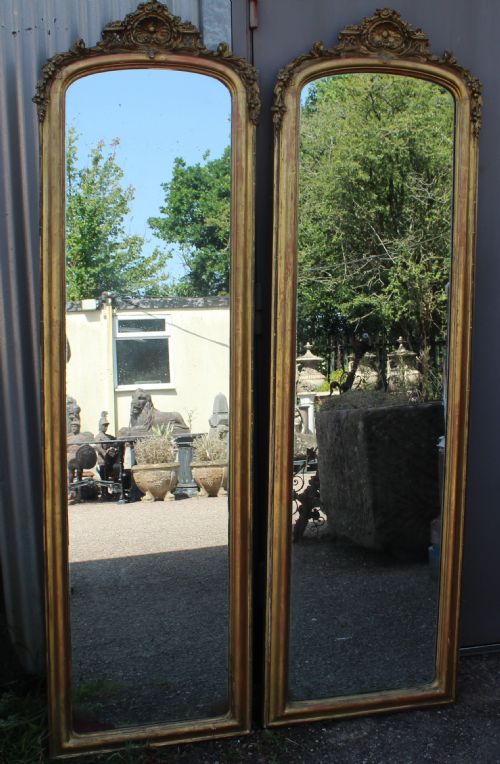
The most prevalent examples on this page date from the Victorian and Edwardian periods, alongside earlier nineteenth-century Regency and George IV items. Many incorporate substantial heights reaching up to six feet, designed to reflect light and expand the visual boundaries of grand interiors.
How they were made
Makers constructed the primary framework of these pieces using timber foundations such as pine, rosewood, or carved wood, often finished with applied gesso and giltwood. Gilding techniques involved laying thin gold leaf over a prepared chalk and glue ground.
Glass production during these periods relied on silvering techniques applied to flat mirror glass, occasionally enhanced with hand-etching and engraving as seen in Edwardian examples. Carved details and applied ornaments were shaped by hand before surface finishes were applied.
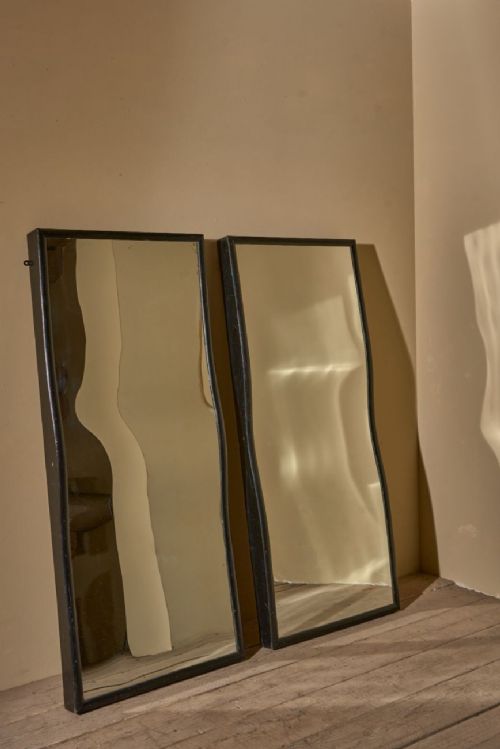
Among the formal antique glasses sit a pair of early twentieth-century fairground fun house mirrors, proving that Victorians also enjoyed a distorted reflection.
What varies in quality
The sophistication of the carving and the depth of the giltwood or gesso ornamentation dictate the visual distinction of a piece. Finer examples display crisp detail in the foliage, scrolls, and architectural motifs characteristic of Adam, Rococo, or Empire revivals.
The integrity of the original mirror glass and the stability of the wooden frame structure further differentiate standard production from superior craftsmanship. Original mercury or early silvered plates show characteristic ageing that contributes to the authenticity of nineteenth-century examples.
The Pair of Tall Mirrors Glossary
- Pier mirror
- A tall looking-glass traditionally hung on the narrow pier of wall between two windows. These pieces often stood above matching console tables.
- Giltwood
- Wood that has been coated with gold leaf or gold paint. This finish characterises many nineteenth-century formal mirrors.
- Gesso
- A plaster-like mixture applied to wood frames to create a smooth surface for carving and gilding. It allows for crisp decorative relief work.
- Chinoiserie
- European interpretations of Chinese and East Asian artistic traditions. This style appears on revival mirrors from the late nineteenth century.
- Regency
- The period in British design spanning the early nineteenth century, noted for classical restraint and influenced by ancient Greek and Roman forms.
Pair of Tall Mirrors: Frequently Asked Questions
How do I identify a pier mirror?
Pier mirrors are traditionally proportioned to fit the narrow wall space between windows or doors. They often feature rectangular formats designed to stand above console tables.
Many examples from the nineteenth century retain this specific vertical emphasis.
What is giltwood?
Giltwood is timber that has been decorated with a thin layer of gold leaf applied over a prepared gesso base. It was widely used on formal mirrors throughout the Victorian and Regency eras.
The technique creates a reflective, warm metallic surface.
Are these mirrors original?
The listings comprise items dating from the nineteenth and early twentieth centuries, encompassing Victorian, Edwardian, and Regency periods. Materials and construction methods reflect the manufacturing standards of those eras.
Individual pieces demonstrate period-specific styles such as Adam Revival, Rococo, and French Empire.