

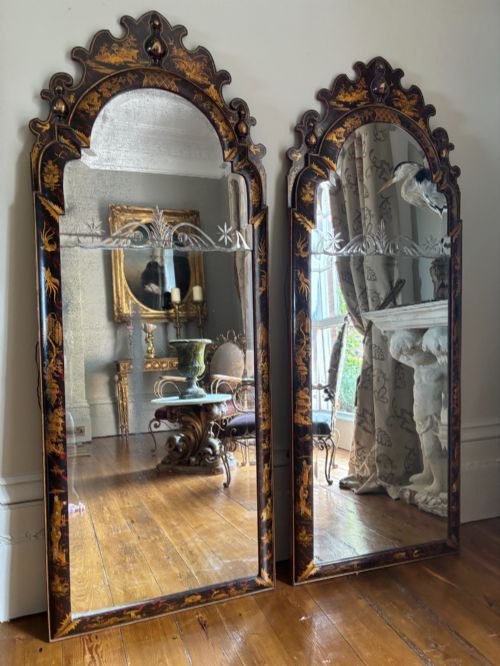
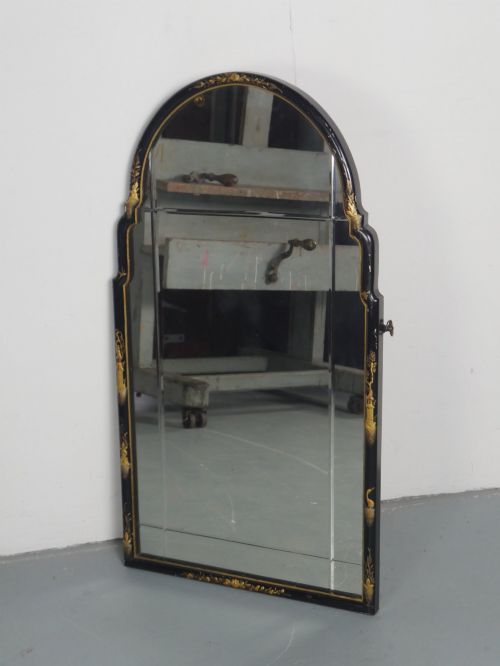
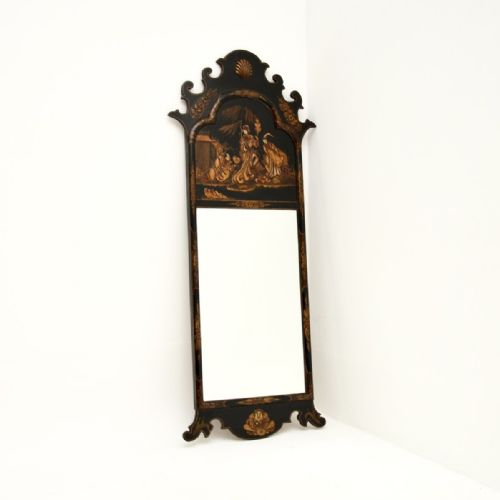
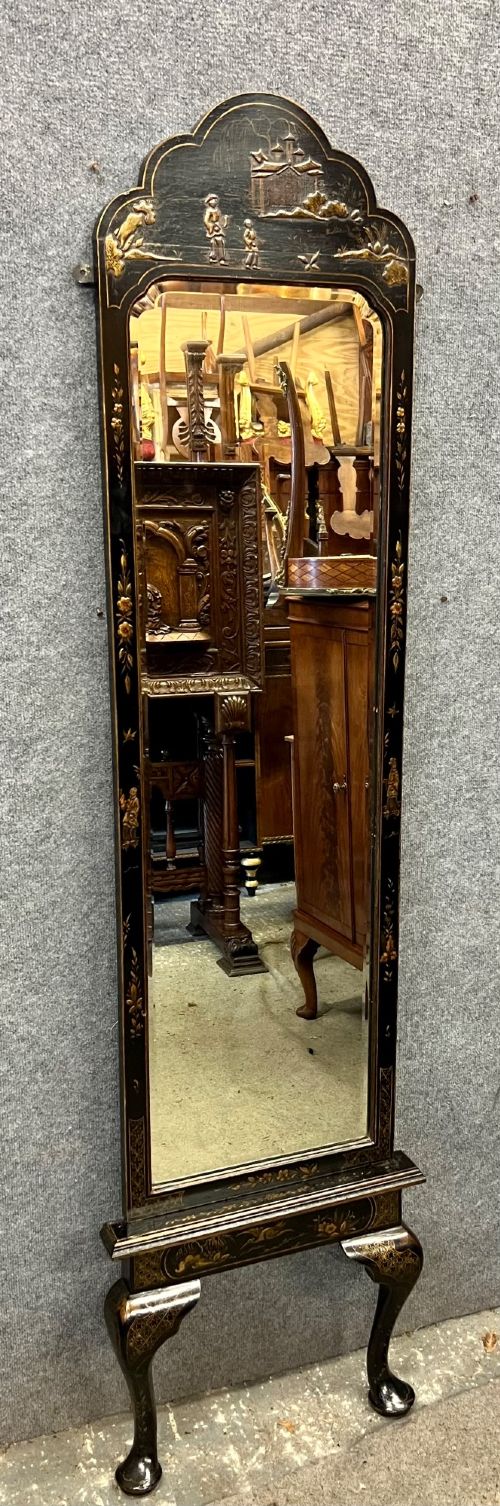
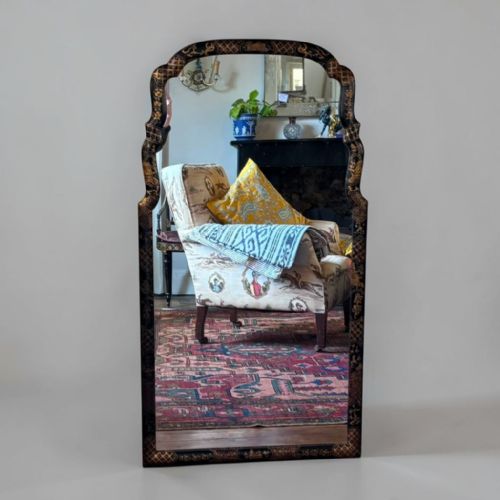


Black Gold Lacquered Mirror
A black gold lacquered mirror brings depth and ornamental richness to a room, catching the light across polished surfaces.
Black Gold Lacquered Mirror
A black gold lacquered mirror is a decorative looking glass defined by dark lacquer work and gilt detailing, often executed in Chinoiserie or Chinese Chippendale styles. These pieces range from wall mirrors and pier mirrors to dressing table mirrors and console tables with matching mirror frames.
The versions most commonly met span the Victorian period through to the early twentieth century, including pieces dated to the nineteenth century, 1900, 1910, 1920, and 1930. They appear in oval, rectangular, and large wall-hanging formats, alongside dressing table variations.
Origins and stylistic influences draw heavily on Georgian Chinoiserie and French Empire designs, incorporating ebonised wood and gilt brass alongside traditional lacquer work. Buyers seek these items to introduce historic decorative motifs and reflective depth into interior spaces.
Materials and construction methods
Construction relies upon wood, ebonised wood, and lacquered wood as the primary structural and decorative bases. Artisans applied layers of lacquer to create a deep black ground before introducing gold leaf and gilt detailing.
Mirror glass and standard glass are set within frames that frequently utilise Chinoiserie ornamentation, while specific French Empire examples incorporate gilt brass alongside black lacquer.
Black Gold Lacquered Mirror Retail Price Guide 2026
Typical asking prices for black gold lacquered mirror among the pieces listed under this phrase on Sellingantiques today, from the lower quarter to the upper quarter. They describe what is for sale here now, not the wider market.
Even four-fold screens make an appearance alongside wall looking glasses.
Distinguishing quality in lacquer and gilding
Quality rests in the execution of the surface finish and the crispness of the gilt detailing over the black lacquer ground. Finer examples display meticulous application of gold leaf and intricate pictorial motifs without surface blurring.
The choice of underlying material, whether solid wood, ebonised wood, or structured lacquer work, dictates the weight and structural integrity of the frame. The preservation of the original mirror glass and the depth of the dark lacquer layers further separate standard items from superior works.
The Black Gold Lacquered Mirror Glossary
- Chinoiserie
- A decorative style reflecting European interpretations of Chinese artistic traditions. It is frequently characterised by lacquer work, gilt motifs, and figurative scenes.
- Ebonised wood
- Timber treated to resemble ebony through staining or painting. This process creates a dense black surface commonly used as a base for gilt decoration.
- Gilt brass
- Metal alloy treated with a gold-coloured finish or gold leaf. It appears on French Empire frames to provide metallic contrast against black lacquer.
- Pier mirror
- A tall looking glass designed to hang on the pier wall between windows. These pieces often coordinate with console tables placed below them.
- Coromandel screen
- A multi-folded wooden screen carved through layers of dark lacquer. Examples feature distinct oriental pictorial designs.
Black Gold Lacquered Mirror: Frequently Asked Questions
How do I date a black gold lacquered mirror?
Dating relies on examining the construction of the wooden frame, the composition of the mirror glass, and the specific decorative style applied. Pieces range from Georgian periods through to the 1930s, with Victorian and early twentieth-century examples showing distinct shifts in Chinoiserie interpretation.
Secondary indicators include the type of backing, the formulation of the black lacquer, and whether gilt brass or gold leaf was utilised by the maker.
Where should I hang a wall mirror?
These mirrors suit principal reception rooms, halls, and dressing areas where reflected light enhances the surrounding interior. Pier mirrors work particularly well positioned above matching console tables to create a cohesive decorative arrangement.
Ensure the wall structure securely supports the weight of the wooden and glass frame before hanging.
Are dressing table mirrors free-standing?
Dressing table mirrors are typically designed to sit atop a surface rather than hang directly from a wall. They offer adjustable viewing angles useful for personal grooming.
Their smaller scale allows them to function as decorative tabletop items while retaining the signature black lacquer and gilt finish.
What is Chinese Chippendale style?
Chinese Chippendale represents an eighteenth-century design movement incorporating oriental fretwork, pagoda motifs, and asymmetrical patterns. In mirror frames, this translates to elaborate wooden carvings finished in black lacquer and gold leaf.
Later Victorian and nineteenth-century pieces frequently revived these specific stylistic conventions.