
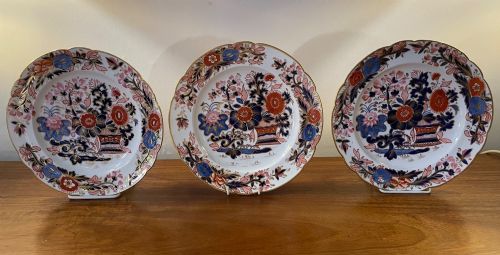
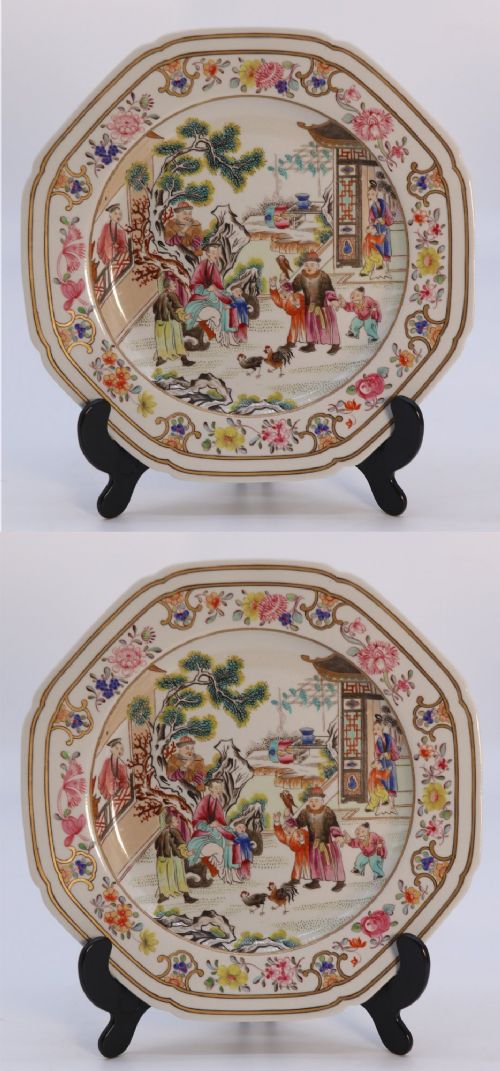
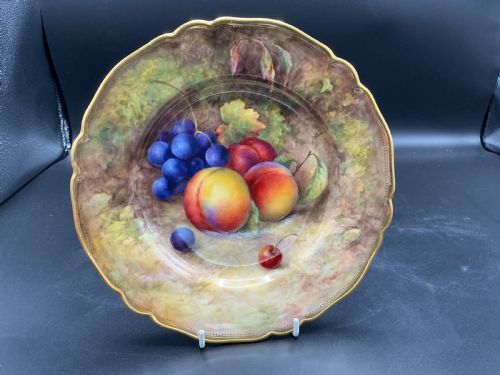
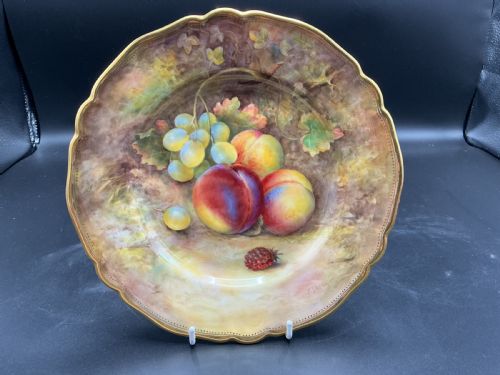
Gilt China Plate
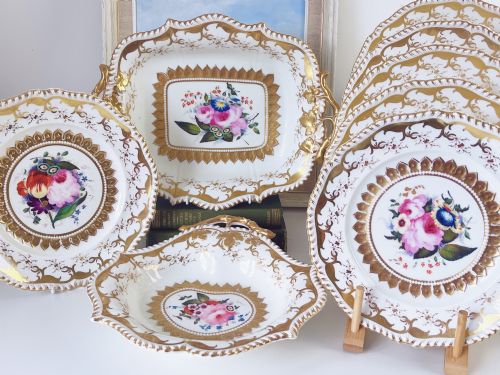
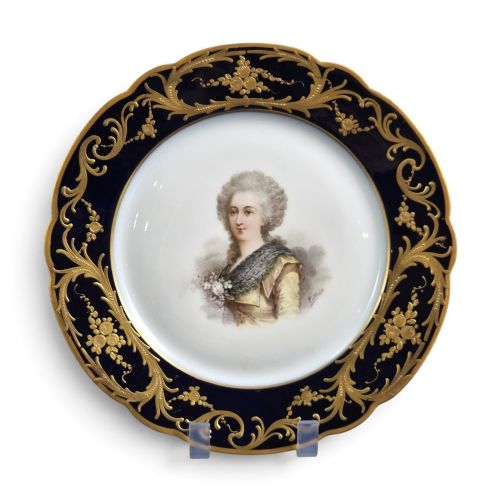
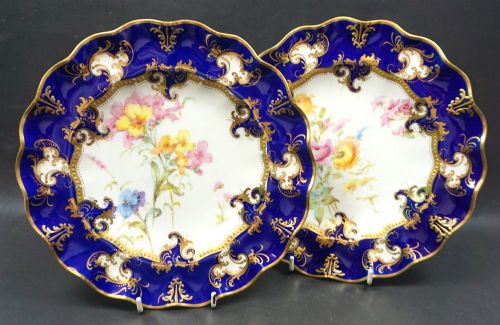
A gilt china plate brings hand-painted flowers, armorial crests, and gleaming gold leaf to the table from Georgian, Victorian, and later periods.
Gilt China Plate
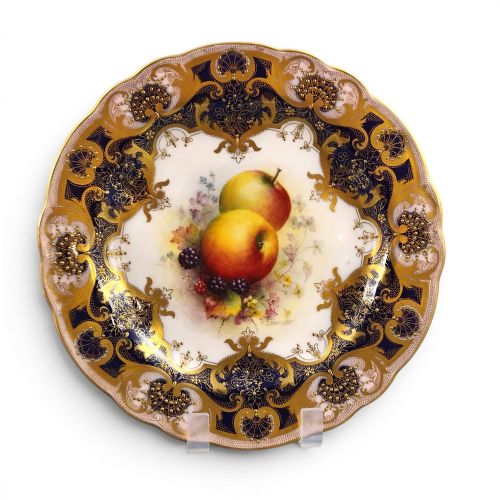
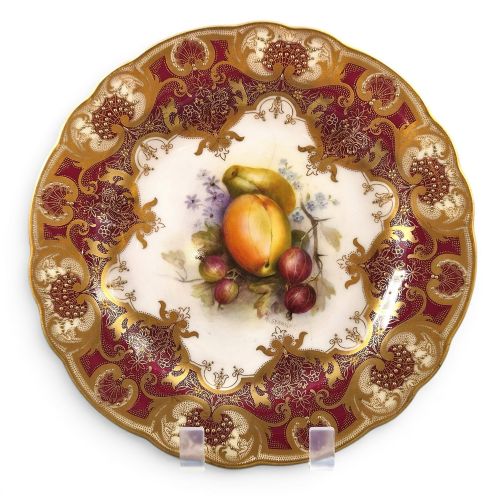
A gilt china plate stands among the most decorative tableware produced in Britain and continental Europe across the eighteenth, nineteenth, and twentieth centuries. These pieces encompass cabinet plates, dessert dishes, and serving plates fashioned for display or formal dining rather than everyday use.
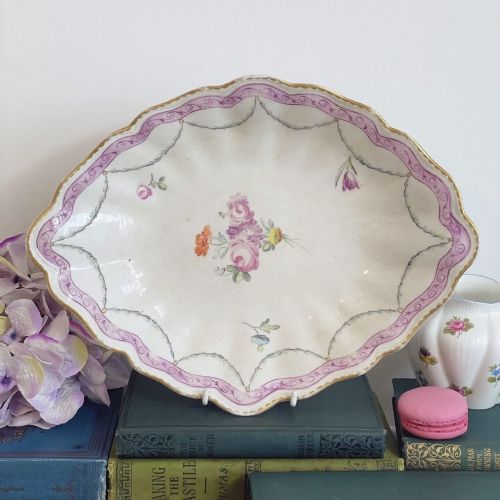
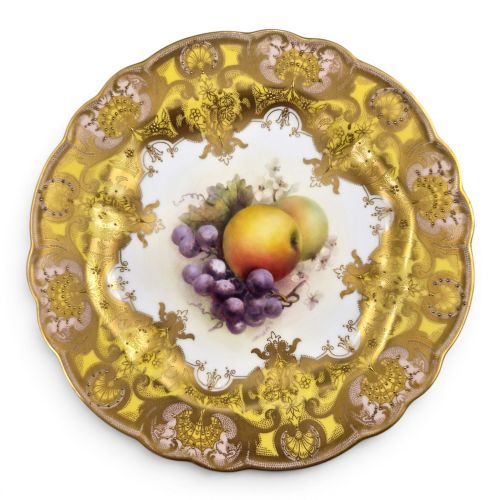
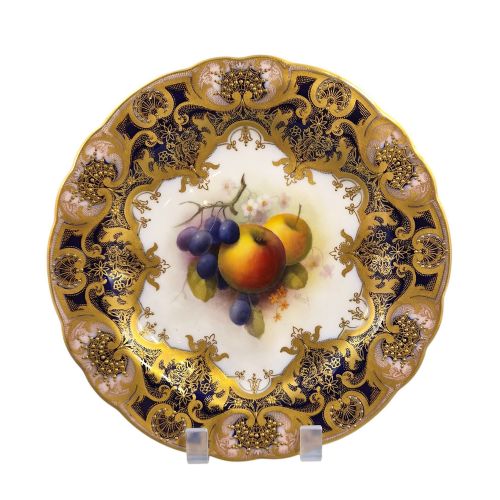
The selections available range from early Georgian porcelain and Regency botanical services to Victorian aesthetic designs and twentieth-century painted fruit studies. English factories such as Royal Worcester, Derby, and Minton dominate the forms, alongside continental porcelain from Meissen and Sèvres-style workshops.
Buyers encounter everything from single cabinet plates bearing artist signatures to large part-services intended for display in dining rooms. Forms vary from traditional round plates to octagonal cabinet pieces and shaped dessert dishes.
Materials and technique
Potters utilised fine porcelain, bone china, ironstone, and earthenware as the foundational bodies for these plates. Artisans then applied hand-painted polychrome enamels, botanical studies, fruit, or armorial crests directly onto the ceramic surface.
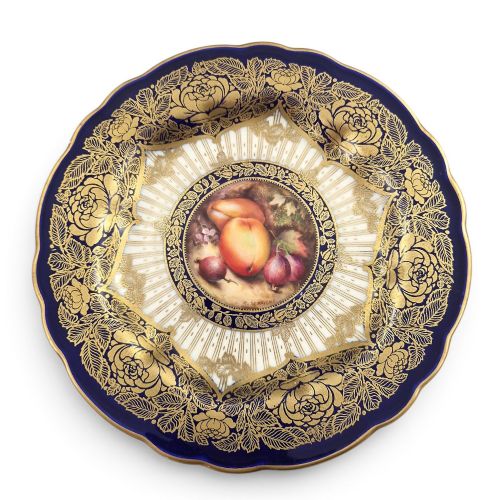
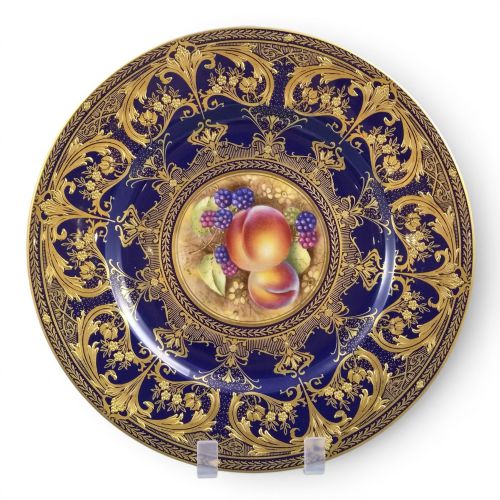
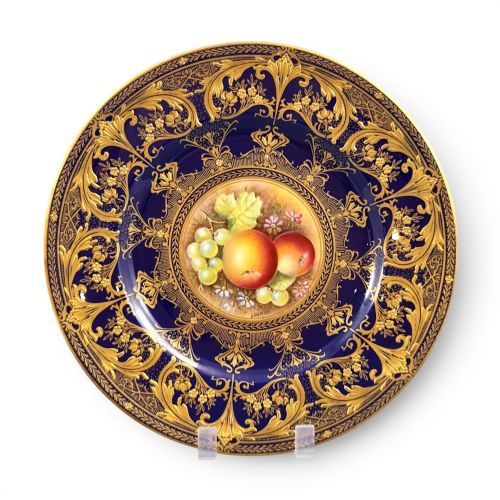
Gilding was achieved using gold leaf or liquid gold paint, which was meticulously brushed or tooled onto borders, rims, and central compartments before being fired in a kiln to secure the metallic sheen.
Listings feature porcelain and bone china bodies spanning the eighteenth, nineteenth, and twentieth centuries.
What varies in quality
Quality rests upon the skill of the hand-painting and the prestige of the maker or artist involved. Pieces featuring signed work by recognised painters command greater attention than standard factory output.
The precision and depth of the gilding, alongside the complexity of the porcelain body and decorative ground colours such as cobalt blue or scale patterns, separate standard wares from exceptional cabinet specimens.
Grainger Lee And Co·Royal Crown Derby·Royal Worcester·Royal Doulton·John Davenport·Meissen
The Gilt China Plate Glossary
- Cabinet plate
- A decorative plate intended for display in a cabinet or on a wall rather than for practical dining use. These pieces usually feature elaborate hand-painted scenes or rich gilding.
- Gilding
- The application of gold leaf or gold paint to ceramic surfaces to create metallic highlights and borders. This technique elevates the visual richness of the piece.
- Armorial
- A design incorporating a family crest, coat of arms, or heraldic symbols. Such services were custom-ordered by landed families.
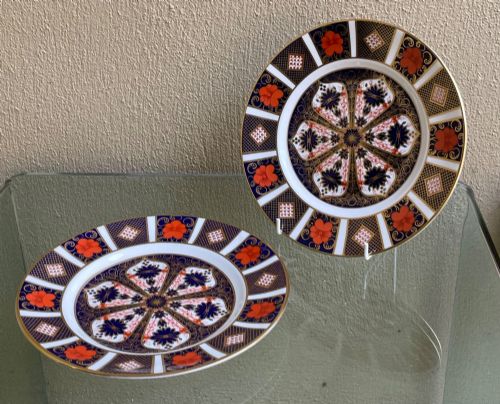
- Imari palette
- A decorative style using cobalt blue, iron red, and abundant gilt, inspired by Japanese export porcelains. English factories frequently adopted this vibrant aesthetic during the Georgian and Victorian eras.
Gilt China Plate: Frequently Asked Questions
How do I date a gilt china plate?
Dating relies on factory ceramic marks stamped or painted on the underside, stylistic clues such as Regency or Aesthetic Period motifs, and the type of porcelain body used.
Comparing pattern numbers and painter signatures against factory records helps narrow the production era down to specific decades.
Were these plates used for dining?
Many examples began as part of large dessert or dinner services intended for formal dining rooms during the Georgian and Victorian periods.
Over time, finer pieces with delicate hand-painted scenes transitioned primarily into cabinet plates kept solely for display.
How should I clean antique porcelain plates?
Antique porcelain and delicate gilding require gentle hand washing in lukewarm water with mild soap, avoiding dishwashers entirely.
Harsh scrubbing can wear away hand-painted enamels and delicate gold leaf accumulated over centuries.
What does an armorial crest mean?
An armorial crest indicates that the service was commissioned specifically for a titled family or landed estate, often featuring their unique heraldry.
These personalized sets represent some of the most prestigious commissions undertaken by porcelain factories.