
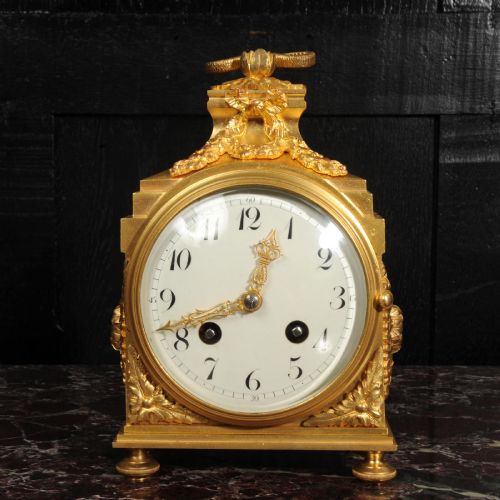
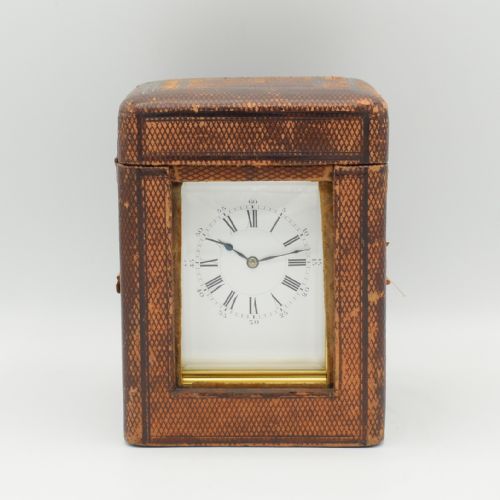
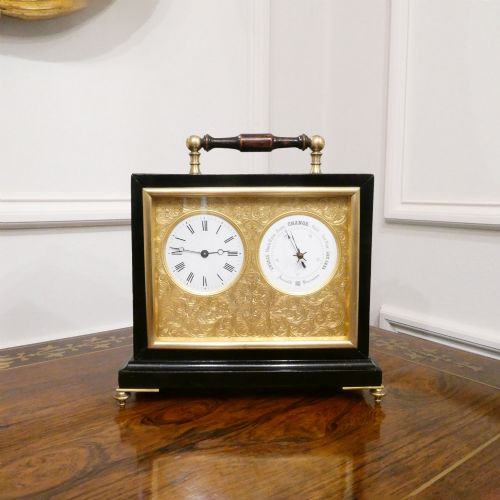
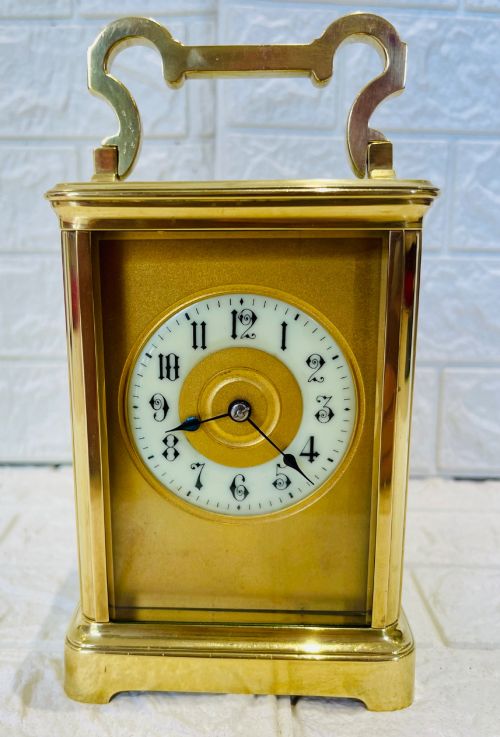

Gilt Carriage Clock
A gilt carriage clock brings portable nineteenth-century horology into a room, combining heavy brass frames with visible glass panels and precise mechanical movements.
Gilt Carriage Clock
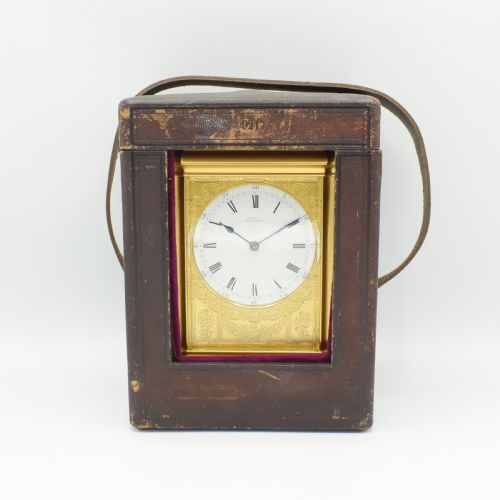
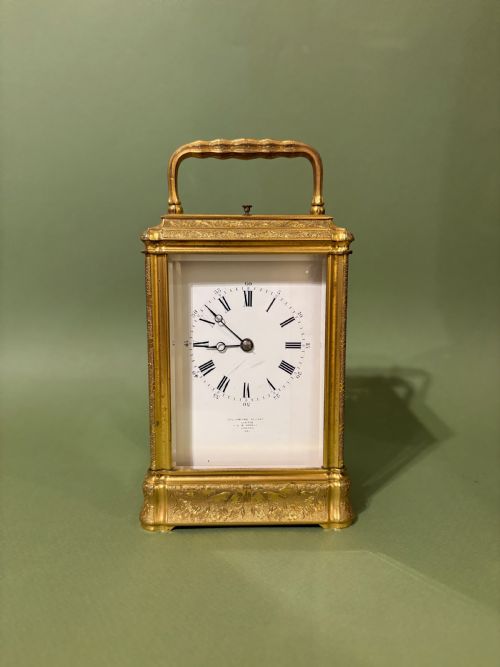
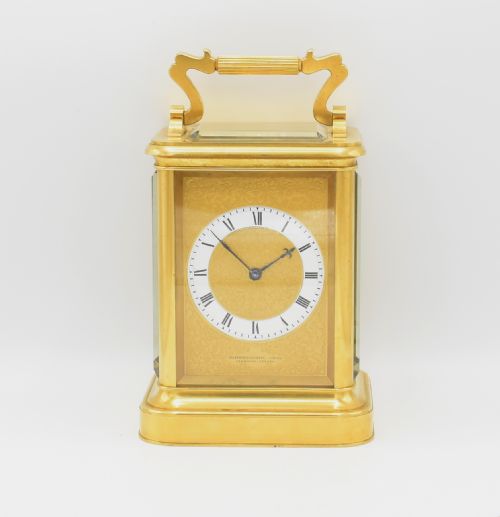
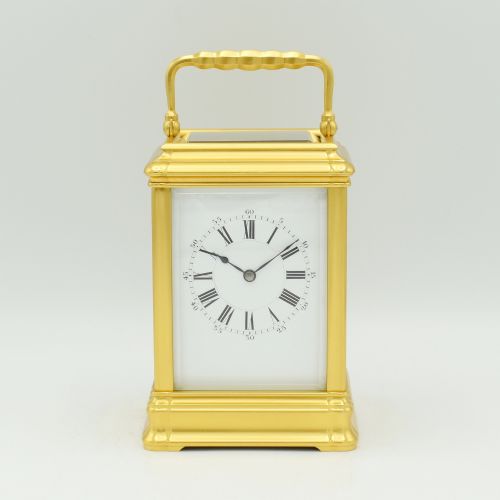
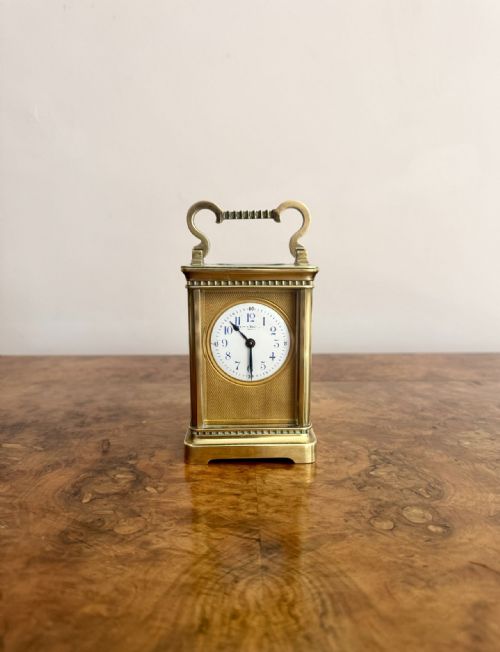
A gilt carriage clock is a portable timepiece housed in a glazed metal case, designed originally for travel by officers and gentlemen during the nineteenth century. These objects typically feature rectangular brass frames heavily coated in gilding, surmounted by a small carrying handle above flat or bevelled glass panels.
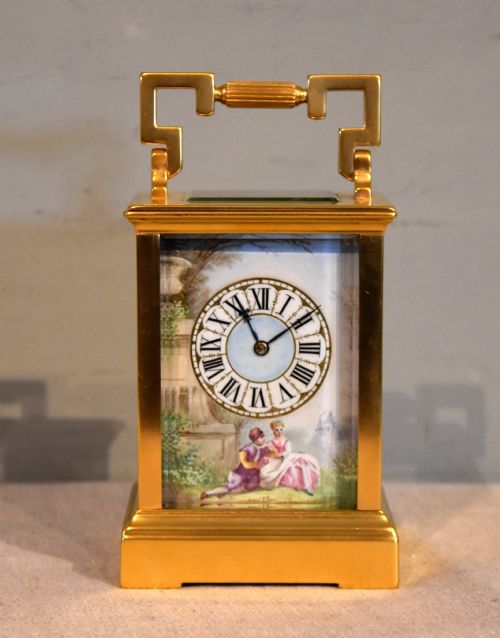
The versions most commonly met on this page belong to the Victorian era and the later decades of the nineteenth century, originating largely from French workshops in Paris alongside English makers. Alongside standard timepieces, many examples incorporate repeating mechanisms, striking trains, alarm functions, or porcelain enamel dials.
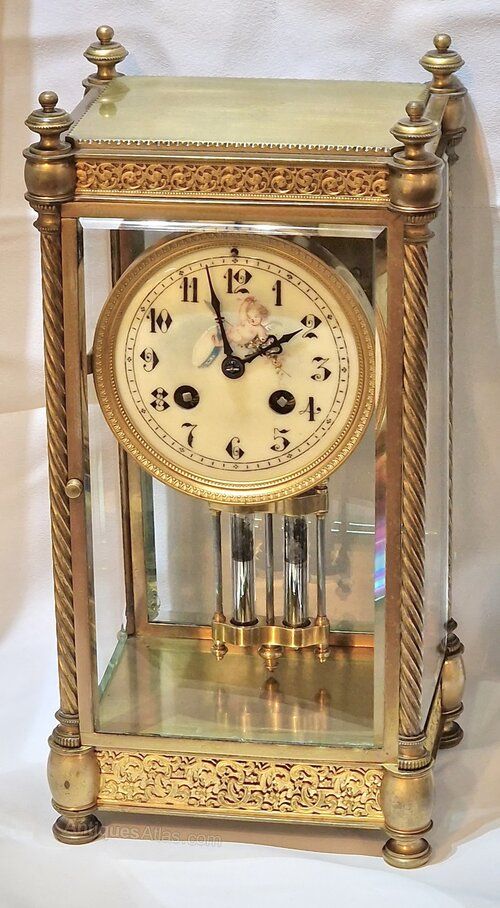
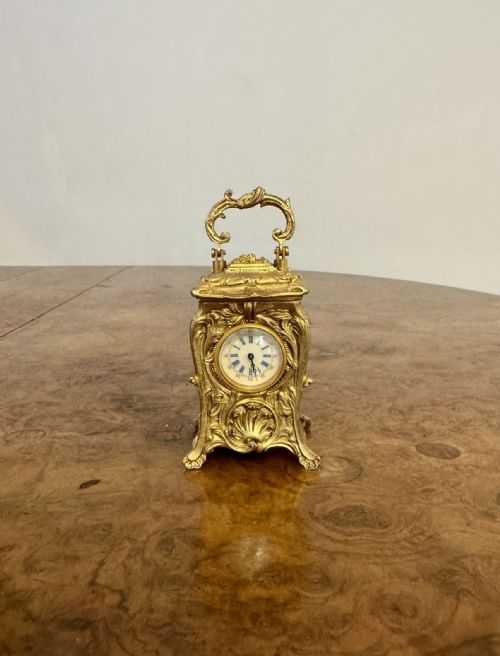
Beyond standard carriage clocks, related forms such as four-glass mantel clocks and miniature variants appear frequently within the records. These pieces share the characteristic gilt housing and visible internal escapements, shifting the emphasis from travel utility toward static interior display.
Materials and construction
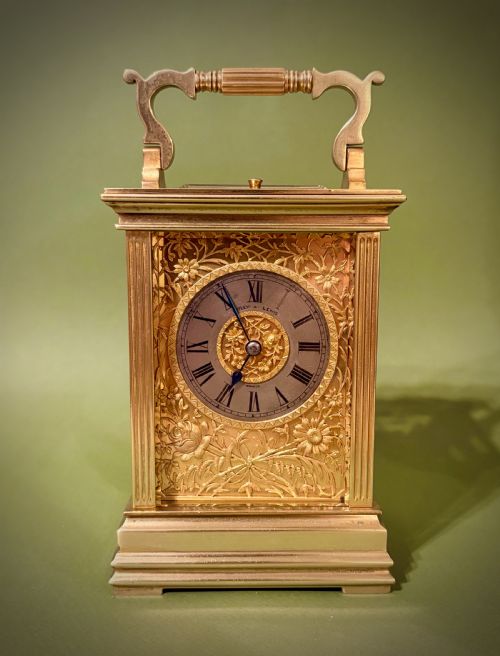
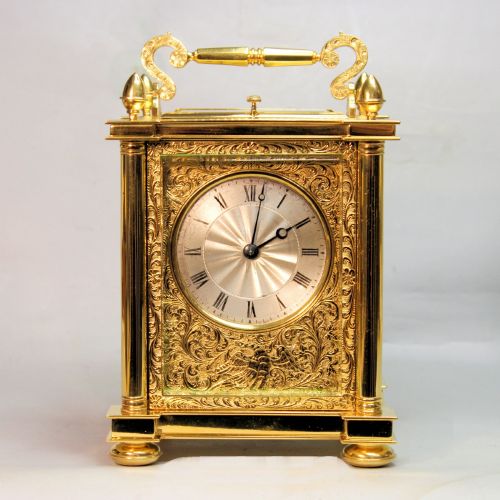
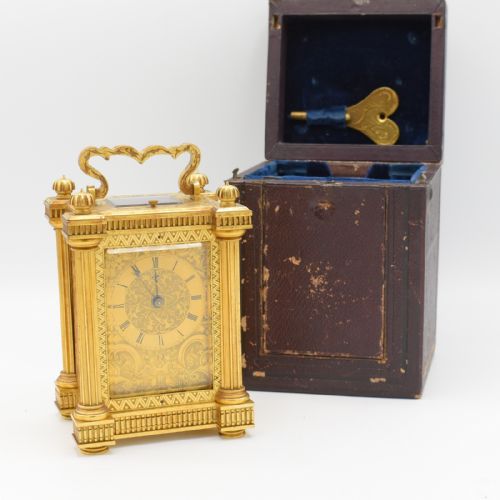
Makers constructed the structural frames and cases primarily from brass or bronze, applying a layer of heavy gilding or ormolu to the exterior surfaces. This metalwork was frequently enhanced through hand-engraving, fretwork, or cast foliate masks surrounding the dial.
Transparent enclosures were formed from thick bevelled glass panes fitted tightly into the brass housing to protect the delicate wheel train while permitting a full view of the movement. Dials were commonly fashioned from white enamel painted with Roman numerals, sometimes accompanied by subsidiary alarm dials or hand-painted porcelain panels.
The listings show French and English origins, spanning the Victorian period alongside Edwardian examples dated from the mid-nineteenth century onward.
Factors determining quality
Quality in these timepieces rests upon the complexity of the internal movement and the crispness of the exterior metalwork. Examples featuring repeating complications, grand sonnerie striking, or jewelled platform escapements represent a higher tier of horological achievement than simple time-only models.
The degree of hand-finishing defines the visual distinction between standard production and top-tier pieces. Finely engraved gilt cases, fully gilt interior movements, signed maker plates, and retained travel cases elevate an object significantly above plain, mass-produced counterparts.
Henri Jacot·Paul Garnier·Drocourt·Francois Arsene Margaine·Cousens And Whiteside·Goldsmiths Alliance Ltd·Howell And James·Brunelot
The Gilt Carriage Clock Glossary
- Escapement
- The mechanism within a clock that controls the unwinding of the mainspring by delivering regular impulses to the balance wheel. Platform escapements are mounted on a small removable plate visible through the top glass of a carriage clock.
- Repeater
- A complication that chimes the hours and quarters upon demand when a lever or plunger on the case is activated. This mechanism allowed owners to check the time audibly in the dark without lighting a candle.
- Grand Sonnerie
- A striking train that automatically sounds both the hours and the quarters on every passing quarter-hour. It represents a more complex and desirable movement than a standard hour-striking clock.
- Ormolu
- Finely ground high-carat gold applied to a bronze or brass base object using a mercury amalgamation technique. The resulting surface gives a deep, warm metallic lustre characteristic of luxury nineteenth-century pieces.
- Doucine case
- A clock housing featuring distinctive concave ogee moulding along the top or base profile. This curved architectural contour appears frequently on better French carriage clocks from the nineteenth century.
Gilt Carriage Clock: Frequently Asked Questions
What is a carriage clock?
A carriage clock is a small, portable mechanical timepiece enclosed in a brass and glass case, equipped with a swinging handle for travel. Developed in the nineteenth century, they were designed to be packed into luggage for use during journeys.
Over time, these clocks transitioned from practical travelling items to decorative domestic timepieces displayed on mantels and tables. Their distinctive glass panels allow the ticking escapement and internal gear train to remain visible from multiple angles.
How do repeating mechanisms work?
A repeating mechanism allows the clock to strike the current hour and quarters aloud when a button or cord on the case is pressed. This function relied on an additional train of gears and spring hammers housed within the movement.
Owners utilised this feature during the night to ascertain the time without needing to strike a match or view a candlelit dial. Such complications require precise synchronisation between the striking racks and the motion work.
How do I wind a carriage clock?
Winding is performed by inserting a matching key into the arbours located through the solid backplate of the movement. Most eight-day movements require a simple clockwise turn until resistance is felt, taking care not to overwind the mainspring.
Before winding, the carrying handle should be folded flat to clear the key path. It is also important to handle the heavy brass case with both hands to avoid accidental drops.