
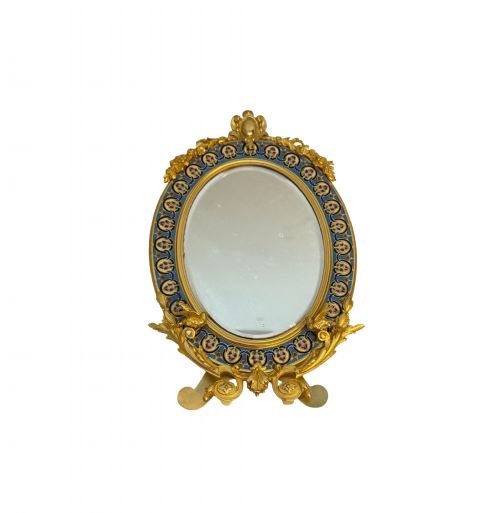


Gilt Bronze Table Mirror
These gilt bronze table mirror pieces bring nineteenth-century French elegance to a dressing surface, offering both decorative presence and functional reflection.
Gilt Bronze Table Mirror
A gilt bronze table mirror sits upon a dressing table, chest or console, bringing nineteenth-century French styling into interior spaces. These pieces function primarily as vanity mirrors or adjustable dressing table accessories.
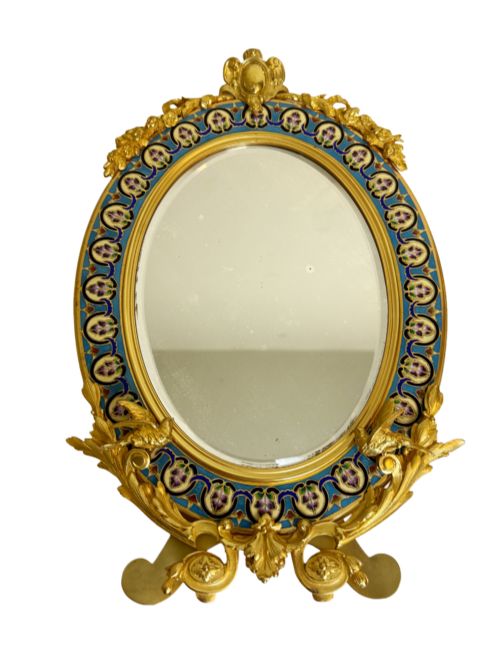
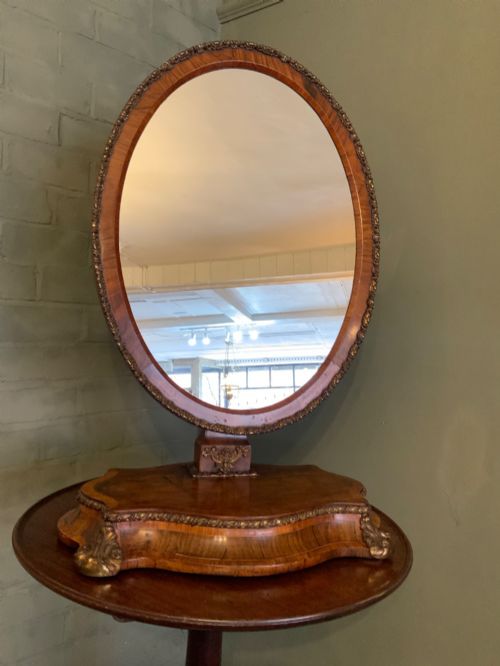
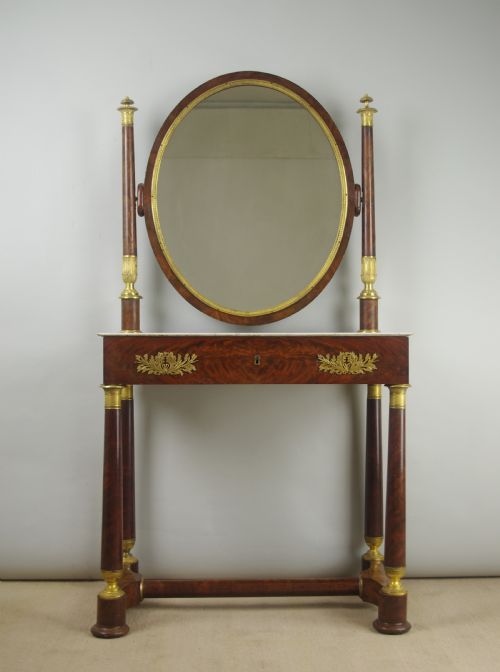
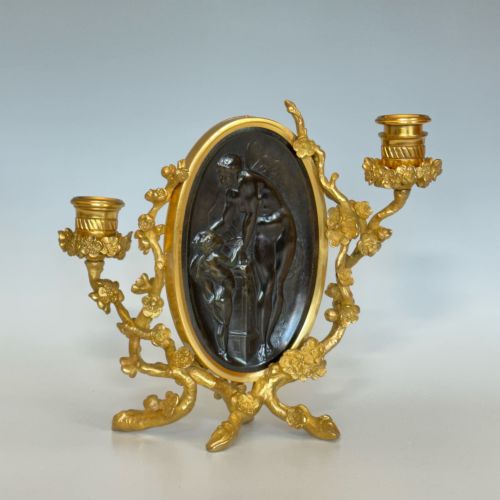
The selection here encompasses various forms including oval dressing table mirrors, vanity sets, hand mirrors, and occasional console tables fitted with mirrors. Most examples originate from the nineteenth century, displaying French Empire, Rococo Revival, and Napoleon III aesthetics.
Makers and workshops of the period utilised combinations of glass, gilt bronze, ormolu, enamel, marble, bronze, mahogany, and porcelain. The resulting objects range from simple adjustable pedestal mirrors to elaborate pieces mounted with Sevres or Limoges porcelain.
How They Were Made
Artisans cast frames and mounts in bronze, applying a layer of gold via mercury gilding or electroplating to achieve the characteristic gilt bronze and ormolu finishes. Champleve enamel and porcelain plaques from Sevres and Limoges were frequently integrated into the cast metalwork.
Frames frequently combine cast bronze with secondary materials like marble bases, mahogany structures, and walnut supports. Glass plates were bevelled and set securely into heavy metal surrounds designed to support adjustable pivoting mechanisms.
Hand mirrors of this era ensured personal vanity remained strictly portable.
What Varies in Quality
The refinement of the cast bronze work and the crispness of the chasing separate standard production from superior pieces. Workshops like Thiebaut Freres demonstrated exceptional command over metal finishing and structural assembly.
Integration of decorative elements such as hand-painted Limoges enamel, champleve panels, and Sevres porcelain mounts dictates the relative sophistication of an individual mirror. The quality of the underlying marble or mahogany support further distinguishes the tier of the piece.
Thiebaut Freres·Joseph Meissonnier·F.Bienvue
The Gilt Bronze Table Mirror Glossary
- Ormolu
- Gilt bronze, typically referring to finely chased cast brass or bronze coated with a gold amalgam. This technique was widely employed on nineteenth-century French decorative objects.
- Champleve
- An enamelling technique where troughs are dug out of a metal surface and filled with vitreous enamel before firing. These colourful enamel sections frequently accent gilt bronze frames.
- Napoleon III
- A nineteenth-century French design style encompassing eclectic revivals of earlier monarchical aesthetics, heavily represented in ornate vanity and dressing mirrors.
- Sevres
- A renowned French porcelain factory whose decorative plaques were frequently mounted onto nineteenth-century furniture and mirror frames.
Gilt Bronze Table Mirror: Frequently Asked Questions
How do I date a gilt bronze table mirror?
Dating relies on stylistic indicators such as French Empire or Rococo Revival motifs, alongside the construction methods of the bronze casting and the type of mirror glass used.
Evidence from nineteenth-century pieces shows specific material combinations like champleve enamel and Sevres porcelain that help place objects within distinct periods like 1880 or 1890.
Were these mirrors used on dressing tables?
Yes, these objects functioned primarily as dressing table mirrors, vanity mirrors, and toilet mirrors placed upon surfaces for personal grooming.
Many examples include adjustable pedestal mounts or stands designed specifically for tabletop placement in nineteenth-century bedrooms.
What is the difference between ormolu and gilt bronze?
Ormolu specifically describes high-quality gilded bronze or brass used in decorative arts, particularly within French furniture and metalwork.
In practice across these listings, the terms often describe the same golden metal finish applied to cast bronze frames and mounts.
How do I care for antique gilt bronze?
Maintenance requires gentle dusting with a soft, dry cloth to protect the delicate gilt surface and any integrated porcelain or enamel panels.
Avoid chemical polishes and abrasive cleaners that can strip away the historical gilding or damage the surrounding marble and wood.