
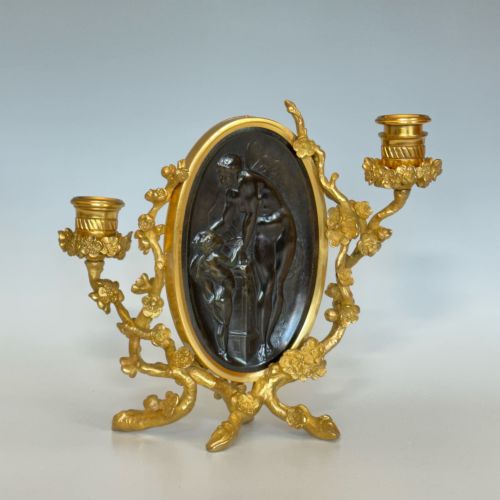
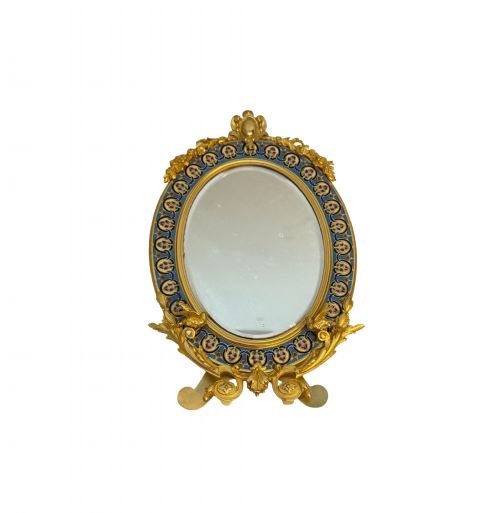


Bronze Table Mirror
A bronze table mirror brings reflective polish and sculptural weight to a dressing room or surface.
Bronze Table Mirror
A bronze table mirror is a functional vanity object designed to stand on a dressing table, chest, or surface, offering a movable reflective glass panel supported by a cast metal frame.
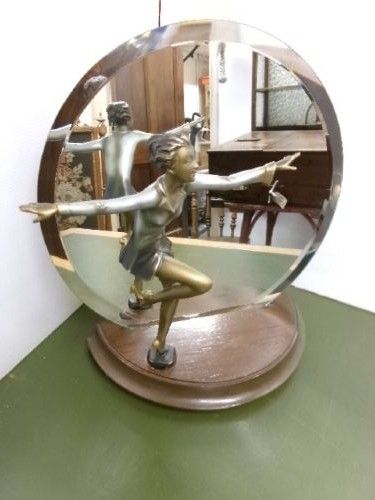
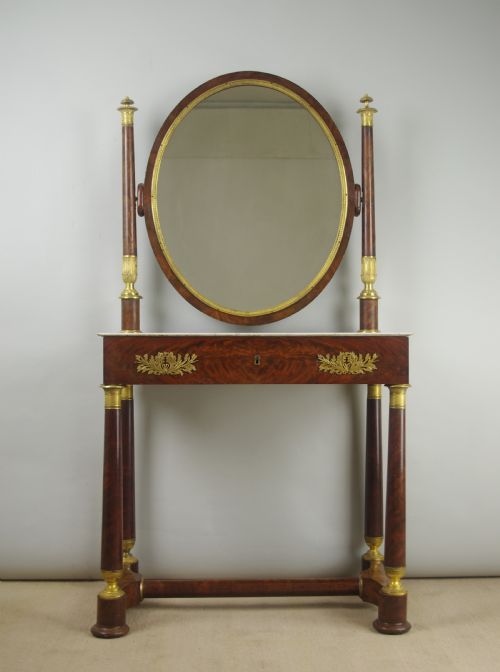
The versions met on this page span the nineteenth century into the twentieth century, largely originating from French workshops and embracing styles such as Empire, Rococo Revival, and Art Deco.
Beyond standalone tabletop mirrors, related forms include dressing table mirrors, vanity mirrors, hand mirrors, and occasional furniture mounts that incorporate bronze or ormolu.
Materials and construction methods
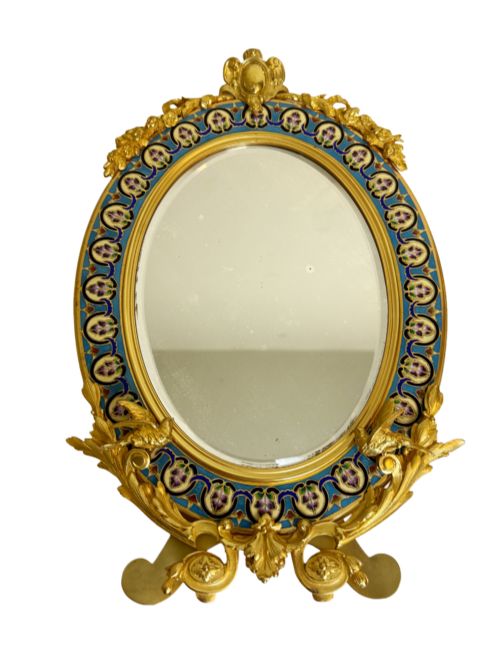
Frames are cast in bronze, brass, or spelter, frequently enhanced with fire-gilding known as ormolu to achieve a bright golden surface finish.
Decorative embellishments often incorporate inset panels of champleve enamel, porcelain plaques, or marble bases that provide structural stability and contrasting colour.
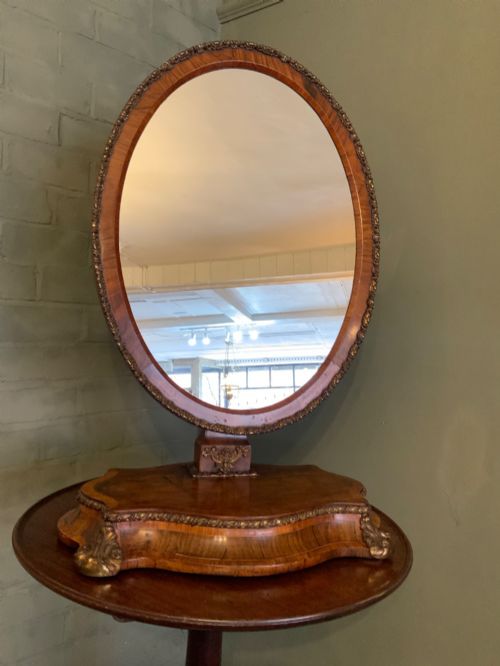
Glass panels are set within adjustable frames, sometimes featuring bevelled edges and supported by pivoting pins or pedestals.
Listings feature materials including glass, gilt bronze, ormolu, marble, bronze, enamel, mahogany, and brass across the nineteenth and twentieth centuries.
Distinctions in quality and execution
The refinement of the casting separates standard production pieces from finer studio work, visible in the crispness of chased details and floral or figurative motifs.
Quality rests in the weight of the metal and the integrity of the gilding or patination, alongside the integration of decorative elements such as enamel work and porcelain inserts.
Thiebaut Freres·Maison Bagues·Joseph Meissonnier·F.Bienvue
The Bronze Table Mirror Glossary
- Ormolu
- A technique of applying finely ground high-carat gold to a bronze object, creating a rich metallic sheen. This finish defines the decorative surface of many nineteenth-century French frames.
- Champleve
- An enamelling process where troughs are carved into the metal surface and filled with vitreous enamel before firing. It adds colourful patterns to the bronze frame.
- Spelter
- A zinc alloy used as a substitute for bronze in decorative metalwork, particularly during the Art Deco period. It takes patination well while offering a lighter structural weight.
- Bevelled
- A glass edge cut at an angle rather than straight through, creating a framed visual border. This detail appears on higher quality mirror plates.
Bronze Table Mirror: Frequently Asked Questions
How do I date a bronze table mirror?
Dating relies on stylistic clues, such as the symmetrical discipline of French Empire design versus the sweeping curves of Rococo Revival or the geometric lines of Art Deco.
Material combinations also provide context, as champleve enamel and Sevres-style porcelain mounts point directly to nineteenth-century production.
Are these mirrors adjustable?
Many examples feature pivoting side pins or weighted pedestals that allow the glass frame to tilt to different angles for use on a dressing table.
Fixed frames also exist, particularly among picture frame hybrids and smaller tabletop formats.
What is the difference between ormolu and gilt bronze?
Ormolu specifically describes the application of a mercury-gilt finish to bronze, producing a warm golden brilliance characteristic of French decorative arts.
Both terms describe gilded bronze surfaces, though historical pieces often use ormolu to denote high-status objects.
Where should I place a table mirror?
These pieces are traditionally designed for dressing tables, vanity units, or chests of drawers where they serve both a functional and decorative purpose.
Their finished backs and detailed frames also suit placement on console tables or mantelpieces where they catch the light.