



Standing Bronze Mirror
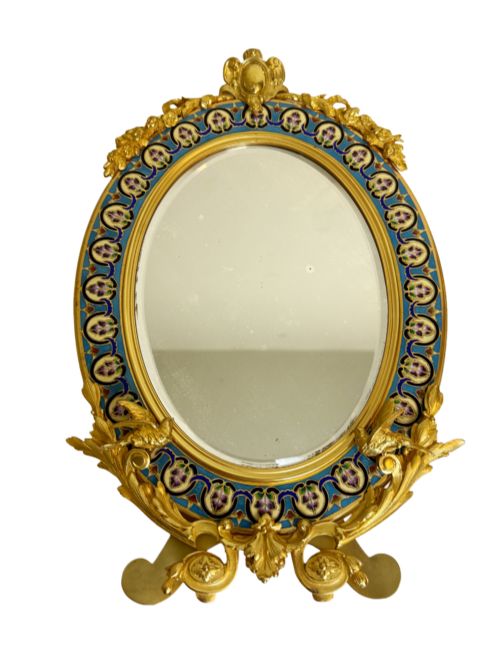
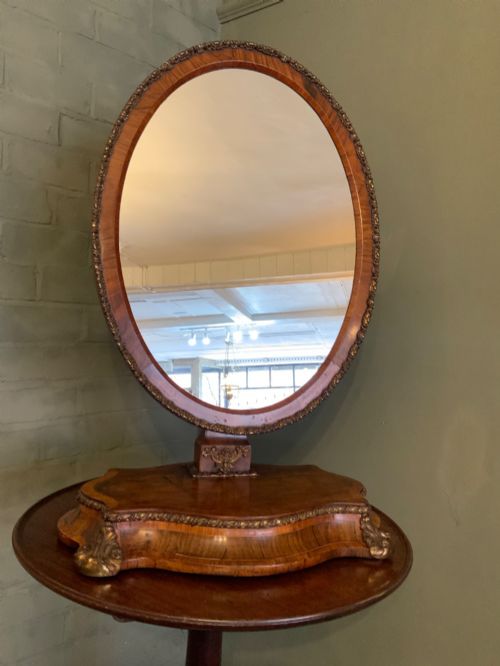
These standing bronze mirror examples span the nineteenth and early twentieth centuries, bringing French and Victorian elegance to any dressing table or boudoir.
Standing Bronze Mirror
When searching for a standing bronze mirror, buyers encounter a variety of tabletop, dressing table, vanity, and cheval mirror forms originating from the nineteenth and early twentieth centuries. These pieces encompass Victorian, Edwardian, and distinct French styles including Empire, Rococo revival, and Napoleon III.
Materials and construction methods
Makers utilised cast bronze, ormolu, and gilt bronze for the structural frames, mounting them with clear reflective glass and occasionally incorporating marble bases, walnut, or kingwood. Decorative techniques include champleve enamel work, limoges enamel inserts, and cast iron framing.
Many examples incorporate adjustable mechanisms, allowing the mirror plate to tilt within the bronze or ormolu framework. Surface ornamentation draws heavily on French Empire and Rococo styles, utilising detailed metalcasting and gilding.
Listings feature periods from the nineteenth century through the Edwardian era, incorporating materials such as marble, walnut, kingwood, and champleve enamel.
Evaluating quality and execution
Quality in a standing bronze mirror rests in the crispness of the bronze or ormolu casting and the complexity of decorative embellishments such as champleve enamel or limoges panels. Finer examples display meticulous hand-chasing on the metalwork and robust pivoting mechanisms that hold the mirror plate securely at any angle.
The choice of secondary materials also distinguishes the range, with select pieces incorporating solid walnut, kingwood, or marble plinths rather than simpler frames. The inclusion of signed enamel work or complex multi-part cast frames elevates a piece above standard production.
The Standing Bronze Mirror Glossary
- Ormolu
- Gilt-bronze ornament applied to furniture or decorative objects. This technique involves amalgamating gold and mercury onto a bronze base.
- Champleve
- Enamelling method where troughs or cells are sunken into the surface of the bronze and filled with vitreous enamel before firing.
- Cheval mirror
- A full-length freestanding mirror suspended in a frame that allows it to swing. These large pieces often stand on pedestal supports.
- Empire
- A neoclassical design style spanning the early nineteenth century. It draws inspiration from ancient Roman and Greek forms.
- Limoges enamel
- Painted enamelwork produced in the French city of Limoges. These decorative plaques often feature portraits or pastoral scenes inset into mirror frames.
Standing Bronze Mirror: Frequently Asked Questions
Where were standing bronze mirrors placed?
These mirrors were traditionally positioned on dressing tables, large chests of drawers, or dedicated pedestal stands within bedrooms and boudoirs. Larger cheval versions stood directly on the floor to provide full-length reflections.
Today, they function well on dressing tables, sideboards, or console tables, adding reflective light and period character to domestic interiors.
How do I date a bronze mirror?
Dating relies on stylistic clues, manufacturing techniques, and material combinations seen across Victorian and nineteenth-century pieces. French Empire and Rococo revival pieces carry distinct decorative motifs tied to specific periods.
Examining the casting quality, the type of glass, and any maker inscriptions helps narrow down the decade of production between the early nineteenth and early twentieth centuries.
Are these mirrors adjustable?
Many of the table and dressing table mirrors feature pivoting side screws or hinges. This allows the user to tilt the glass plate to the desired angle.
Pedestal and cheval formats also utilise swivel frames designed to adjust the viewing angle easily.
What is the difference between ormolu and bronze?
Bronze is an alloy primarily composed of copper and tin, used to cast the structural frames of these mirrors. Ormolu specifically refers to the application of a gold-mercury amalgam onto the bronze surface to create a rich golden finish.
In many listings, these terms describe the same gilt-metal framing techniques popular in French decorative arts.