


19th Century Bronze Mirror
A 19th century bronze mirror brings sculptural weight and warm metallic lustre to a room, offering both practical reflection and decorative presence.
19th Century Bronze Mirror
A 19th century bronze mirror encompasses portable table mirrors, adjustable dressing table glasses, and large wall-mounted pieces designed to catch the light. The items found here predominantly display French origins, spanning the Victorian period and specific decades such as eighteen-eighty and eighteen-ninety.
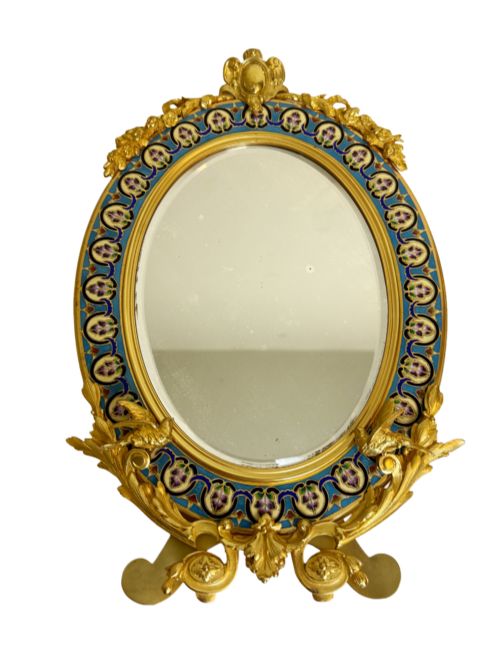
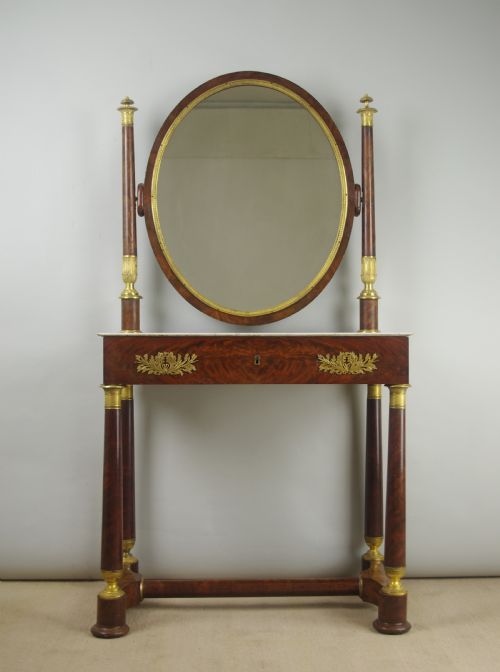
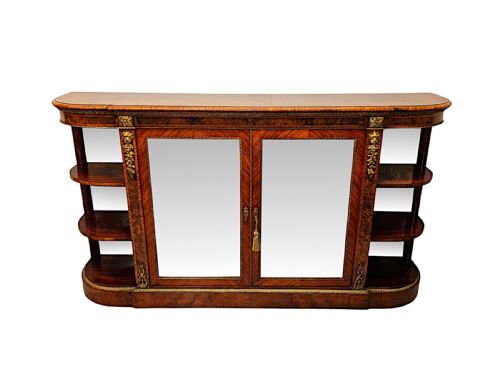
Makers and workshops produced these mirrors in forms influenced by French Empire, Rococo Revival, and Napoleon III styles. They appear not only as standalone looking glasses but also integrated into larger furniture forms such as dressing tables, credenzas, and vanity sets.
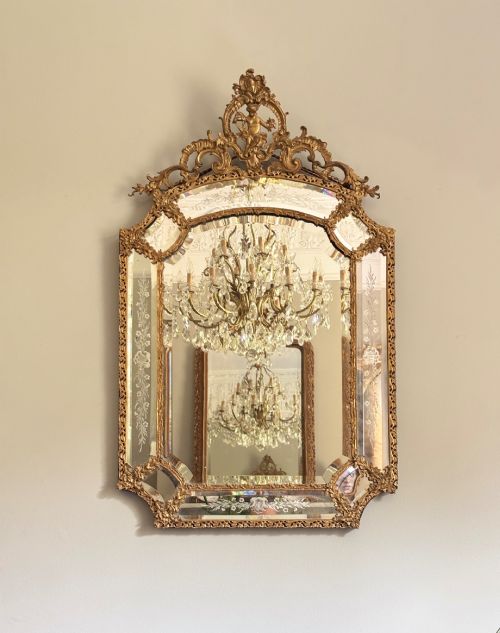
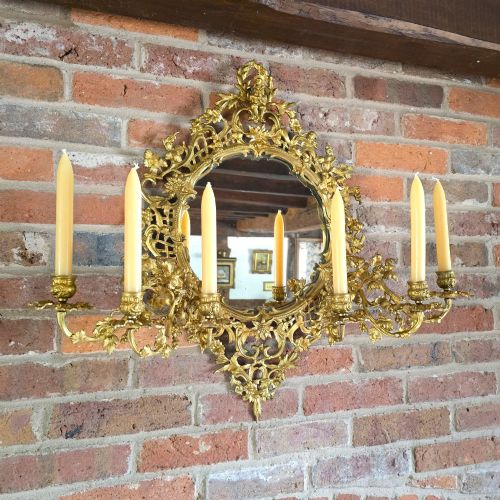
Buyers encounter table-top versions with easel backs alongside hanging girandoles and wall sconces featuring integrated candle branches. The variety reflects the diverse domestic requirements of nineteenth-century interiors, from intimate boudoirs to grand reception rooms.
How they were made
Foundry work relied on bronze, gilt bronze, and ormolu to create sculptural frames, mounts, and stands. Artisans often combined these metal elements with contrasting materials such as mahogany, burr walnut, marble, and glass.
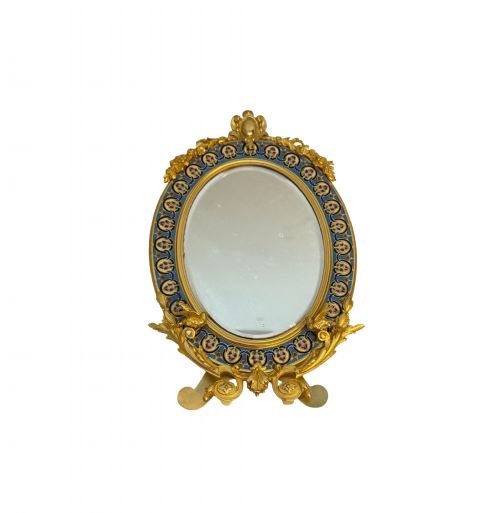
Decorative surfaces frequently incorporated champleve enamel, Limoges panels, and Sevres porcelain plaques set directly into the metalwork. Hand-chiselling and gilding finished the cast bronze components, securing glass plates within rebated frames or easel structures.
A Burmese temple lion found among the records proves that nineteenth-century metalworkers cast more than vanity sets when working with bronze and mirrors.
What varies in quality
The standard of a 19th century bronze mirror depends on the crispness of the bronze casting and the depth of the subsequent gilding or ormolu finish. Superior examples exhibit finely chased detail in the foliage, scrolls, or figural motifs rather than softened, generalised contours.
Integration of secondary materials also dictates the grade of the piece, distinguishing standard commercial production from exhibition-quality works. Hand-painted porcelain plaques, precise champleve enamelling, and substantial gauge bronze mark the upper tier of surviving items.
Gillows·Joseph Meissonnier·F.Bienvue·Town and Emanuel
The 19th Century Bronze Mirror Glossary
- Ormolu
- Gilt bronze produced by applying a mercury and gold amalgam to a bronze base, then heating to vaporise the mercury. This technique creates a durable, warm metallic finish characteristic of nineteenth-century French luxury goods.
- Champleve
- An enamelling technique where troughs or cells are hollowed out of the metal surface and filled with vitreous enamel powder before firing. The resulting coloured patterns sit flush with the surrounding bronze borders.
- Girandole
- A branched wall mirror or candlestick designed to reflect and multiply candlelight from attached arms. These fixtures combine functional illumination with decorative cast metal backplates.
- Easel mirror
- A looking glass supported by a hinged rear strut for desktop or dressing table placement. This portable format allows adjustment of the viewing angle.
- French Empire
- A neoclassical design style spanning the early nineteenth century, drawing inspiration from ancient Roman and Greek motifs. Pieces in this idiom feature strict symmetry, classical mounts, and dark mahogany veneers.
19th Century Bronze Mirror: Frequently Asked Questions
How do I date a bronze mirror?
Dating relies on stylistic indicators, assembly methods, and the composition of the metal and glass. Comparing the decorative vocabulary against documented periods like Napoleon III or French Empire helps narrow the decade of manufacture.
Secondary materials such as porcelain plaques or enamel work also provide comparative benchmarks. Maker stamps or signatures, where present, offer direct historical attribution.
Were these mirrors meant for walls or tables?
Nineteenth-century workshops produced both formats to serve different domestic spaces. Table mirrors and vanity sets stood on dressing surfaces, often featuring adjustable frames and easel supports.
Wall-mounted examples, including girandoles and sconces, were hung in principal rooms to illuminate dark corners. The physical scale and presence of mounting hardware usually clarify the intended placement.
How should I clean a gilt bronze frame?
Dusting with a dry, soft microfibre cloth removes surface particles without disturbing delicate gilding or patination. Avoid abrasive cleaners, chemical polishes, and excessive moisture, which can strip ormolu surfaces.
If deeper cleaning is necessary, consult a professional conservator to prevent damage to integrated enamel, porcelain, or original mirror glass.
What is the difference between bronze and ormolu?
Bronze is an alloy of copper and tin used as the structural base metal for casting frames and mounts. Ormolu refers specifically to the application of fine gold leaf or amalgam onto that bronze substrate.
Many nineteenth-century pieces combine patinated dark bronze with bright ormolu highlights to create visual depth and contrast.