




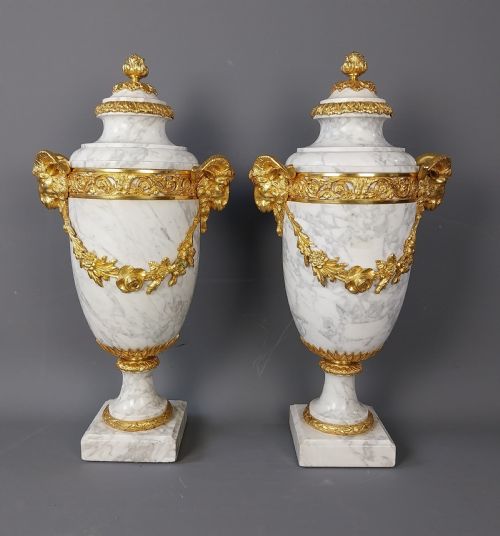

Gilt Bronze Marble Vases
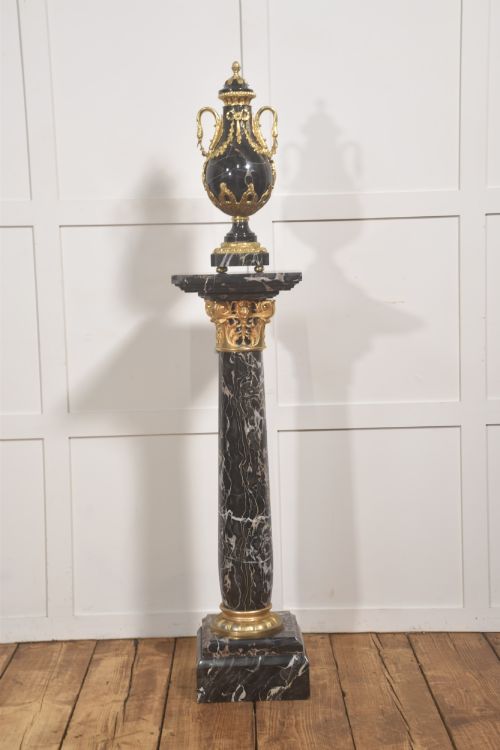
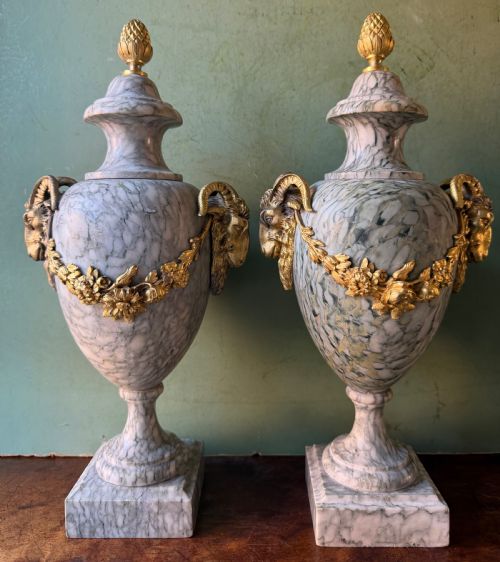
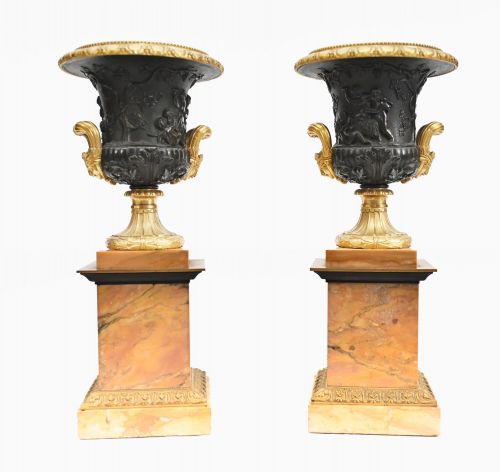
These gilt bronze marble vases bring nineteenth-century neoclassical and French Empire dignity to a room.
Gilt Bronze Marble Vases
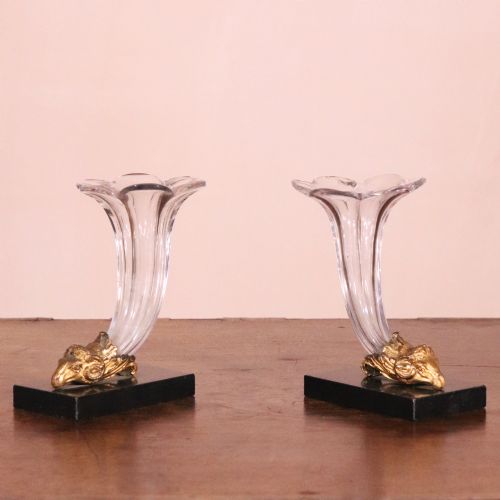
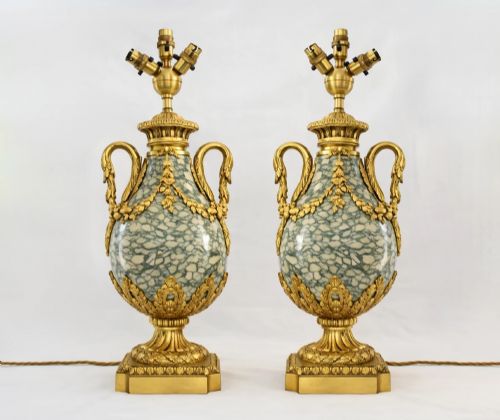
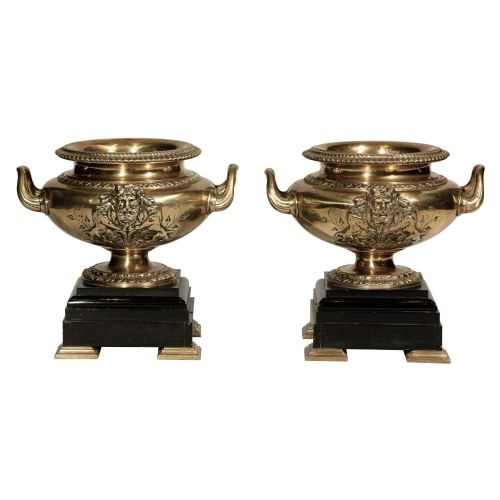
When searching for gilt bronze marble vases, buyers encounter decorative urns, cassolettes, and table lamps produced across the nineteenth century. These objects draw heavily on French Empire, Louis XVI, and Grand Tour styles.
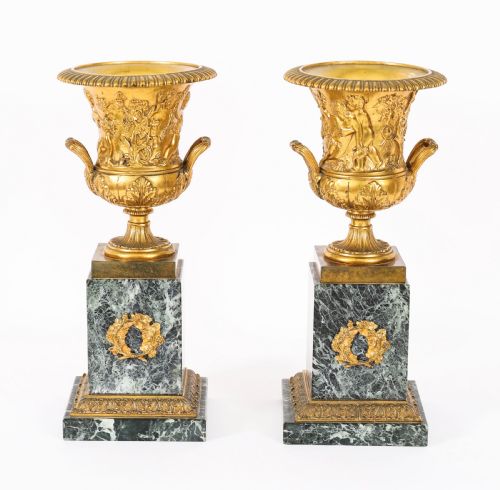
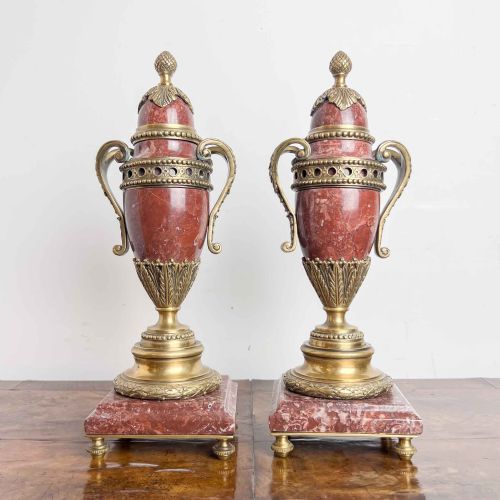
The selections on this page centre on matched pairs mounted on marble plinths or bases. Forms range from classical amphorae to lidded cassolettes originating primarily from French workshops.
How They Were Made
Maker's workshops combined cast bronze and ormolu with turned stone bodies such as white marble, green marble, rouge marble, and onyx. Metal components were chased and fire-gilded to achieve a sharp contrast against the polished mineral surfaces.
Cassolettes often featured reversible lids that transformed an urn into a vase or candle holder. Bronze mounts were pinned or screwed directly into the stone plinths to secure the composition.
Gilt Bronze Marble Vases Retail Price Guide 2026
Typical asking prices for gilt bronze marble vases among the pieces listed under this phrase on Sellingantiques today, from the lower quarter to the upper quarter. They describe what is for sale here now, not the wider market.
Some nineteenth-century cassolettes hide reversible lids that let an austere classical urn double as a decorative incense burner.
What Varies in Quality
Quality depends on the crispness of the bronze chasing and the selection of the marble base. Finer examples display deeply articulated acanthus leaves, classical figures, and handlers without casting flaws.
The grain and uniformity of the green, white, or rouge marble dictate the visual weight of the piece. Superior specimens integrate metal mounts tightly with the stone body without visible gaps.
The Gilt Bronze Marble Vases Glossary
- Gilt bronze
- Metal cast and coated with a layer of gold or gold amalgam. This finish provides a bright metallic sheen that resists tarnishing.
- Ormolu
- Synonym for gilded bronze popular in French decorative arts. It describes finely chased bronze mounts applied to furniture and stone vessels.
- Cassolette
- A dual-purpose vessel with a reversible lid functioning as an urn or a burner. These pieces typically combine marble bodies with bronze mounts.
- Grand Tour
- Cultural travel undertaken by nineteenth-century elites collecting classical souvenirs. Objects from this context emulate ancient Roman and Greek forms.
- Campana
- A bell-shaped urn profile common in classical antiquity. These vessels feature flared rims and pedestal bases.
Gilt Bronze Marble Vases: Frequently Asked Questions
What is a cassolette?
A cassolette is a decorative vessel featuring a lid that turns over to serve as a container or holder. They combine turned marble bodies with cast bronze mounts.
Nineteenth-century makers produced these pieces largely in French workshops following neoclassical and Louis XVI designs.
How do I clean gilt bronze?
Dust gilt bronze gently with a dry microfibre cloth to remove surface particles. Avoid chemical polishes that strip the gold layer.
Water and harsh detergents damage the underlying bronze and ruin the original fire-gilt surface over time.
Are these pieces French?
Many examples originate from France, particularly under the French Empire and Louis XVI revival styles. Grand Tour pieces also reflect Italian manufacturing for travelling buyers.
French workshops set the standard for ormolu mounting and stone turning during the nineteenth century.
What marble types appear most?
Surviving nineteenth-century pieces utilise white marble, green marble, rouge marble, and onyx. Alabaster and quartz also form the central bodies of certain urns.
These stones were selected for their rich veining and polished surfaces that contrasted against the bright gilt bronze.