





Gilt Bronze Marble Urns
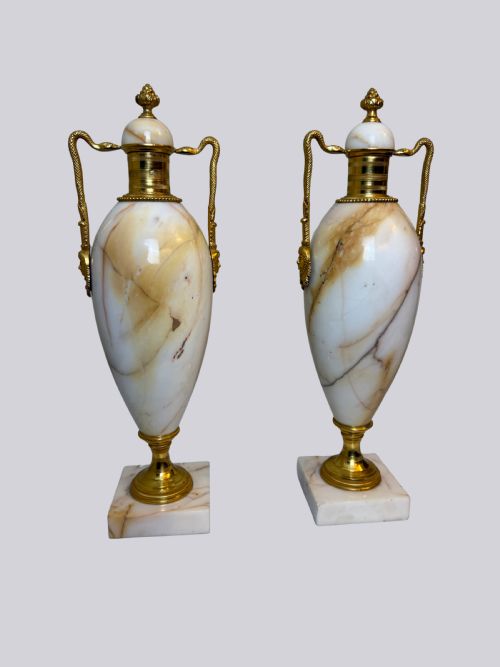
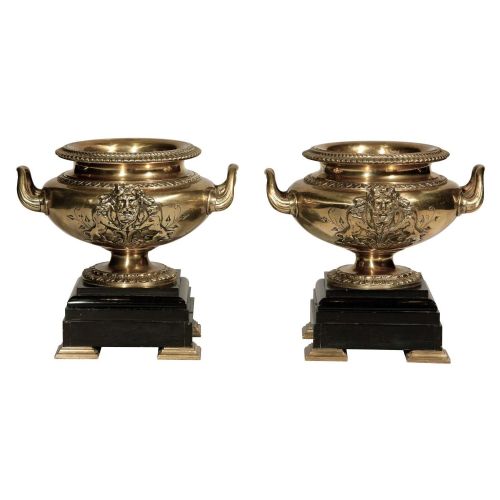
These gilt bronze marble urns combine classical metalwork with carved stone plinths to anchor period interiors with distinct architectural weight.
Gilt Bronze Marble Urns
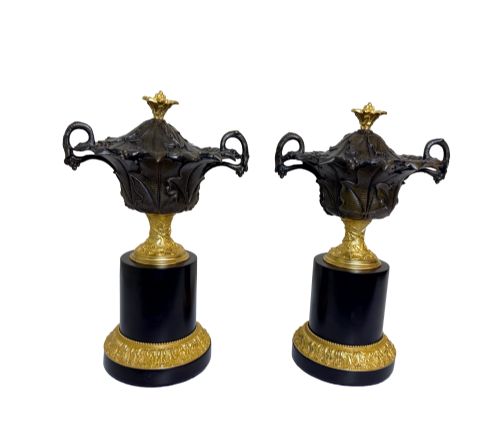
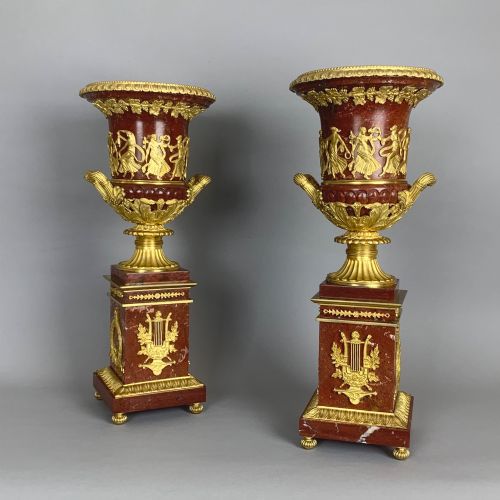
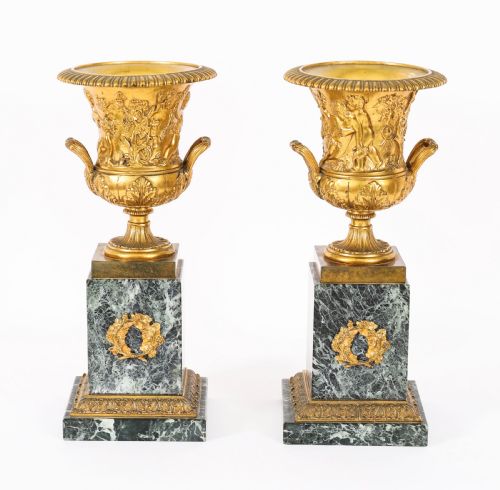
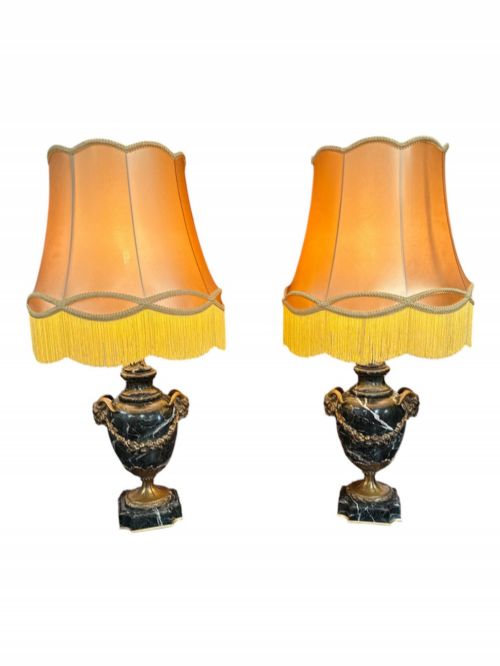
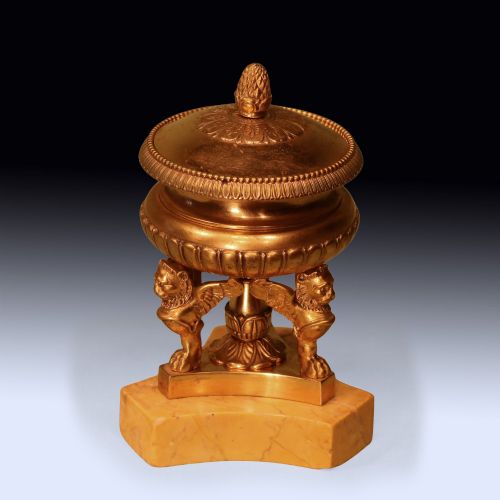
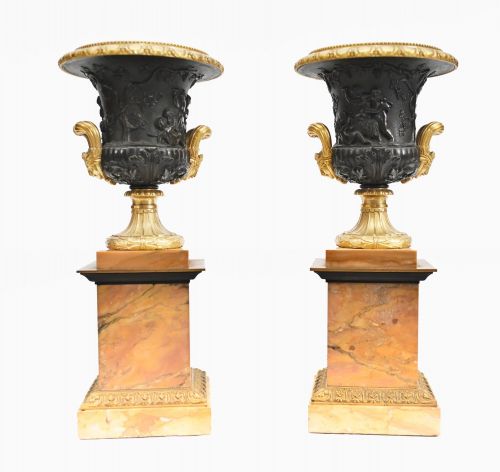
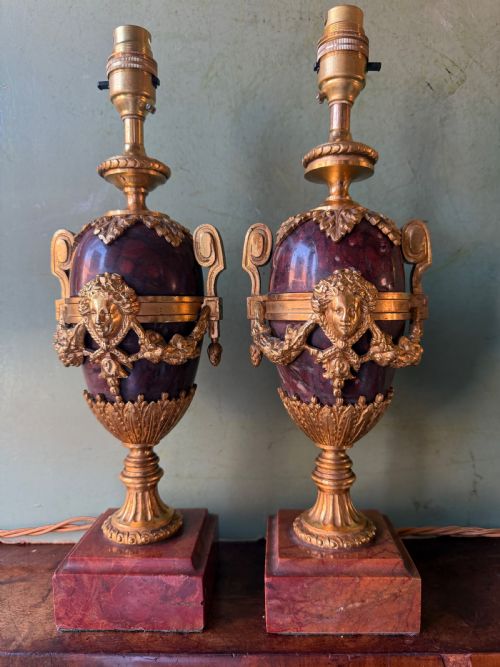
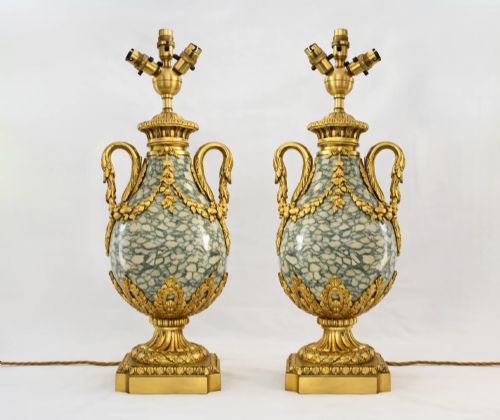
When you search for gilt bronze marble urns, you encounter decorative objects and functional conversions dating from the nineteenth century. These pieces predominantly originate from French workshops adhering to Neoclassical, Empire, and Louis XVI revival styles. Pairs designed as garnitures, table lamps, or cassolettes dominate the selection.
The forms draw heavily on Grand Tour classical inspirations, often featuring handles, pedestal bases, and mounts cast in bronze and highlighted with ormolu. The stone bodies utilise various forms of marble, including white, green, and rouge varieties, paired with bronze elements. Many surviving examples have been adapted over time to function as electric lamps.
The inventory encompasses ornamental urns, inkwells, and mantel clock garniture sets that integrate stone and metalwork. These items reflect nineteenth-century European interpretations of classical antiquity, bridging decorative arts and functional domestic lighting.
Materials and Construction
The manufacture of these objects relies on the combination of cast copper-alloy metals and quarried stone. Bronze and brass components receive a gilt finish or ormolu treatment, where gold amalgam is applied to the metal surface through heat-gilding or electroplating.
Marble bodies are turned on lathes or hand-carved, utilising materials such as white marble, green marble, and rouge marble. Ormolu mounts, handles, and friezes are then mechanically pinned or secured to the stone plinths and urn bodies.
Listings feature nineteenth-century French and Italian pieces, uniting gilt bronze, ormolu, and marble in forms such as cassolettes, table lamps, and clock garnitures.
Quality Variations
The crispness of the bronze casting determines the visual definition of floral swags, drapery, and classical motifs. Finer examples display sharp chasing and hand-finished detailing on the metal surfaces, whereas simpler pieces show softer contours from basic casting.
The selection of the marble body and the precision of its turning dictate the foundational balance of the piece. High-grade items employ unblemished stone with uniform veining, integrated securely with heavy, well-balanced metal mounts.
Louis Goret·Achille Brocot
The Gilt Bronze Marble Urns Glossary
- Ormolu
- A technique of applying finely ground gold-mercury amalgam to a bronze object, followed by firing to drive off the mercury. This produces a rich golden finish characteristic of decorative mounts on nineteenth-century pieces.
- Cassolette
- A decorative vase or urn with a reversible lid that functions either as a vessel or a burner. Many nineteenth-century examples feature interchangeable candle nozzles or flame finials.
- Campana
- A classical bell-shaped form derived from ancient pottery and metal vessels. These urns feature flared rims and tapered lower bodies mounted on square plinths.
- Garniture
- A coordinated set of ornamental objects, typically comprising a mantel clock flanked by matching candelabras or urns. They were designed to sit symmetrically on a fireplace mantel.
- Grand Tour
- A cultural journey undertaken by nineteenth-century elites across Europe, which generated a strong demand for classical souvenirs and reproductions. Many bronze and marble pieces commemorate this era.
Gilt Bronze Marble Urns: Frequently Asked Questions
What are cassolettes used for?
Cassolettes serve primarily as ornamental decorative urns. Their reversible lids allow them to shift between a solid stone vase profile and a burner configuration.
In nineteenth-century interiors, they occupied prominent positions on mantelpieces and side tables as balanced decorative objects.
How do you clean gilt bronze mounts?
Cleaning requires a soft cloth to remove dust without abrasive action. Chemical polishes strip the historic gold surface and must be avoided entirely.
Preserving the original ormolu layer involves gentle dusting and avoiding moisture on vulnerable stone sections.
Are these urns original period pieces?
The available selection consists mainly of nineteenth-century French and Italian productions. These items draw heavily on eighteenth-century Louis XVI and classical design vocabularies.
Many electrical conversions occurred during the twentieth century while retaining the antique bronze and marble bodies.
What is a clock garniture?
A clock garniture is a matched set containing a central mantel clock accompanied by two matching side pieces. These side pieces commonly take the form of urns, candelabras, or cassolettes.
Such sets created a unified decorative scheme across drawing room mantelpieces during the Victorian period.