





Antique Marble Garniture
An antique marble garniture brings together a central mantel clock and matching side pieces, anchoring a room with heavy stone and metalwork.
Antique Marble Garniture
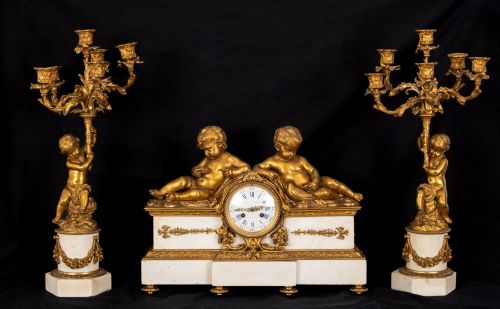
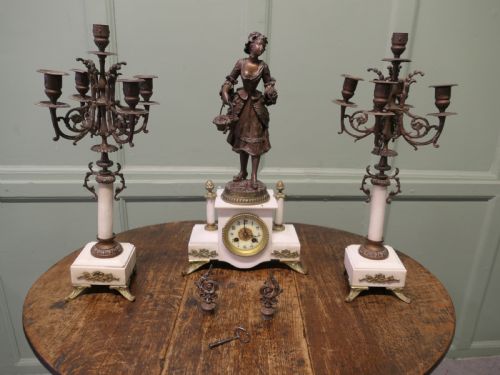
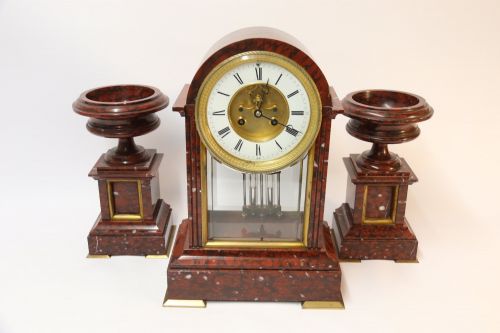
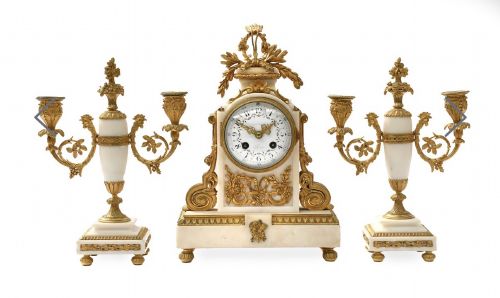
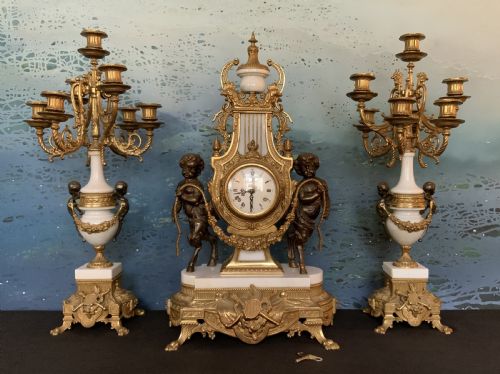
An antique marble garniture consists of a central mantel clock paired with matching side pieces such as urns, vases, candelabra, or candleholders. These three-piece sets were designed to sit symmetrically on a fireplace mantel or console table.
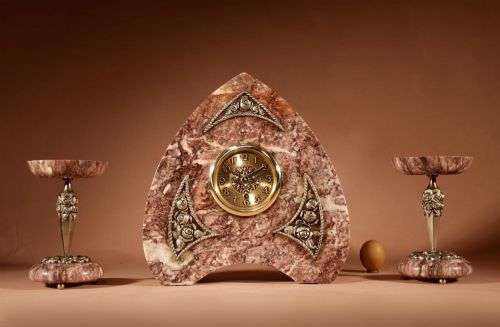
Most examples found here hail from nineteenth-century France, though later interpretations stretch into the Art Deco period of the 1920s and 1930s. The core material is stone, frequently paired with cast metals to form balanced decorative suites.
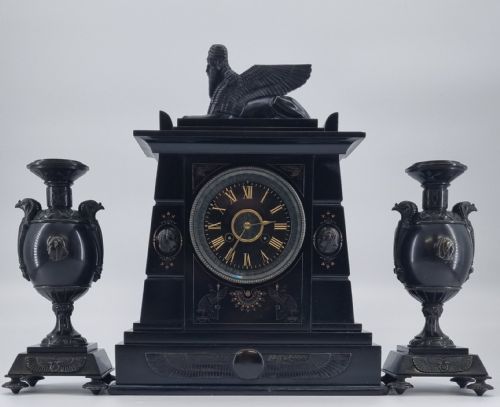
The styles mirror broader European revivals, drawing heavily on French Empire, Louis XVI, and Neoclassical motifs, alongside Egyptian Revival themes and later geometric Art Deco designs.
Materials and Construction
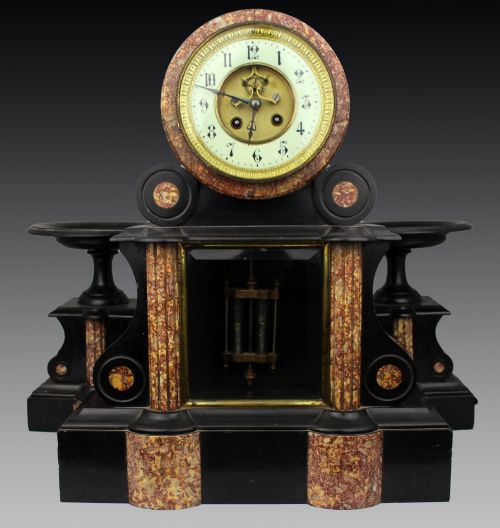
The structural body relies on heavy carved stone, utilising black marble, white marble, red marble, siena marble, pink marble, white onyx, and black slate. These stones are cut into architectural blocks, columns, or portico shapes to house the clock movements.
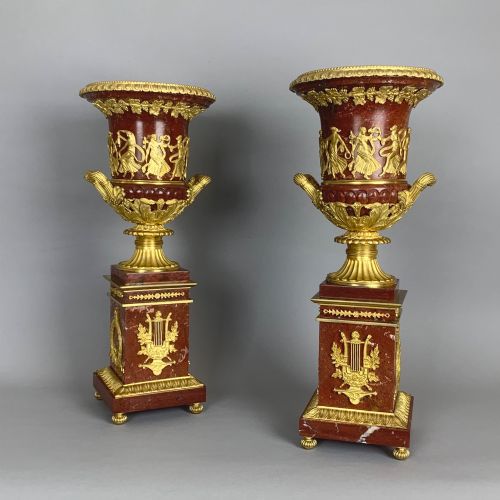
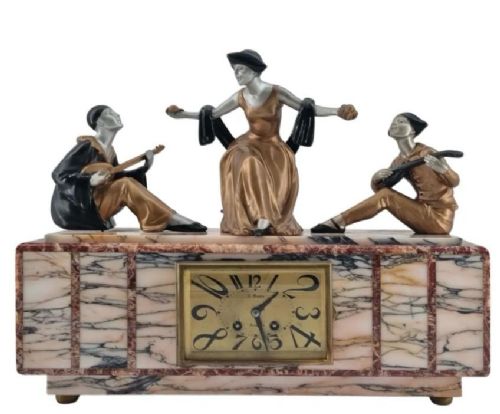
Foundries supplied cast gilt bronze, brass, ormolu, and enamel components to accent the stone. Figures of cherubs, figural pierrots, and classical mounts were pinned or screwed directly into the marble bodies.
Materials recorded across the inventory include marble, gilt bronze, brass, ormolu, enamel, white onyx, and glass.
Judging the Workmanship
The standard of a garniture rests on the precision of the stonecutting and the crispness of the metal casting. Sharp, deeply chased gilt bronze details distinguish fine French foundry work from simpler production pieces.
Integrated design coherence separates standard sets from exceptional ones, where the clock dial, side urns, and figural bronzes share a unified sculptural language and identical patination.
Japy Frères·Samuel Marti·Mougin
The Antique Marble Garniture Glossary
- Garniture
- A matching set of ornamental objects for a mantelpiece, typically comprising a clock flanked by two matching vases or candelabra.
- Ormolu
- Gilded bronze, produced by applying a mercury-gilding technique to cast bronze objects during the eighteenth and nineteenth centuries.
- Portico clock
- A clock housed within an architectural frame supported by four or more columns, commonly executed in marble.
- Candelabra
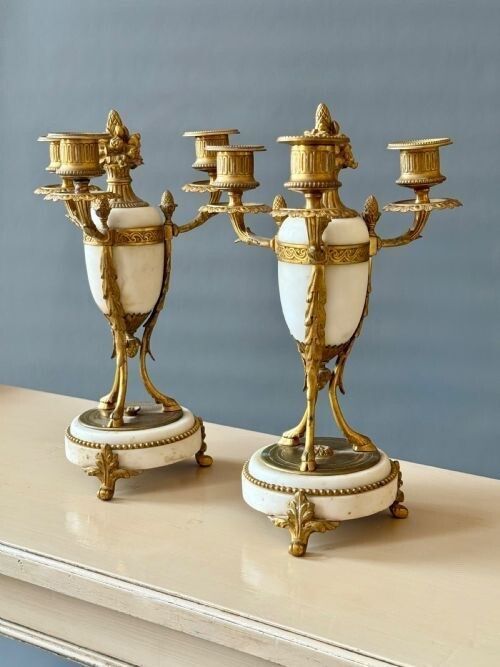
- A branched candlestick holder designed to hold multiple candles, frequently made as the side pieces in a garniture set.
Antique Marble Garniture: Frequently Asked Questions
What is included in a garniture set?
A complete set contains a central mantel clock accompanied by two matching side objects. These companion pieces take the form of urns, candelabra, or vases.
They are manufactured to match the materials and decorative style of the clock, creating a balanced display across a mantelpiece.
How do I identify a nineteenth-century piece?
Nineteenth-century sets generally rely on heavy black, white, or red marble combined with cast gilt bronze or ormolu. Look for classical Revival styles such as Louis XVI or French Empire.
Maker signatures stamped on the clock movements or dials also help date the piece accurately to this era.
Where should I place a garniture?
These sets are traditionally displayed on a fireplace mantelpiece, where the central clock sits between the two flanking urns or candelabra. They also suit wide sideboards or console tables.
Because the stone is heavy, ensure the supporting surface is sturdy enough to bear the combined weight of all three pieces.
What is the difference between Art Deco and earlier sets?
Art Deco garnitures from the 1920s and 1930s feature geometric lines, stylized figural elements like pierrots, and streamlined marble bases. Earlier nineteenth-century sets focus on classical symmetry, cherubs, and ornate ormolu mounts.
The materials also shift, incorporating white onyx or patterned marble alongside simplified metalwork.