



Louis XVI Marble Urns
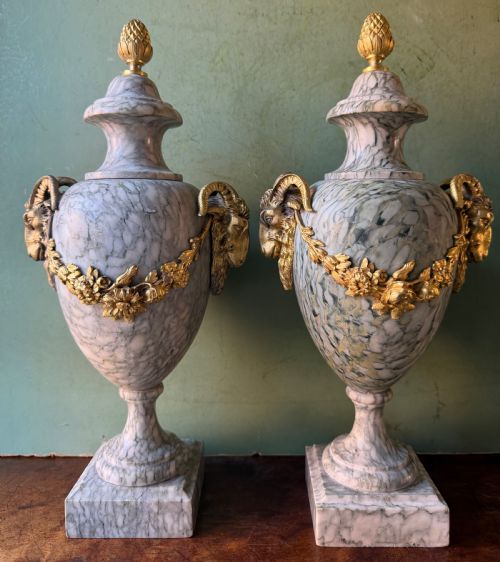
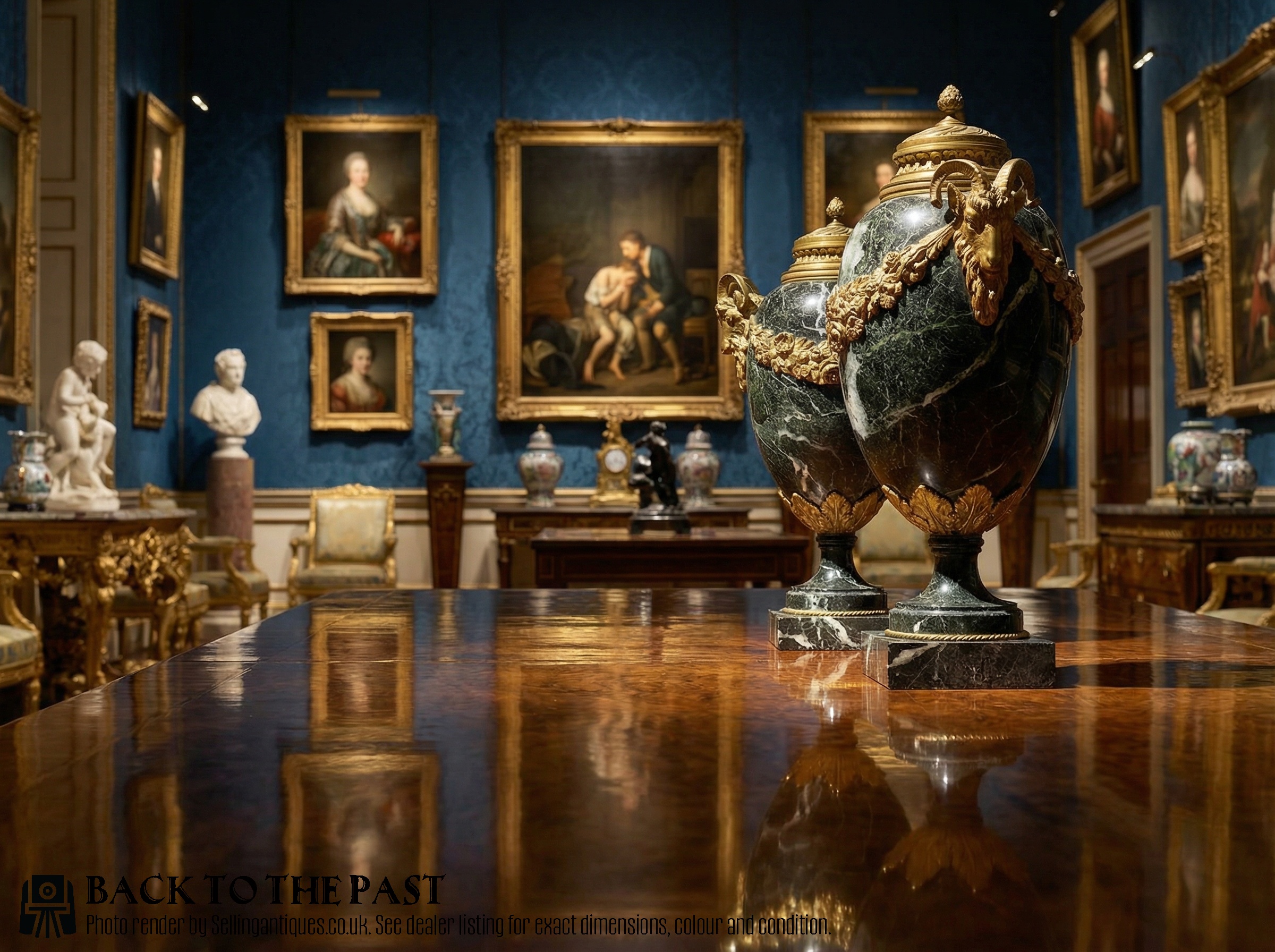
Louis xvi marble urns bring classical French elegance to a room, combining cool stone with gilded mounts.
Louis XVI Marble Urns
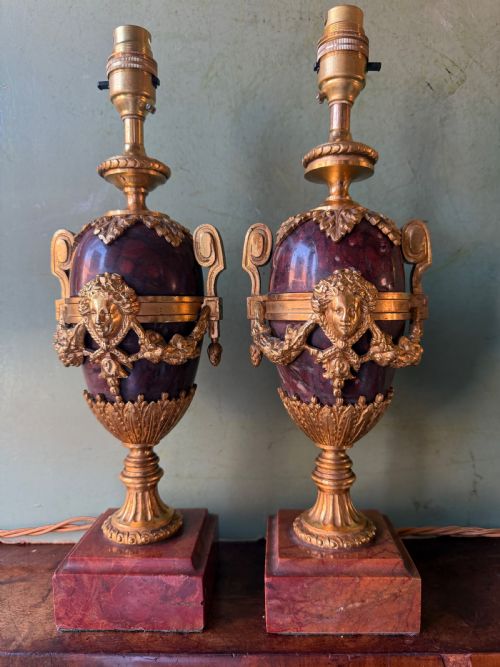
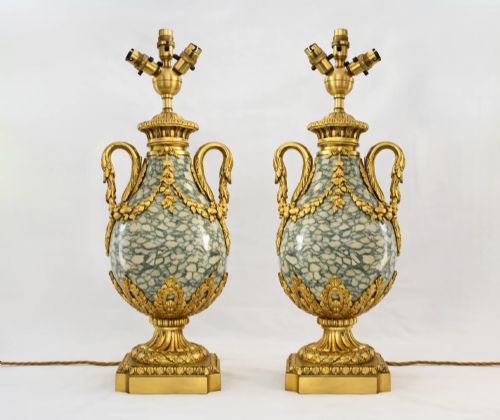
Louis xvi marble urns encompass decorative vessels, cassolettes, and lamp conversions originating mostly from the nineteenth century in revival styles. These objects draw directly upon eighteenth-century French neoclassical design principles, favouring symmetry, architectural proportion, and classical motifs.
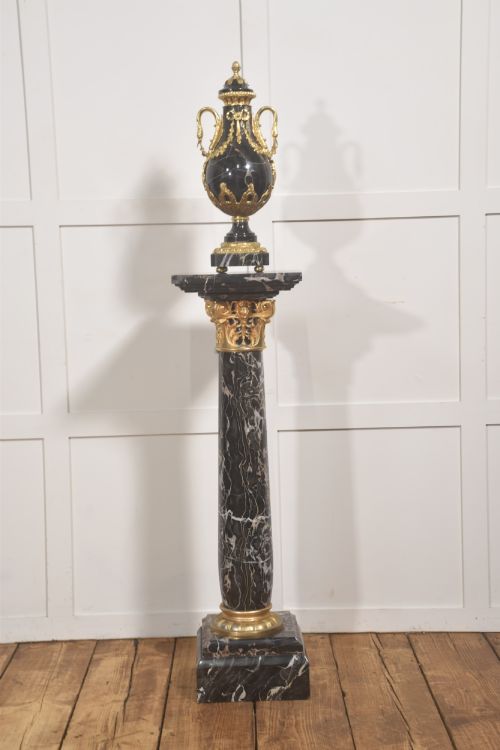
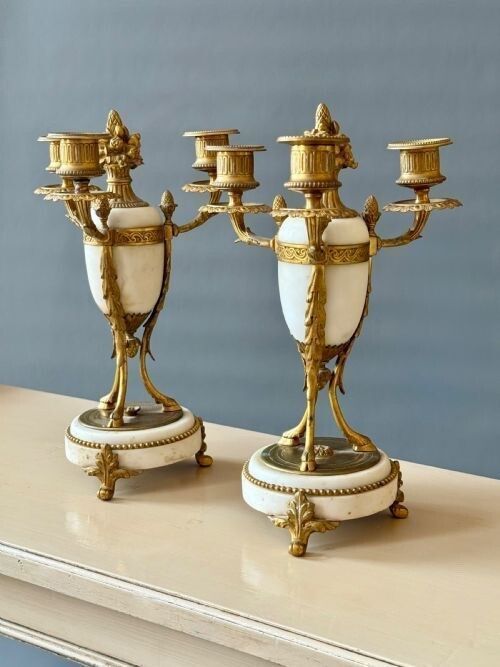
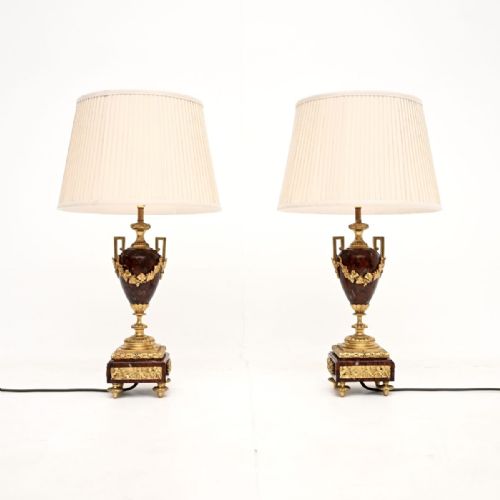
The buyer meets pairs of white or rouge marble urns mounted in ormolu, frequently adapted as table lamps or fitted with reversible lids to function as cassolettes. They appear alongside mantel clocks, candelabra, and garnitures within the broader categories of French decorative arts.
How they were made
Makers shaped natural stone into bodies and plinths, pairing white, green, or rouge marble with cast bronze and brass components. Gilt bronze and ormolu mounts were applied to accent handles, rims, and bases.
Cassolettes were constructed with double-sided lids, allowing the vessel to transform between an open vase and a closed urn. Metal elements received fire gilding or chemical patination to achieve a rich metallic finish alongside the polished stone.
Louis XVI Marble Urns Retail Price Guide 2026
Typical asking prices for louis xvi marble urns among the pieces listed under this phrase on Sellingantiques today, from the lower quarter to the upper quarter. They describe what is for sale here now, not the wider market.
Listings feature items spanning the eighteenth century through the 1930s, dominated by nineteenth-century French revival pieces.
What varies in quality
The refinement of the cast ormolu mounts dictates the standing of an urn, separating crisp, hand-chiseled detailing from soft, shallow production. Superior pieces display deep chasing on foliage, swags, and classical masks.
The selection and turning of the marble itself determine the visual weight, with dense, evenly coloured stone and symmetrical lathe work separating finer examples from simpler utilitarian pieces.
Louis Goret·Sacre
The Louis XVI Marble Urns Glossary
- Cassolette
- A dual-purpose decorative vessel with a reversible lid that functions as either a solid urn or a holder for tapers and incense. These pieces often appear converted to electric lamps.
- Ormolu
- Finely chopped gold amalgamated with mercury and applied to bronze mounts through heat. This historic technique provides a distinct golden lustre unlike modern electroplate.
- Garniture
- A coordinated set of ornaments, usually comprising a mantel clock flanked by matching candelabra or urns. They were designed to sit symmetrically upon a fireplace mantel.
- Neoclassical
- A revival style drawing inspiration from the classical art and architecture of ancient Greece and Rome. It prioritises straight lines, restraint, and classical symmetry.
- Rouge marble
- A decorative limestone variety featuring deep red and white veining, frequently utilised in French nineteenth-century decorative objects.
Louis XVI Marble Urns: Frequently Asked Questions
What is a cassolette?
A cassolette is a decorative vase featuring a lid that turns over to reveal a candle socket or burner. This allows the vessel to shift between a solid ornamental urn and a functional holder.
In nineteenth-century French interiors, these pieces sat on mantelpieces or side tables as part of symmetrical arrangements.
Are these urns period or revival?
The majority of pieces found here date from the nineteenth century, created during the Louis XVI revival and neoclassical movements. They imitate the aesthetic of eighteenth-century French royal courts.
Master artisans of the later period utilised older decorative vocabulary to produce high-status decorative items for bourgeois homes.
How do I live with them?
These urns suit placement on mantelpieces, sideboards, or pedestals where their silhouette and contrasting stone and metal can be appreciated. Many surviving examples have been converted into table lamps to function in modern rooms.
Position them away from direct heat sources to protect the stone and the historical gilt surfaces from unnecessary wear.
How do I clean marble and ormolu?
Dust the stone and metal components gently with a dry, soft microfiber cloth to prevent grime accumulation. Avoid abrasive cleaners, water, or chemical solvents that strip the historical gilding from the bronze mounts.
Treat the polished marble surface with care to preserve its original sheen and prevent staining.