
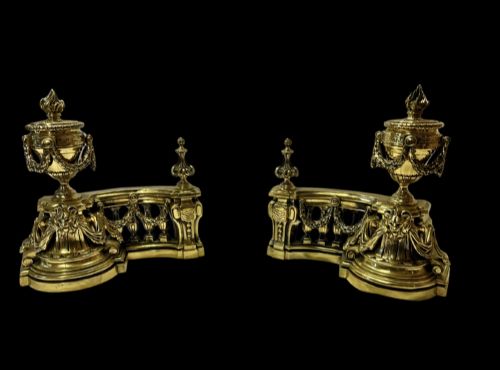


Louis XVI Style Urns
Louis xvi style urns bring classical French proportion and gilt bronze mounts into a room through nineteenth-century revivals.
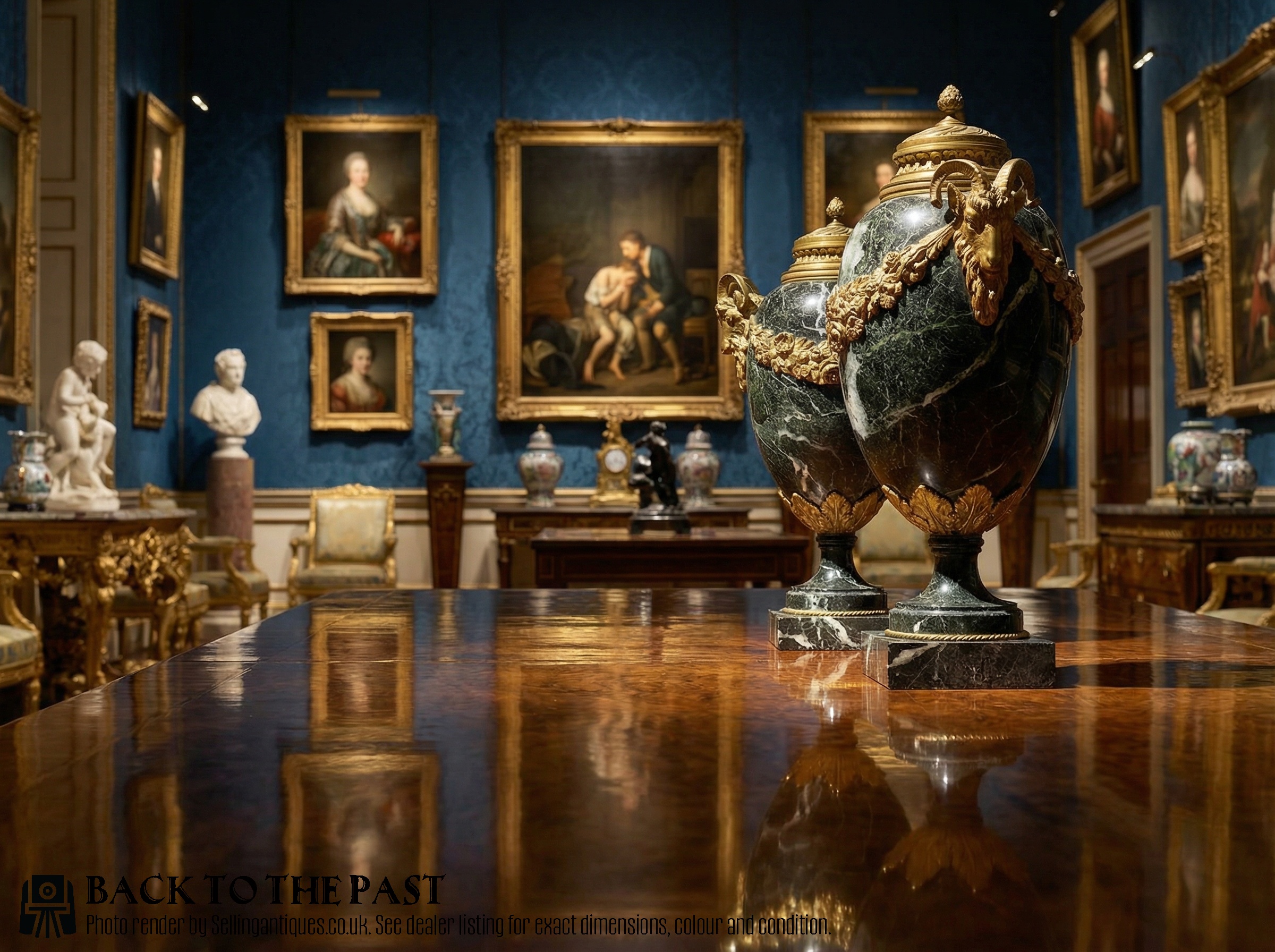
Louis XVI Style Urns
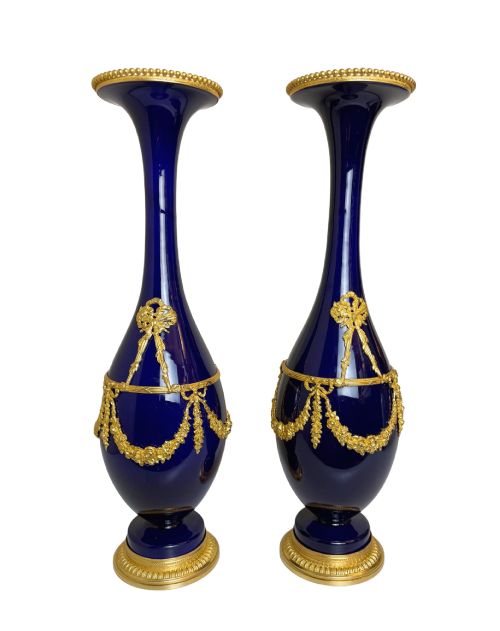
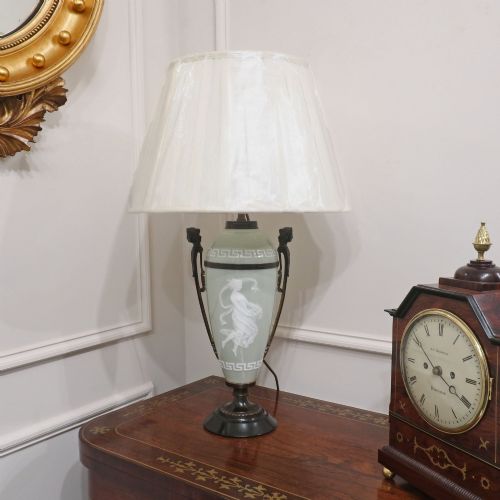
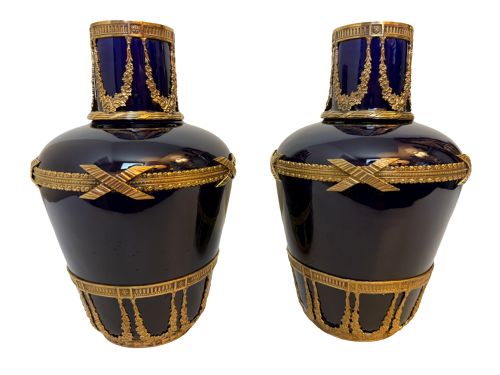
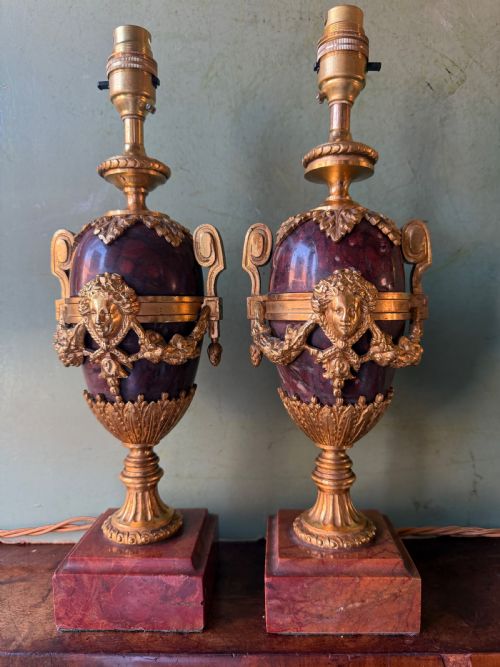
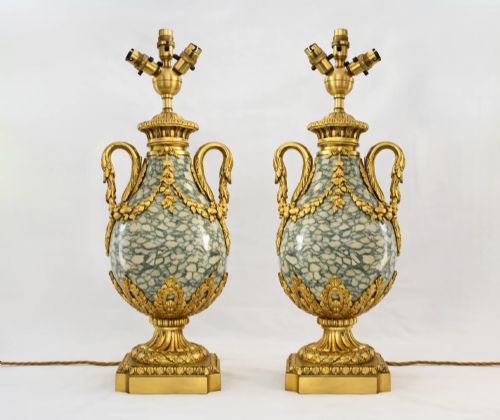
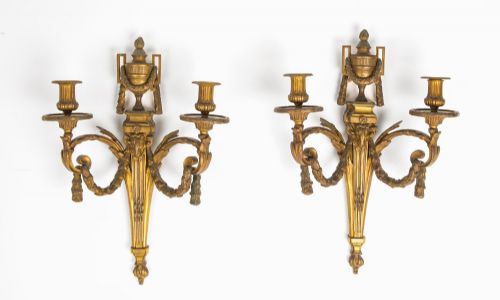
Louis xvi style urns embody the neoclassical symmetry and restrained architectural ornament of eighteenth-century France, reinterpreted during the nineteenth century. Makers produced these decorative forms in pairs, frequently adapting them as cassolettes or mounting them as table lamps.
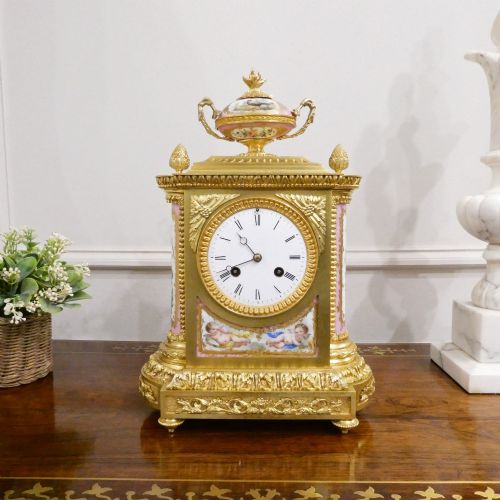
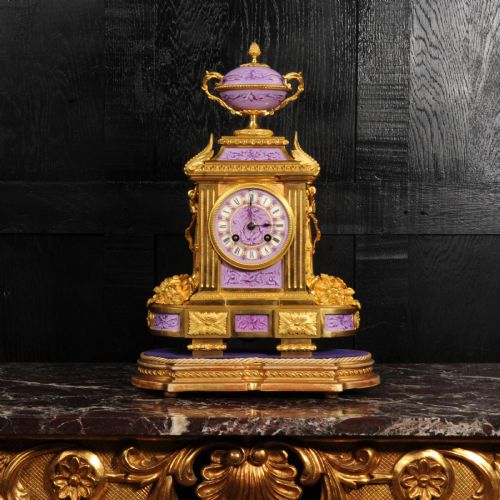
The objects appearing on this page span the 1860s to the 1930s, capturing a sustained Victorian and Edwardian appetite for French design. Marble bodies paired with ormolu mounts dominate the selection, alongside porcelain and bronze examples.
How they were made
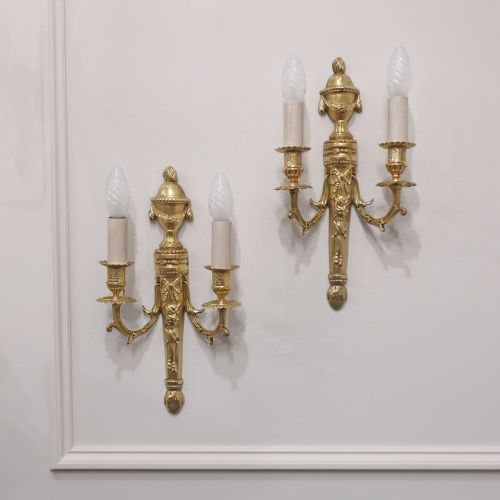
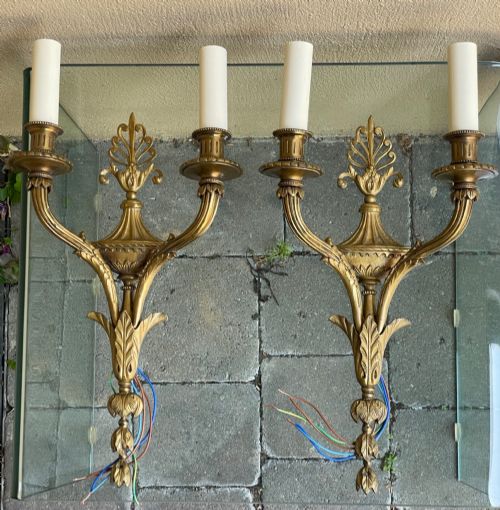
Craftsmen built these pieces by combining turned marble or cast porcelain bodies with intricately chased ormolu and gilt bronze mounts. The metalwork required precision casting followed by hand-chasing to define foliage, drapery, and classical motifs.
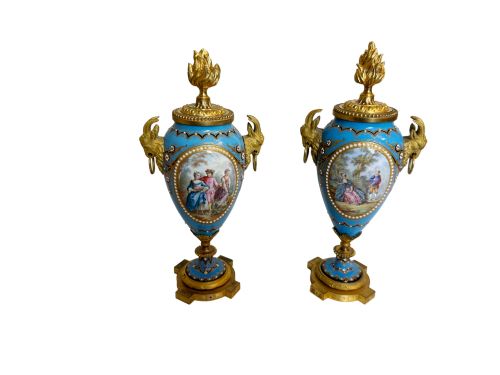
Porcelain elements often featured pate sur pate decoration or hand-painted panels, secured to the stone and metal components with threaded bronze fittings.
Several pairs incorporate ram's head masks on their ormolu mounts, glaring sternly across the mantelpiece.
What varies in quality
Quality rests in the crispness of the bronze chasing and the selection of the stone. Superior examples display sharp definition in foliage and masks, whereas lesser pieces show softened cast details.
The integration of the materials dictates the overall success of the piece, with finer works demonstrating seamless joints between the ormolu mounts and the marble or porcelain bodies.
Jean-Baptiste Delettrez·Achille Brocot·Casier
The Louis XVI Style Urns Glossary
- Ormolu
- Gilded bronze used for decorative mounts on furniture and objects. This technique involves applying a gold amalgam to a bronze base and heating it to drive off the mercury.
- Cassolette
- A dual-purpose decorative vessel with a reversible lid that functions as an urn or a candleholder. These pieces often feature in pairs on mantelpieces.
- Pate sur pate
- A ceramic decorating technique where liquid clay is built up in successive layers on a coloured clay body to create a low-relief cameo effect.
- Neoclassical
- A style spanning the eighteenth and nineteenth centuries that revived classical Greek and Roman motifs, architectural symmetry, and restrained ornamentation.
- Casting
- The process of pouring molten metal into a mould to form the primary shape of a mount before hand-chasing refines the surface texture.
Louis XVI Style Urns: Frequently Asked Questions
How do you date nineteenth-century pieces?
Dating relies on the foundry marks, the style of the ormolu chasing, and the integration of electrical conversions where lamps are concerned. Nineteenth-century pieces often reflect revival periods spanning the Second Empire and the Third Republic.
Materials such as rouge marble and specific porcelain bodies offer further chronological markers.
Were these originally electrified?
Nineteenth-century urns and cassolettes were conceived as decorative objects or candleholders rather than lighting fixtures. Many examples were subsequently adapted into table lamps during the twentieth century.
This conversion usually involved drilling through the base or running cord through existing central mounts.
How do you clean ormolu?
Ormolu requires gentle dusting with a soft brush to prevent accumulation in the intricate recesses of the chased bronze. Avoid abrasive polishes, which strip the original mercury gilding from the surface.
Professional conservation is recommended for pieces showing significant tarnish or structural instability.