
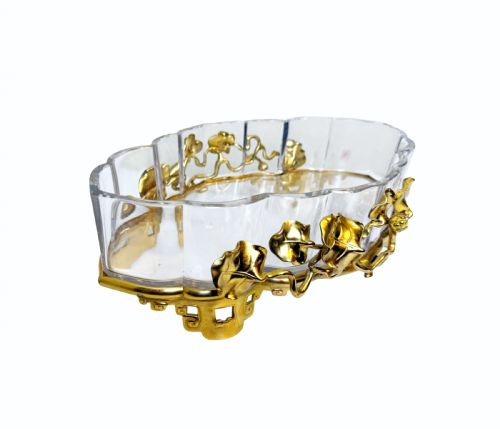
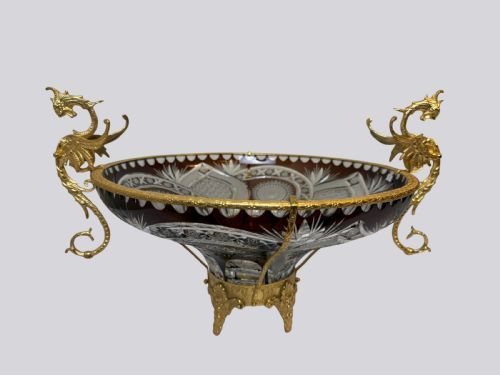


Gilt Bronze Glass Centrepiece
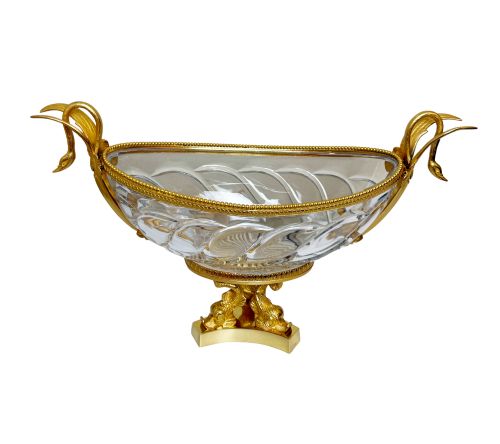
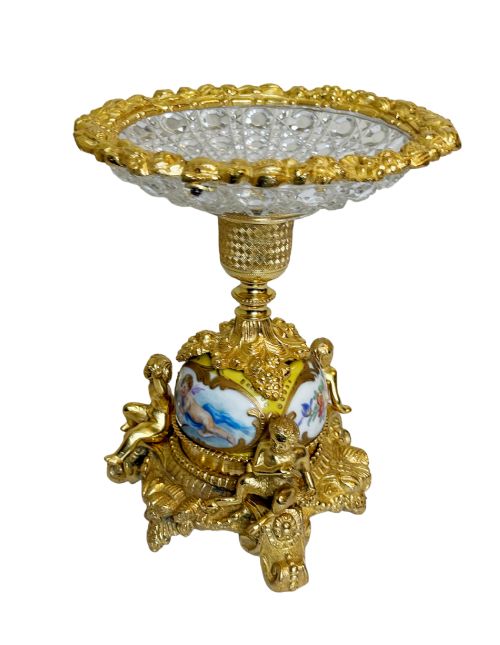
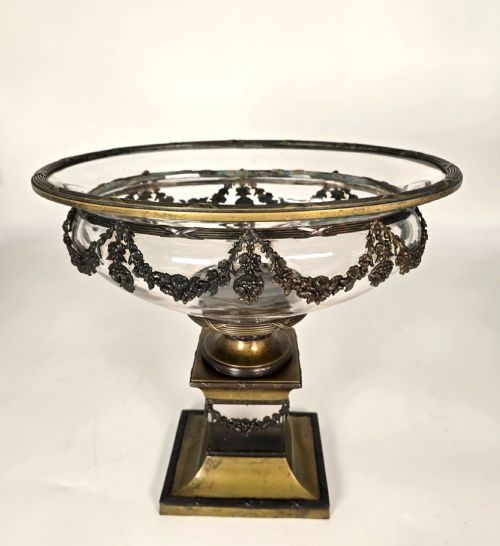
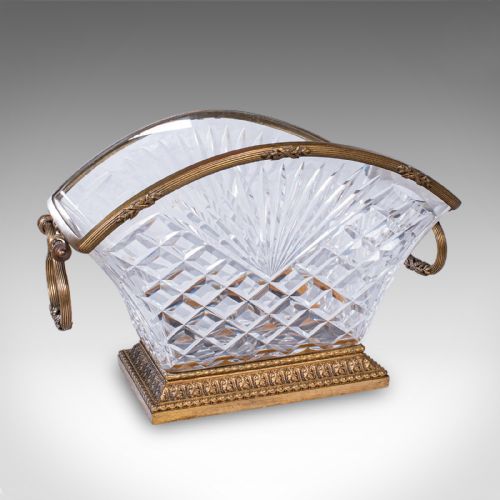
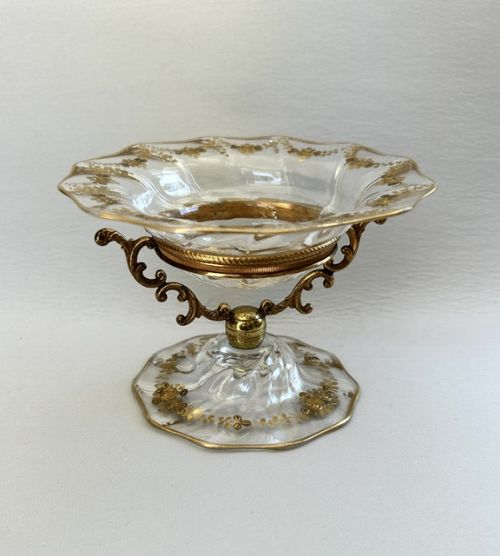
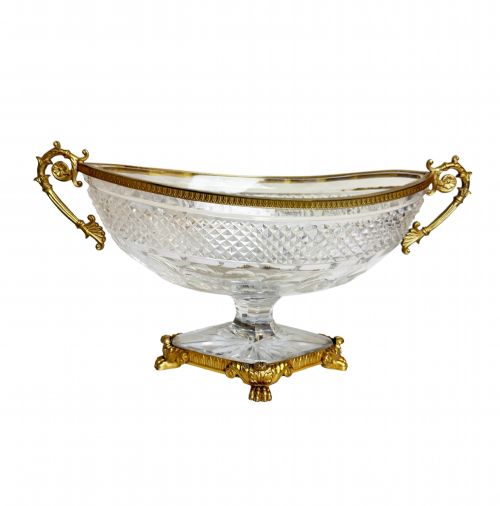
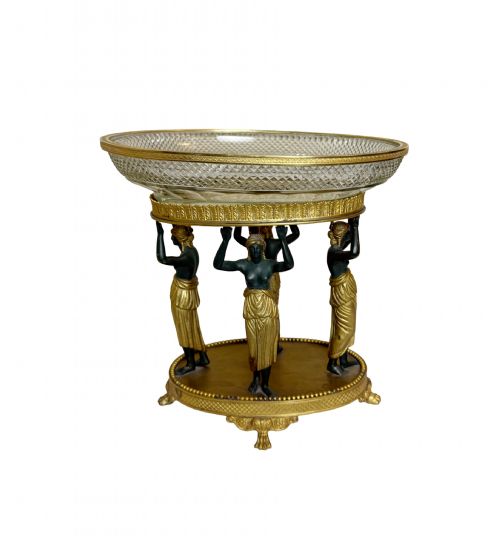
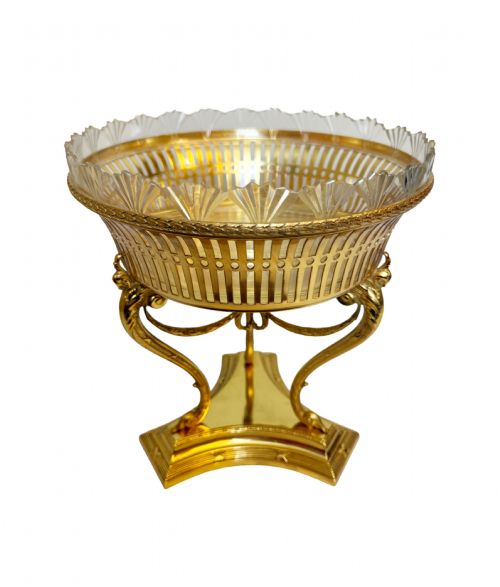
These gilt bronze glass centrepiece examples bring striking nineteenth-century focal points to a table, combining polished metal mounts with heavy cut crystal and glass bowls.
Gilt Bronze Glass Centrepiece
A gilt bronze glass centrepiece serves as a dramatic table ornament, taking the shape of pedestal bowls, jardinieres, serving dishes, and epergnes designed to hold fruit or floral displays. The pieces seen here span from the Victorian era into the early twentieth century, reflecting the grand dining customs of nineteenth-century Europe.
French influence dominates these objects, drawing heavily upon Empire, Neoclassical, and French Rococo Revival styles. Buyers will frequently encounter elaborate metal stands paired with cut crystal or coloured glass inserts, often embellished with figural motifs such as cherubs and mermen.
Materials and construction
The heavy frames utilise gilt bronze, ormolu, and occasionally brass, shaped through casting and chased with meticulous decorative detail to form mounts, stands, and handles. These metal structures provide a secure housing for the glass components.
The glass elements consist of cut crystal, coloured glass, and standard glass shaped into bowls, vases, and dishes. This glass is securely mounted into the bronze framework, frequently incorporating pedestal bases or multi-tiered epergne arrangements.
Several pieces feature sculpted mermen clinging to the metalwork, ensuring your table is guarded by industrious mythical creatures.
Distinguishing quality
Quality rests upon the crispness of the bronze casting and the depth of the chasing on the ormolu mounts, where sharper figurative details such as cherubs or mermen indicate finer craftsmanship. The weight and clarity of the cut crystal or coloured glass insert further set apart the superior examples.
The harmony between the glass vessel and its metal frame dictates the overall success of the piece, with better items showing integrated design where mounts conform precisely to the contours of the crystal bowl.
The Gilt Bronze Glass Centrepiece Glossary
- Gilt bronze
- Metal alloy treated with a layer of gold to give a rich, reflective surface finish. This material forms the primary structural and decorative mount for many table vessels.
- Ormolu
- French term denoting finely applied gold gilding on bronze metalwork. It provides a bright, durable finish characteristic of nineteenth-century decorative items.
- Jardiniere
- An ornamental stand or bowl designed specifically to hold plants or floral arrangements. These vessels often feature pierced metal frames and removable glass liners.
- Epergne
- A large table centrepiece featuring a central dish with multiple branching arms and smaller hanging baskets. They were traditionally utilised for serving fruit, sweets, or flowers.
- Cut crystal
- High-clarity glass shaped by cutting geometric or floral facets across the surface to catch the light. It adds substantial weight and brilliance to the centrepiece assembly.
Gilt Bronze Glass Centrepiece: Frequently Asked Questions
What is a gilt bronze glass centrepiece used for?
These decorative objects were traditionally placed in the middle of dining tables to display fruit, flowers, or sweetmeats during formal meals. They served as conversation pieces that demonstrated the host's taste and wealth.
Today, they function as striking interior ornaments for sideboards, dining tables, or entrance halls, catching the light through their crystal and gilt metal components.
How do I style a centrepiece in a modern room?
Place the piece in the centre of a large dining table or upon a sturdy sideboard where its gilt mounts and crystal bowl can be fully appreciated. Keeping the vessel empty highlights the quality of the cut glass and the detail of the bronze casting.
Alternatively, fill the glass insert with seasonal fruit or floral arrangements to recreate their original nineteenth-century purpose while adding colour and texture to a room.
How can I tell the period of these pieces?
Dating relies on stylistic clues such as the heavy classical motifs of Empire designs or the elaborate scrollwork of French Rococo Revival pieces. The manufacturing techniques seen in the bronze chasing and the weight of the cut crystal also point towards the nineteenth or early twentieth century.
Examining how the bronze mounts are fitted to the glass gives further indication of the period of manufacture, as earlier workshops utilised distinct fastening methods.
What is the difference between ormolu and gilt bronze?
Ormolu specifically refers to the high-quality application of gold to a bronze base, a technique extensively refined by French metalworkers during the nineteenth century. It provides a distinct golden lustre that resists tarnishing.
Gilt bronze is a broader descriptive term for any bronze object coated in gold, encompassing both ormolu and other historic gilding methods found across the various styles represented here.