
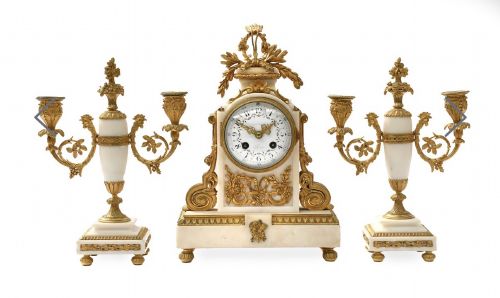
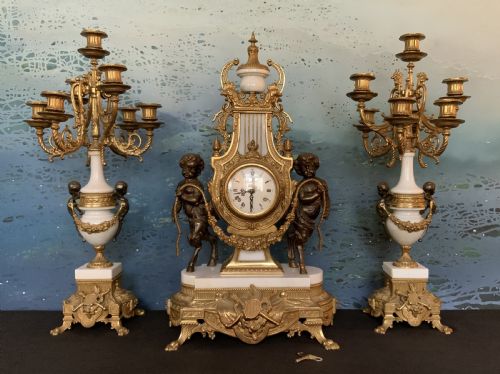


Gilt Bronze Garniture
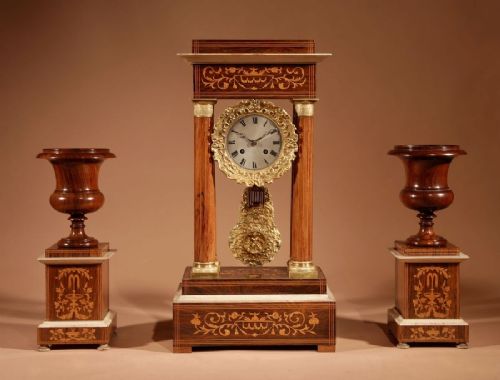
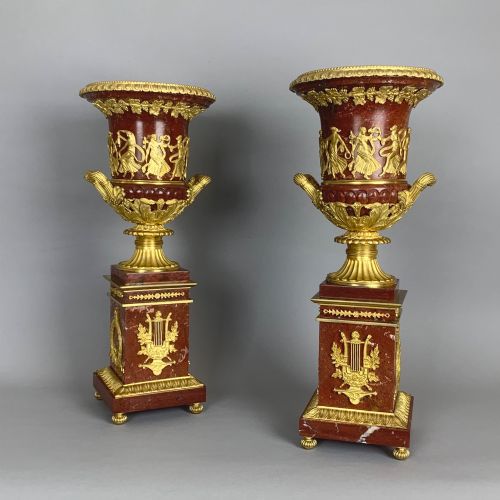
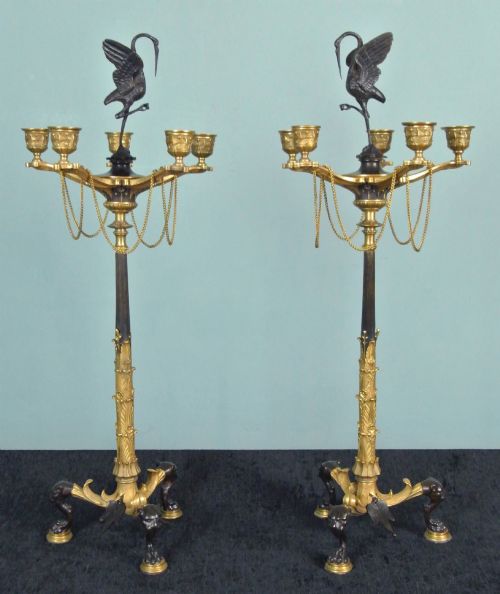
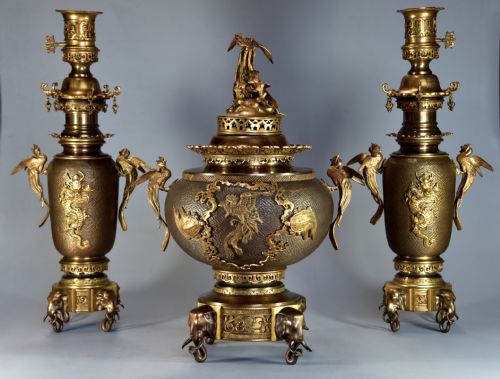
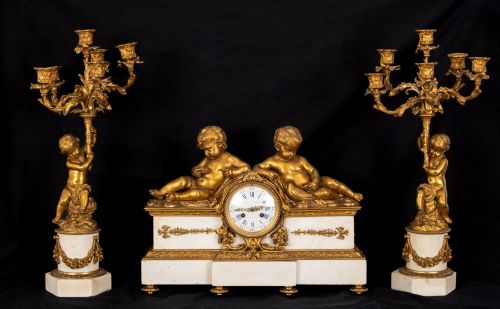
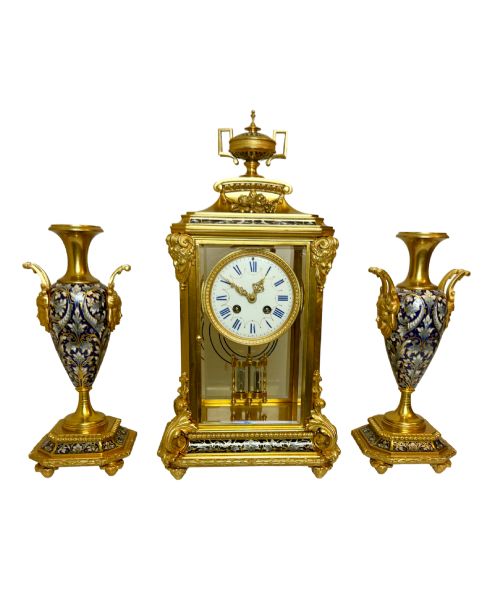
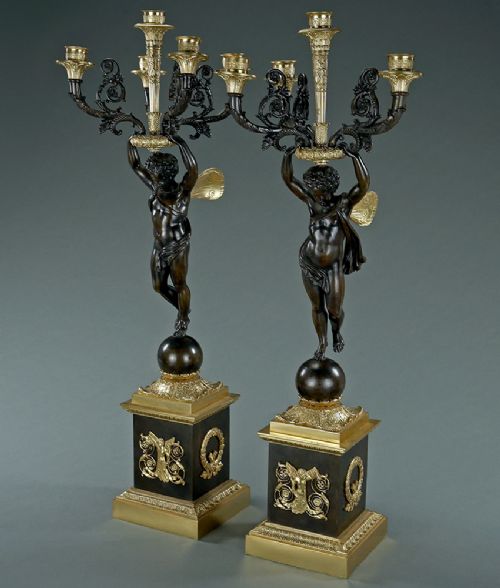
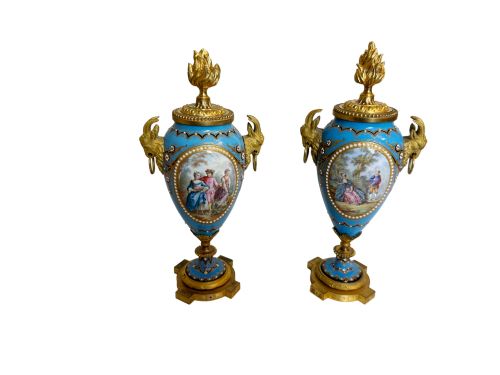
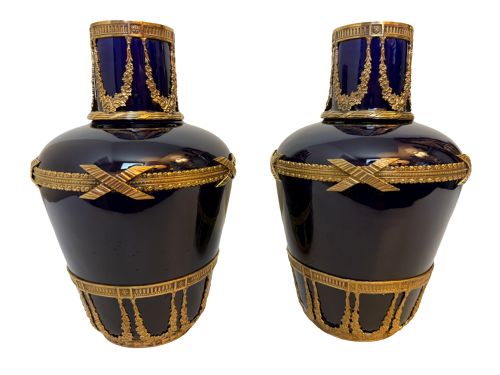
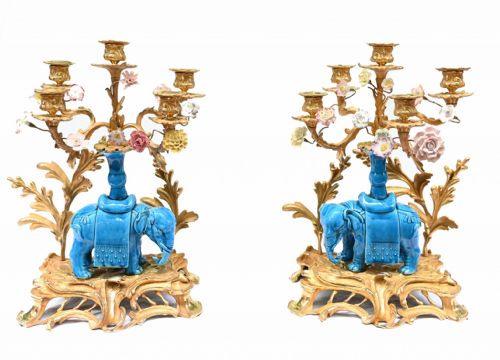
A gilt bronze garniture anchors a mantelpiece with matching urns, candelabra or cassolettes flanking a central clock.
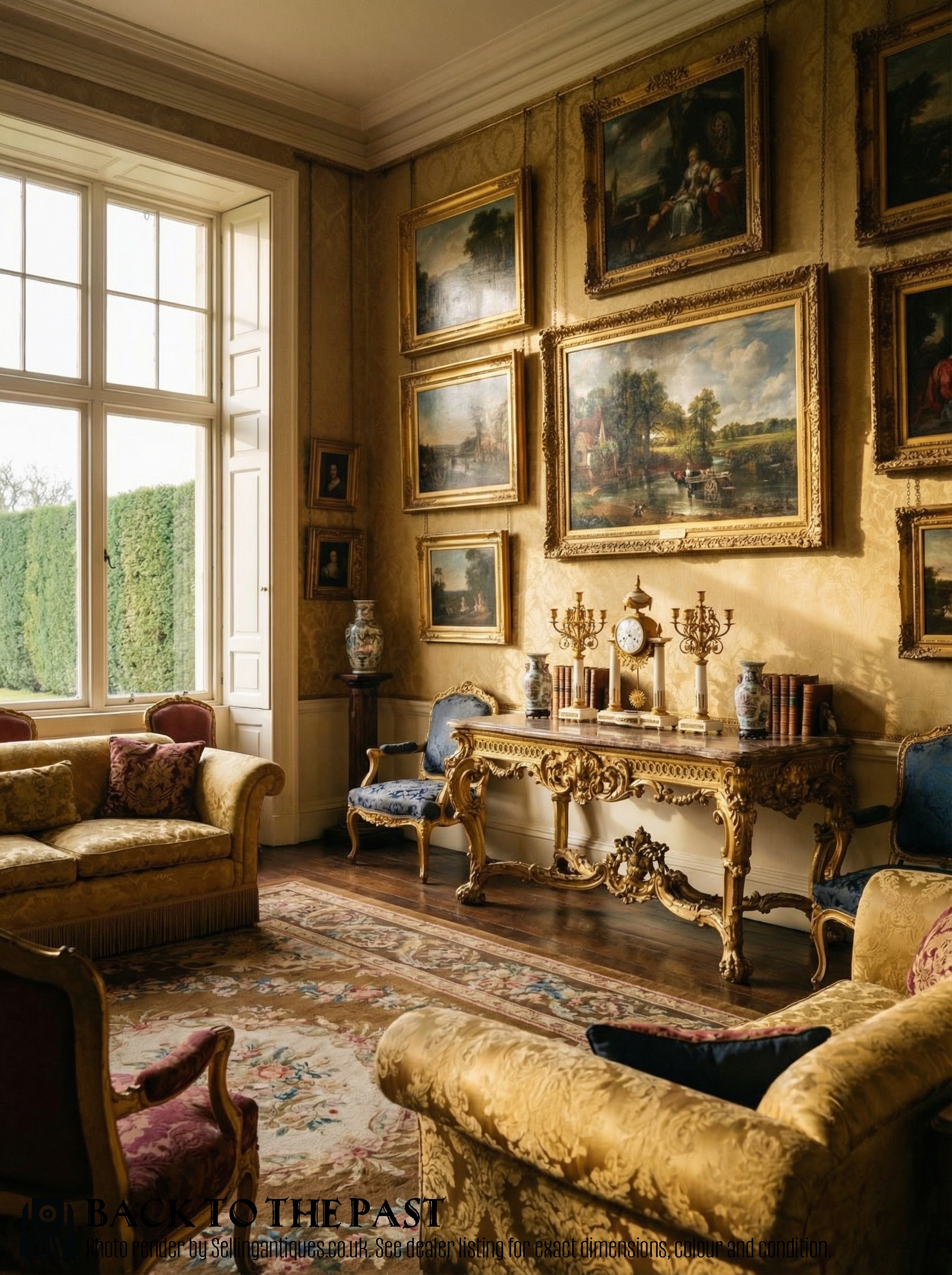
Gilt Bronze Garniture
A gilt bronze garniture consists of a central mantel clock paired with matching side pieces such as candelabra, urns, or cassolettes, designed to create a balanced display. These sets date predominantly from the nineteenth century, with strong representation from Victorian and fin-de-siècle periods.
The most common configurations on this page pair a striking clock with matching candelabra or lidded urns, frequently incorporating materials such as white marble, porcelain, onyx, and enamel alongside the metalwork.
Materials and construction
Maker's workshops cast bronze and ormolu into ornate mounts, scrolls, and figural elements, applying fire gilding or gold plating to achieve a brilliant metallic sheen.
Casting is combined with carved white marble, onyx, slate, and painted porcelain bodies, often integrated with champlevé enamel or glass panels to add colour and texture.
Gilt Bronze Garniture Retail Price Guide 2026
Typical asking prices for gilt bronze garniture among the pieces listed under this phrase on Sellingantiques today, from the lower quarter to the upper quarter. They describe what is for sale here now, not the wider market.
Listings feature nineteenth-century French and Victorian pieces combining gilt bronze, ormolu, marble, porcelain, and enamel in clock sets and candelabra.
Assessing quality and finish
Quality rests in the crispness of the bronze chasing, where sharper, deeper hand-tooling on foliage and figures distinguishes superior sets from softer, cast-only production.
The choice and execution of secondary materials dictate overall merit, separating standard cast-metal sets from those incorporating finely painted Sèvres porcelain, heavy marble bases, and intricate enamel work.
Barbedienne·Henry Dasson
The Gilt Bronze Garniture Glossary
- Garniture
- A set of matching ornamental objects designed to be displayed together on a mantelpiece or sideboard. A clock garniture typically includes a central timepiece and two matching side pieces.
- Ormolu
- Gilded bronze produced by applying a mixture of gold and mercury to a bronze base and heating it. The technique creates a durable, warm metallic finish common in French decorative arts.
- Cassolette
- A reversible ornamental vase with a dual-purpose lid that flips to serve as either a solid urn or a candleholder. These often feature decorative gilt bronze mounts over marble or porcelain bodies.
- Portico clock
- A mantel clock housed within a architectural frame supported by columns. They frequently appear in nineteenth-century French garniture sets.
- Champlevé
- An enamelling technique where troughs are dug into the surface of a metal object and filled with vitreous enamel paste before firing. It appears on coloured dials and decorative mounts.
Gilt Bronze Garniture: Frequently Asked Questions
What pieces make up a complete garniture set?
A complete garniture set typically includes a central mantel clock accompanied by two matching side pieces, such as candelabra, urns, or vases. These elements are designed in a uniform style to create symmetry on a mantelpiece.
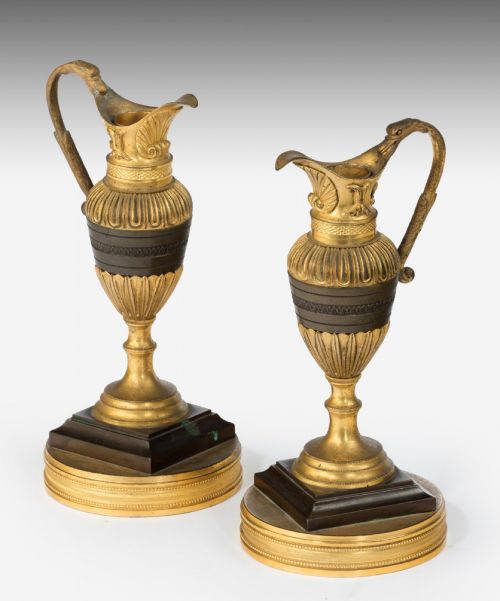
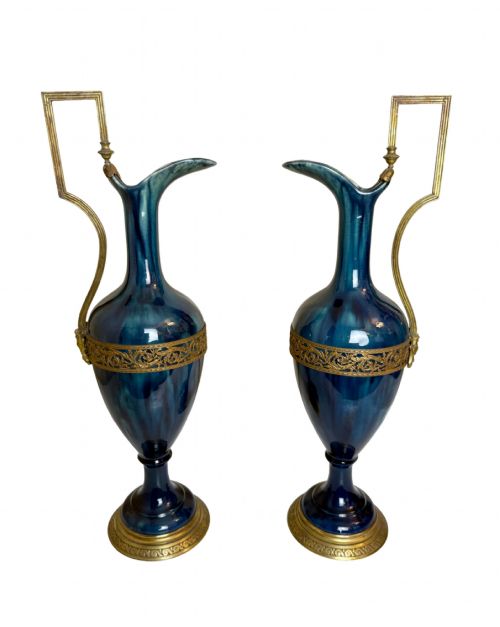
While clock sets are most common, other configurations pair matching cassolettes or porcelain vessels without a clock component.
How do you style a garniture on a mantelpiece?
Place the central clock in the exact middle of the mantel, with the two matching side pieces positioned symmetrically on either side. This traditional arrangement draws the eye inward and balances the visual weight of the room.
Ensure the mantel surface is stable and deep enough to accommodate the heavy marble or bronze bases safely.
Are these clock movements reliable?
Nineteenth-century French movements generally feature eight-day strikes that require periodic winding with a dedicated key. Many retain their original mechanisms, though professional servicing helps maintain accurate timekeeping.
Enthusiasts often have movements cleaned and oiled to ensure smooth operation of the strike and gear trains.
How do I identify Louis XVI style pieces?
Louis XVI style garnitures are distinguished by classical restraint, featuring symmetrical motifs like urns, fluted columns, ribbons, and laurel wreaths. The forms lean towards geometric rectangles and circles rather than asymmetric curves.
Ormolu mounts on these pieces emphasise architectural lines and classical proportions derived from ancient Greece and Rome.