
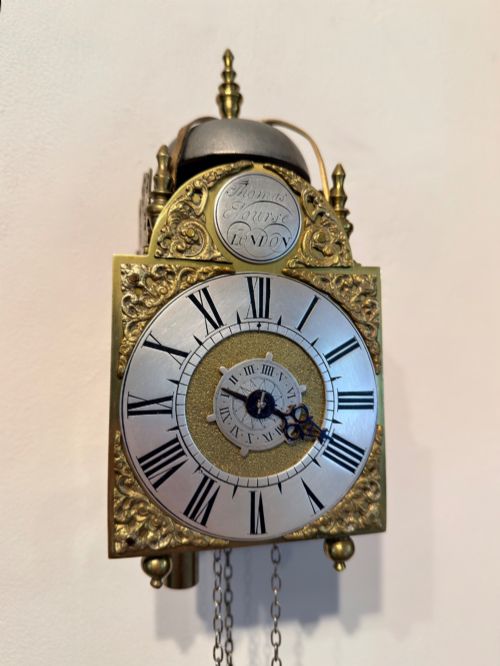
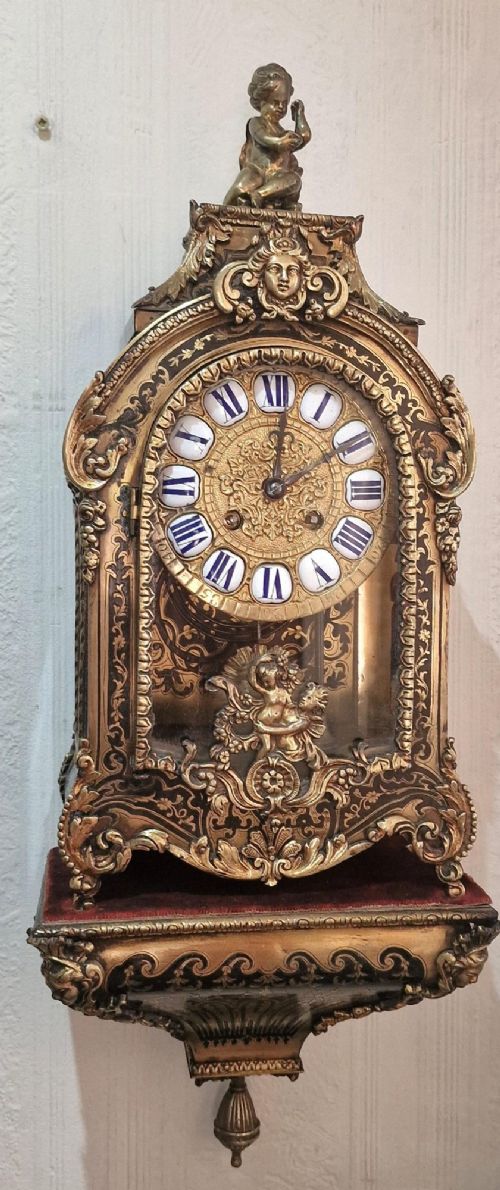


Gilt Brass Wall Clock
A gilt brass wall clock brings the rich ornamentation of past centuries directly to a room, offering both reliable timekeeping and sculptural presence.
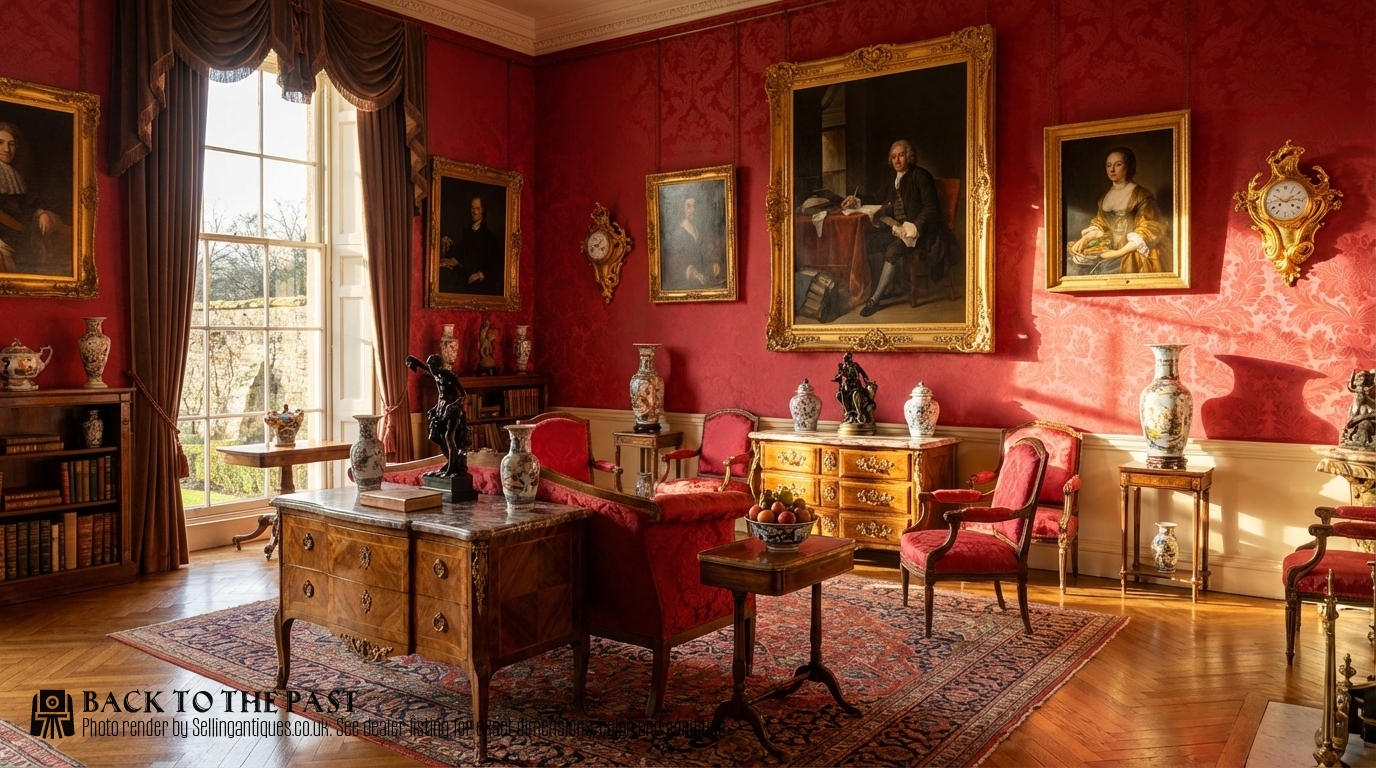
Gilt Brass Wall Clock
When searching for a gilt brass wall clock, you encounter timepieces that span multiple decorative traditions, with French Rococo and Louis XVI cartel clocks appearing frequently alongside Dutch and Georgian examples. These pieces mount directly to a wall, often featuring exposed pendulums, enamel dials, and elaborate metalwork frames that dominate the visual space.
The selection ranges from miniature hook and spike lantern styles to large, substantial cartel clocks decorated with dragons, hunting motifs, or classical scrollwork. Pieces originating from nineteenth-century France form a significant portion of the available range, often displaying the exuberant forms of the Rococo Revival.
Alongside purely brass designs, the evidence shows related forms utilising ormolu, gilt bronze, and gilt metal, sometimes paired with tortoiseshell or walnut bodies. Whether selecting a small Dutch provincial clock or a grand nineteenth-century French cartel, each object functions simultaneously as a mechanical instrument and a decorative wall sculpture.
How they were made
Makers constructed these clocks using cast and chased brass, ormolu, and gilt bronze, applying thin layers of gold over base metals to create a durable, lustrous finish. Metalworkers shaped ornate cartel frames through intricate casting processes, detailing foliage, scrolls, and animal motifs by hand.
Dial faces frequently incorporated white enamel with painted Roman or Arabic numerals, protected behind curved glass panels. Mechanical movements relied on steel gears and brass plates, driven by weights or springs depending on the specific regional tradition and scale of the clock.
Gilt Brass Wall Clock Retail Price Guide 2026
Typical asking prices for gilt brass wall clock among the pieces listed under this phrase on Sellingantiques today, from the lower quarter to the upper quarter. They describe what is for sale here now, not the wider market.
Some nineteenth-century French cartel clocks feature fierce cast dragons clutching the brass dial, proving that time management once required supervision by mythical beasts.
What varies in quality
The standard of the metalwork defines the upper tier of these timepieces, separating sharp, deeply chased bronze and ormolu castings from softer, shallower pressings. Superior examples display crisp definition in the foliage, figures, and asymmetrical scrollwork characteristic of French Rococo and Louis XVI designs.
The integration of the movement with its housing also marks the distinction, where original dials, hands, and matching wall brackets indicate a higher level of preservation and craftsmanship. Master clockmakers of the period ensured that the decorative brass case complemented the mechanical integrity of the movement within.
Henri Marc of Paris·William Webster·Henri Dasson·Japy Freres·Samuel Marti
The Gilt Brass Wall Clock Glossary
- Cartel clock
- A wall clock housed in an ornate frame made of metal, gilt bronze, or ormolu. These pieces gained popularity during the eighteenth century in France and often feature wall brackets.
- Ormolu
- A technique involving the application of finely ground high-carat gold to a bronze object. This process creates a rich, golden surface finish characteristic of luxury furnishings.
- Comtoise wall clock
- A traditional weight-driven clock originating from the Franche-Comté region of France. They typically feature large enamel dials and pressed brass surround panels.
- Boulle
- A method of marquetry using brass and tortoiseshell inlaid in contrasting patterns. Named after French cabinetmaker André-Charles Boulle, it frequently appears on nineteenth-century bracket clocks.
Gilt Brass Wall Clock: Frequently Asked Questions
How do I hang a heavy cartel clock safely?
Cartel clocks require secure mounting directly into wall studs or masonry using appropriate fixings matched to the weight of the bronze and brass case.
The suspension needs to bear the full load of the clock and movement without placing strain on the decorative outer frame or glass door.
What is the difference between a cartel clock and a bracket clock?
A cartel clock mounts directly to the wall via its own integrated back plate, hanging as a decorative fixture.
A bracket clock sits upon a separate matching wall shelf, known as a bracket, though the terms sometimes overlap in historical descriptions.
How do French and Dutch wall clocks differ in style?
French wall clocks often showcase ornate gilt bronze, ormolu, and Rococo scrollwork designed for formal salons.
Dutch styles, such as the stoelklok or staart clock, lean towards folk art traditions featuring wooden hoods, painted dials, and exposed lead weights.
Are these clocks suitable for daily timekeeping?
Mechanical wall clocks from the eighteenth and nineteenth centuries keep time reliably when properly serviced and correctly levelled on the wall.
They require regular winding and occasional professional adjustment to maintain accuracy due to the age of their steel and brass movements.