


Gilt Brass Sconce Mirror
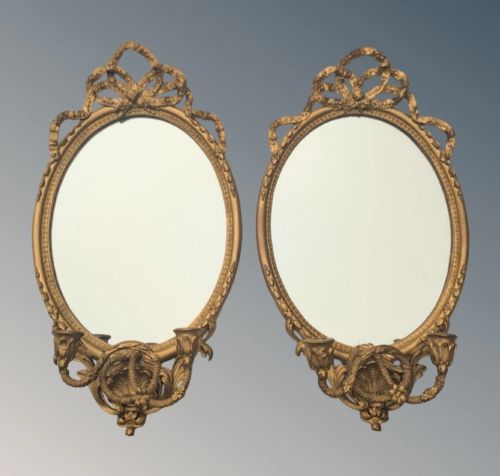
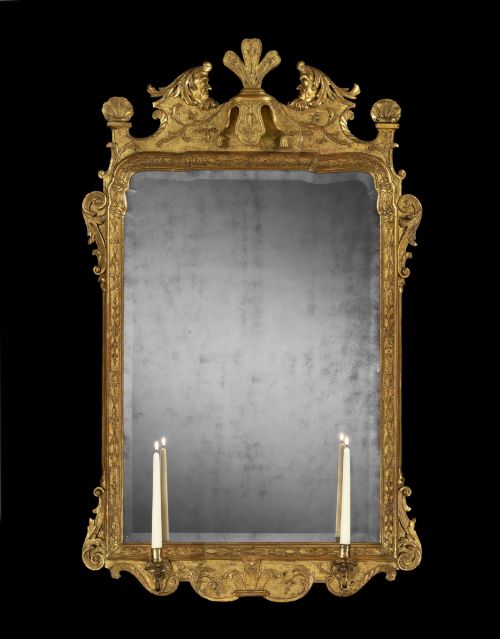
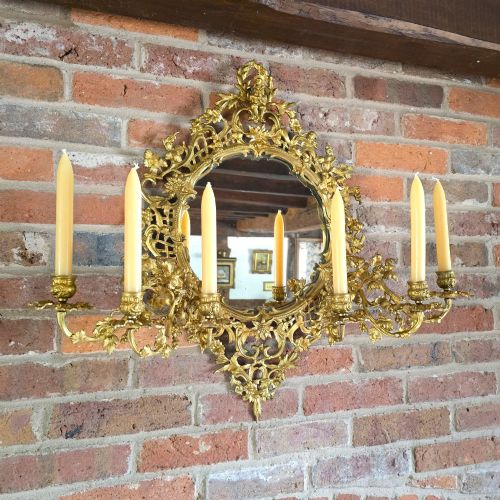
These gilt brass sconce mirror examples combine reflective glass and candle arms to brighten dark corners with period elegance.
Gilt Brass Sconce Mirror
A gilt brass sconce mirror serves as both a functional wall light and a decorative looking glass, designed to multiply the warm flicker of candles across a room. These pieces appear in forms such as girandoles, wall lights, and mirrored wall sconces.
The versions most frequently met on this page include pairs originating from French workshops and the Victorian era, often featuring twin or multiple candle branches extending beneath the glass. Collectors also encounter earlier 18th century gesso examples alongside early 20th century metal variations.
Makers utilised brass, bronze, ormolu, and giltwood to frame the mirror glass, creating surfaces that catch the light even when unlit. The structural object types span simple spike wall lights to elaborate carved and mirrored assemblies.
Materials and construction methods
Foundations typically rely on cast brass, bronze, or carved timber substrates, which receive layers of gilding or ormolu to achieve a bright, metallic lustre. Makers shaped the metal into arms, backplates, and decorative frames supporting the glass.
Mirror glass is set within these frames, sometimes backed by wood or gesso, while candle branches are secured firmly to withstand the weight of burning wax. Crystal elements occasionally suspend from the arms to refract additional light.
Many twin-branch girandoles retain subtle drip pans designed to catch melted wax from evening gatherings long ago.
Assessing quality in gilt brass sconce mirrors
The crispness of the cast or carved detail dictates the upper tier of these objects, separating finely chased ormolu and deep gesso carving from softer, simpler pressings. Superior examples retain their original mercury or silvered mirror plates and intact candle branches.
Proportion and balance also govern the merit of a piece, where the weight of the branches integrates harmoniously with the dimensions of the central mirror glass.
The Gilt Brass Sconce Mirror Glossary
- Girandole
- A branched wall light incorporating a mirror that reflects the candlelight. These pieces often feature ornate frames and multiple arms.
- Ormolu
- Finely ground high-carat gold applied to a bronze base using mercury amalgamation. This technique creates a rich, durable golden finish.
- Gesso
- A paint mixture consisting of a binder mixed with chalk, gypsum, or pigment. Artisans used this to build up surfaces before gilding.
- Sconce
- A wall-mounted light fixture designed to hold candles or electric bulbs. In older pieces, arms project outward from a reflective backplate.
Gilt Brass Sconce Mirror: Frequently Asked Questions
How do I hang a heavy girandole safely?
These mirrors carry substantial weight due to the combination of cast metal, glass, and candle branches. Secure the fixture directly into a wall stud or use heavy-duty wall anchors rated for the specific load.
Ensure the hanging wire or bracket on the reverse is inspected for strength before mounting the piece at eye level.
Were these mirrors meant for candles or electricity?
The historical examples on this page were built exclusively for candles, utilising drip pans and branch sockets designed for wax lighting. Many owners choose to leave them unlit or utilise modern replica candles.
Altering the original arms for electrical wiring is a personal choice that often impacts the historical integrity of the piece.
What period do most of these mirrors belong to?
The inventory spans multiple centuries, with 19th-century French Rococo revival pieces and early 20th-century girandoles appearing frequently. Earlier 18th-century examples featuring carved gesso also occur in the selection.
Stylistic cues such as rope twist frames, crystal drops, and branch counts help differentiate the Victorian and Edwardian iterations.