
Gilt Brass Dial Clock
A gilt brass dial clock brings refined Victorian and French craftsmanship into a room, combining heavy metalwork with precise timekeeping.

Gilt Brass Dial Clock
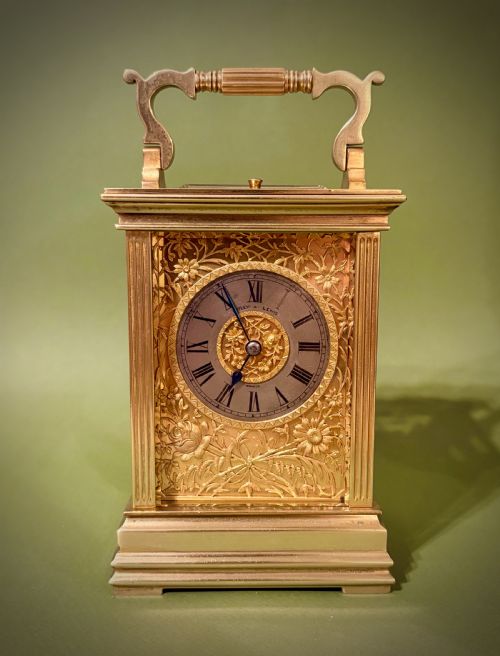
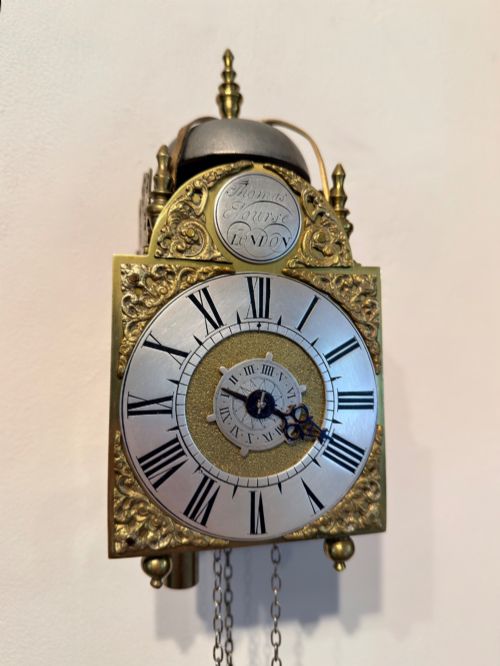
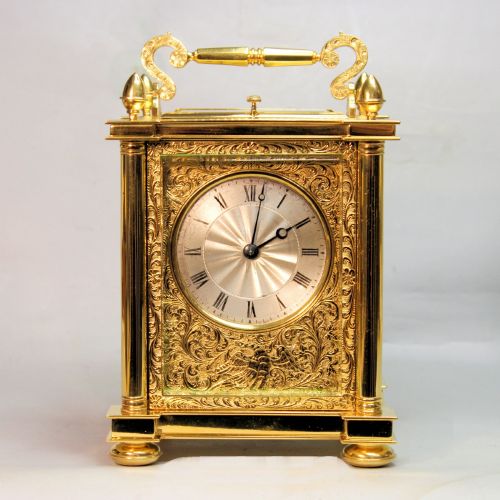
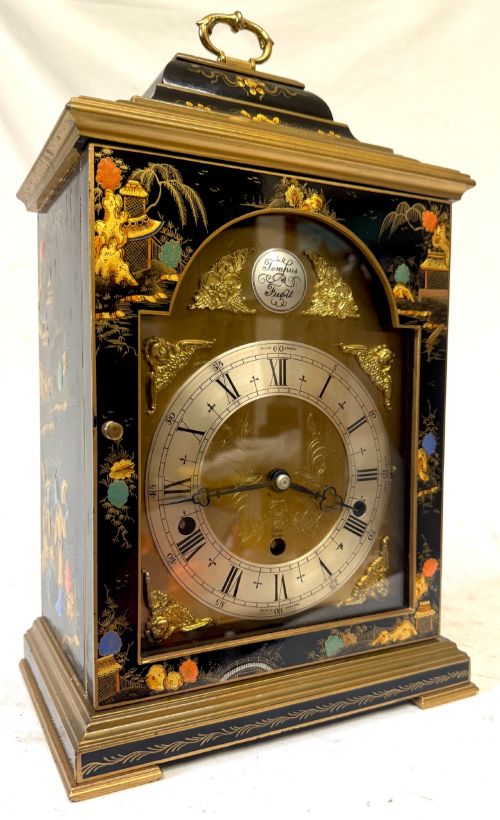
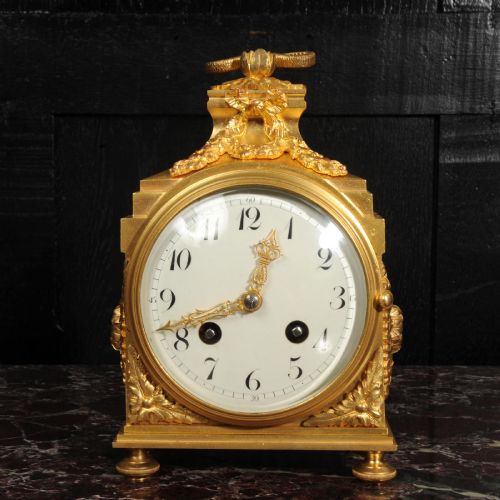
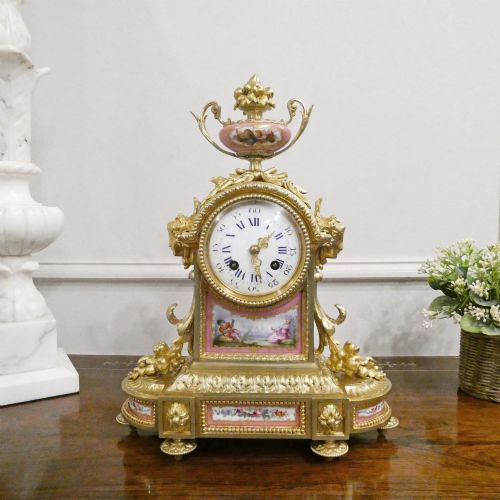
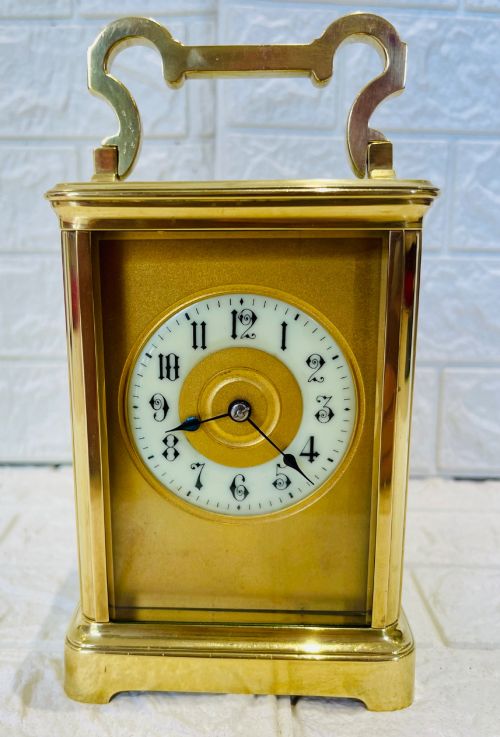
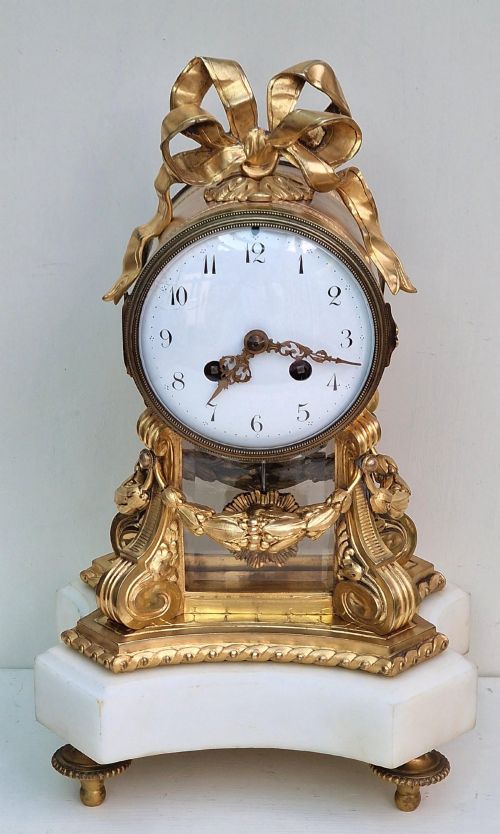
A gilt brass dial clock is a timepiece defined by its prominent metallic face and housing, frequently appearing in forms ranging from substantial carriage clocks to decorative mantel clocks. These items originate across the nineteenth and twentieth centuries, with a strong presence of French and English workshops.
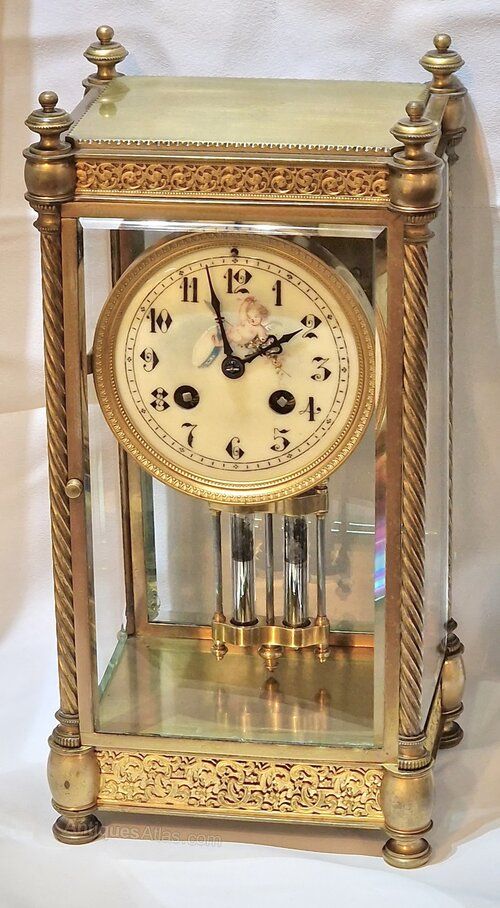
Buyers encounter carriage clocks and four-glass mantel clocks most frequently when exploring this category. They sit on desks, shelves, and mantelpieces, serving both a functional purpose and an ornamental role within a domestic interior.
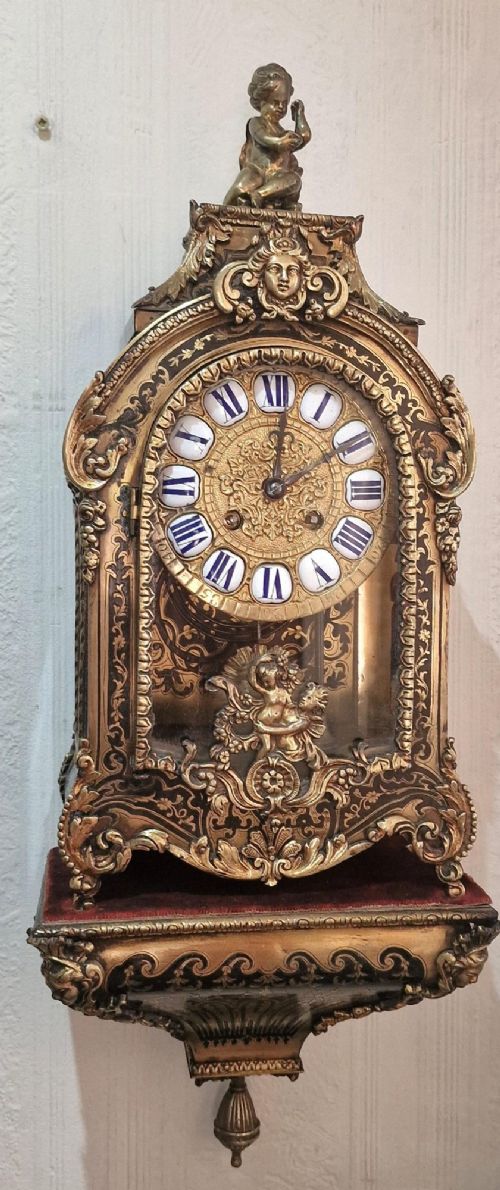
The materials span brass, gilt bronze, ormolu, and glass, often paired with enamel dials or painted porcelain details. Regional variations include English fusee movements alongside French repeating and striking mechanisms.
How They Were Made
The construction relies heavily on cast and polished brass, frequently treated with fire gilding or ormolu to produce a bright, enduring surface finish. Enamel or porcelain elements are integrated into the face, providing a smooth white ground for painted numerals.
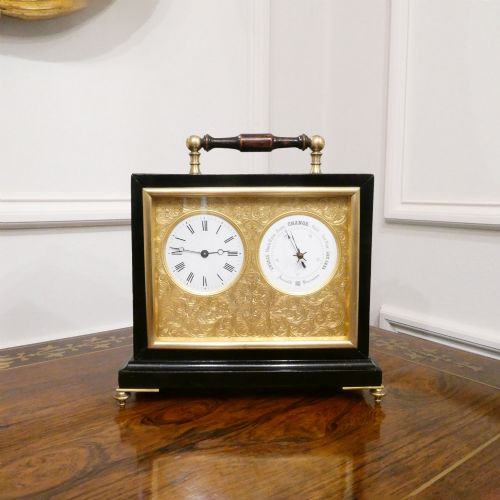
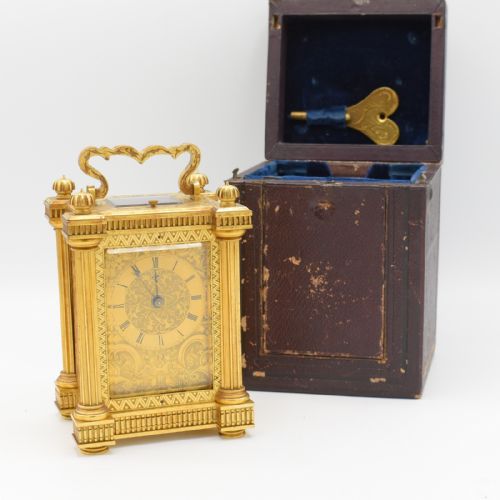
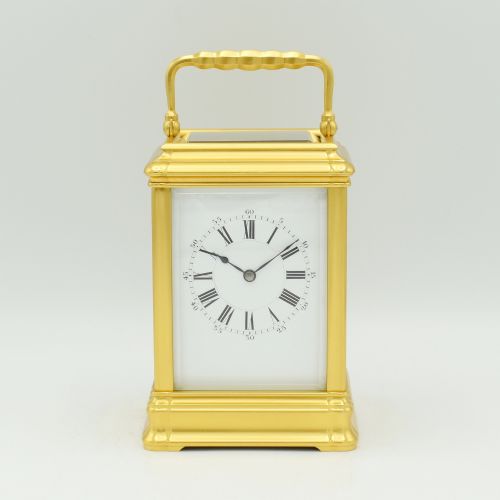
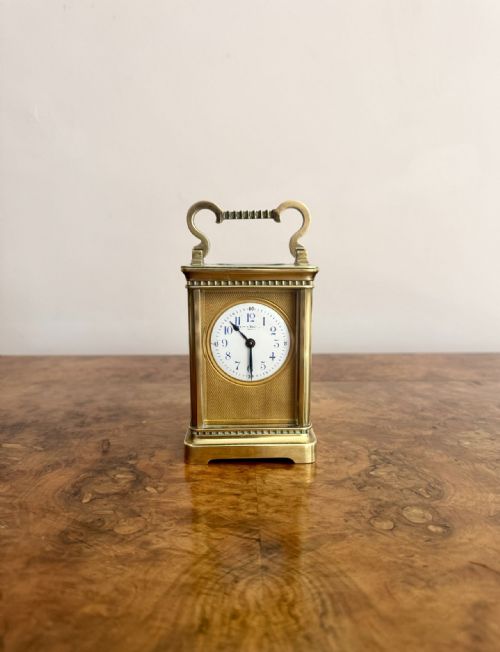
Clockmakers housed these assemblies within heavy glazed brass cases, doucine frames, or marble bodies, securing the mechanical movements with hand-cut gears and escapements. Engraving often decorates the outer brass panels, adding geometric or foliate patterns to the metal.
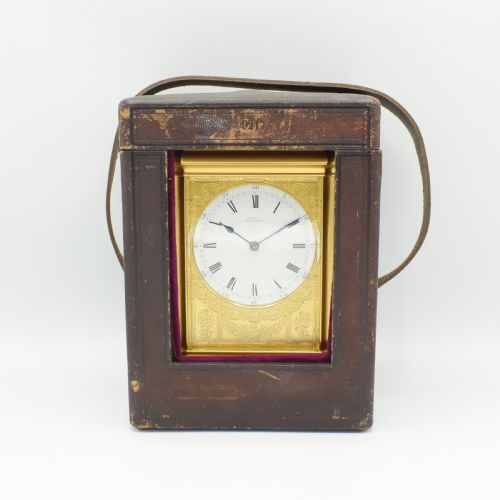
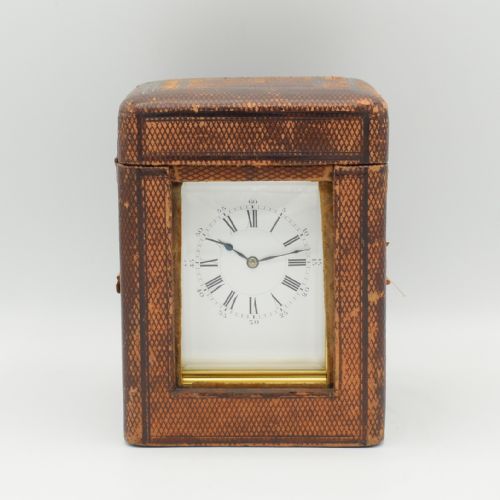
Travel cases accompany several carriage clocks, preserving their original leather exteriors for journeys across centuries.
What Varies in Quality
Quality rests upon the crispness of the cast brass ornamentation and the depth of the gilding applied to the case. Finer examples feature fully engraved plates, repeating mechanisms, and signed enamel dials that retain clean, sharp script.
The integrity of the mechanical movement and the preservation of the original glass panels distinguish superior pieces from standard workshop output. Maker attribution, such as signed French or London movements, further elevates the standing of an individual clock.
Cousens And Whiteside·Henri Jacot·Japy Freres·Tiffany·Sacre
The Gilt Brass Dial Clock Glossary
- Carriage clock
- A portable spring-driven timepiece designed for travel, typically fitted with a carrying handle and a glass-panelled brass case. These originated to meet the needs of nineteenth-century travellers.
- Fusee
- A conical pulley used in clock movements to maintain an even pull on the gear train as the mainspring unwinds. This mechanical addition improves timekeeping accuracy across the power reserve.
- Ormolu
- Finely ground high-carat gold applied to a bronze or brass base using a mercury amalgamation technique. The method produces a rich, durable metallic lustre found on nineteenth-century French pieces.
- Repeater
- A clock mechanism that strikes the hours and quarters when a lever or cord is activated by the user. Such complications required advanced assembly by skilled horologists.
- Four glass clock
- A mantel clock housed in a brass frame with glass panels on all four sides, exposing the internal gear train to view. This design gained popularity during the late nineteenth century.
Gilt Brass Dial Clock: Frequently Asked Questions
How do I wind a carriage clock?
Wind the movement using the matching key inserted into the winding arbour at the back of the clock. Take care not to overwind the mainspring.
Turn the key gently until resistance is felt, ensuring the clock remains upright on a stable surface during the process.
What is a repeating carriage clock?
A repeating carriage clock sounds the most recent hours and quarters on demand when a button or pendant on the case is pressed. This allowed owners to check the time in darkness.
The internal complication relies on additional gongs and hammers distinct from the standard striking train.
Where should I place a gilt brass clock?
Position the clock on a level mantelpiece, shelf, or desk away from direct sunlight, dampness, and draughts. A stable surface ensures the pendulum or balance wheel maintains an even beat.
Avoid high-traffic areas where the case might be accidentally knocked or dislodged.
How do I identify a French nineteenth century clock?
Look for cast ormolu mounts, mercury-gilt surfaces, and signatures on the backplate or enamel dial. French makers often stamped their movement plates with factory medals and serial numbers.
Stylistic cues include Rococo revival curves, Louis XVI symmetry, and heavy bevelled glass panels.