
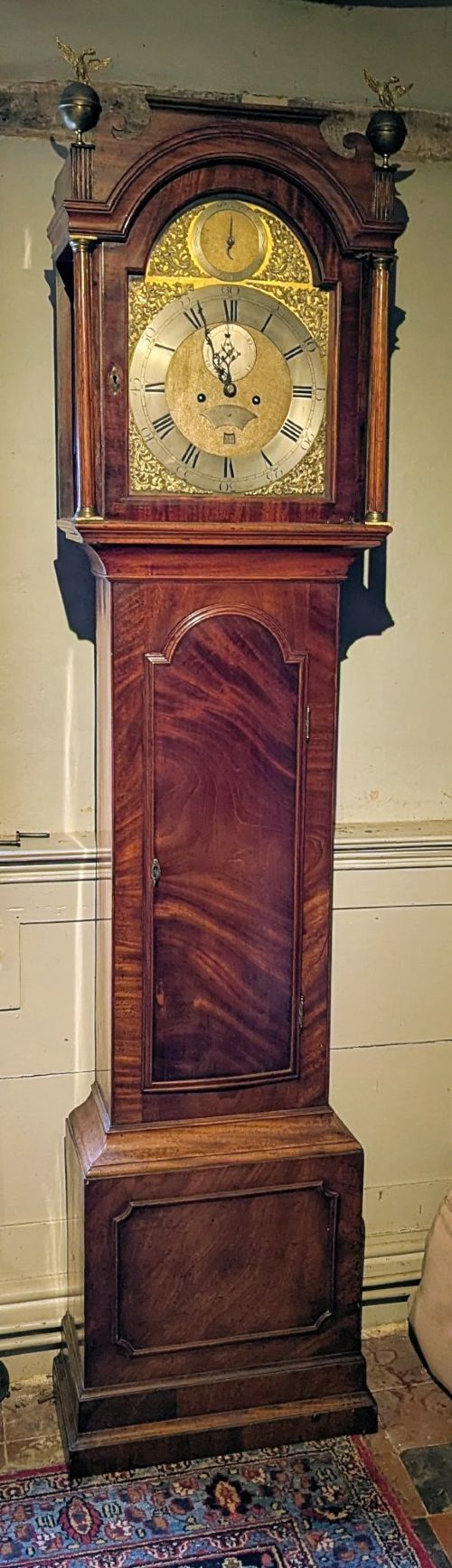
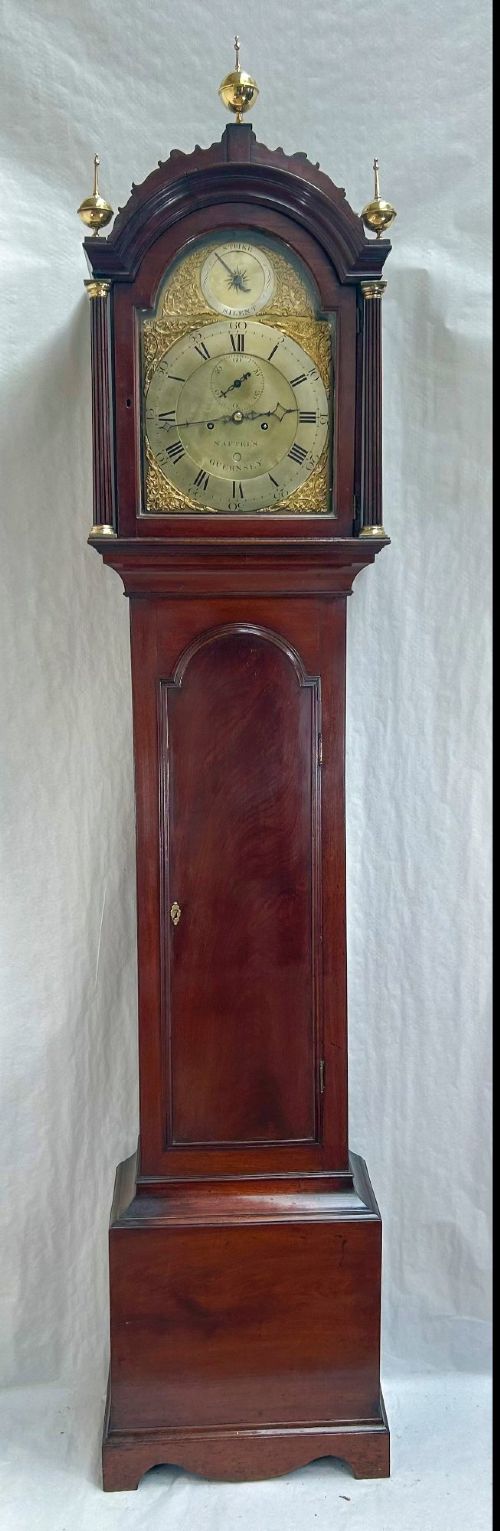
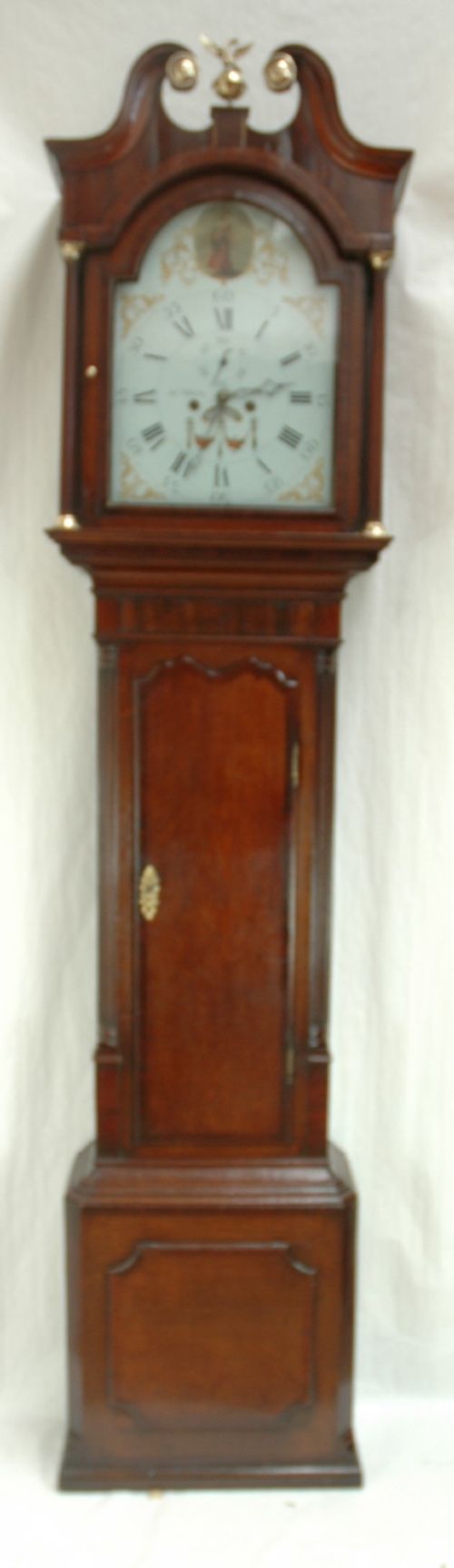


Traditional Long Case Clock
A traditional long case clock brings a measured rhythm and solid timber presence to a room, registering the hours with weighted movements.
Traditional Long Case Clock
A traditional long case clock, often called a grandfather clock, houses a pendulum and weight-driven movement within a tall wooden trunk. These floor-standing timepieces range from modest provincial examples to sophisticated urban creations.
The pieces encountered on this page span several centuries, with a strong representation of Georgian oak and mahogany specimens. Makers from London and the regions produced these clocks in various heights, including smaller cottage variants and dwarf proportions.
The form combines cabinet-making with horology, uniting a protective wooden case with an intricate dial and movement. Buyers examine these objects both for their mechanical reliability and their architectural presence.
Materials and Construction
Timbers such as oak, mahogany, and walnut form the structural cases, sometimes enriched with brass inlay, lacquer, or mahogany banding. Cabinet-makers constructed these tall housings to protect the delicate internal mechanics from dust and atmospheric changes.
The visible faces combine brass, painted iron, and glass elements to display the time, often featuring subsidiary dials for seconds or calendar functions. Movement plates, wheels, and escapements utilise brass, steel, and iron fashioned by specialist clockmakers.
Factors That Determine Quality
The refinement of the cabinet work separates standard regional pieces from superior metropolitan productions, particularly in the selection of figured timber and carved detail. Proportion and harmony between the hood, trunk, and base dictate the visual success of the piece.
Internal mechanics vary from simple thirty-hour movements to complex eight-day striking or musical trains signed by notable makers. The integration of a well-preserved dial with an original, matching movement distinguishes higher grade examples.
Joseph Gibson Ecclefechan·Thwaites London·Handley And Moore Of London·Gillett And Johnston·Edward Glase Of Bridgnorth·George Adams·Richard Midgley Of Halifax·George Clapham Of Whitton·Joseph Jackeman London
The Traditional Long Case Clock Glossary
- Arch
- The curved upper portion of a clock dial, frequently housing a moon phase mechanism or subsidiary regulation dial. This architectural feature became prominent during the George III period.
- Dial
- The face of the clock where hours and minutes are read, constructed from brass, silvered metal, or painted iron. Skilled artisans engraved or painted these surfaces with numerals and maker details.
- Longcase
- The correct term for a tall pendulum clock housed in a protective wooden trunk, also known colloquially as a grandfather clock. These cases provide the drop required for the driving weights.
- Movement
- The mechanical inner workings of the clock, comprising gears, escapements, and arbors powered by descending weights. Eight-day movements require winding weekly, while thirty-hour versions need daily attention.
- Moon phase
- A rotating disc visible on the dial that tracks the lunar cycle alongside the standard time. This complication demands specialised gearing within the movement.
Traditional Long Case Clock: Frequently Asked Questions
How do I wind a long case clock?
Winding involves using a specialised key to raise the weights inside the trunk via the winding holes on the dial face. Care must be taken not to over-wind the movement.
Most eight-day clocks require winding once a week, while thirty-hour variants need attention daily. Keeping a consistent routine helps maintain accurate timekeeping.
Where should I place a grandfather clock?
Position the clock against an interior wall away from direct sunlight, central heating vents, and damp exterior walls. Wood and mechanical parts react poorly to extreme temperature fluctuations.
The floor beneath must be level and stable to ensure the pendulum swings freely and the escapement beats evenly. Wall anchoring provides necessary safety stability for tall timber cases.
How do I distinguish Georgian from Victorian models?
Georgian examples, particularly from the 18th century, tend to feature understated architectural proportions, brass dial work, and solid oak or mahogany construction. Their hood designs often rely on plain columns or moulded cornices.
Victorian models frequently incorporate heavier carving, wider proportions, and painted iron dials or musical movements. Regional variations also persist across both eras.
What maintenance do these clocks need?
Periodic professional servicing ensures the brass bushings, wheels, and pivots remain free from accumulated dust and dried oil. A clean movement runs with less friction and preserves the original metal components.
Routine care includes checking that the case remains plumb and the pendulum suspension spring stays intact. Gentle dusting with a dry cloth protects the exterior polish.