

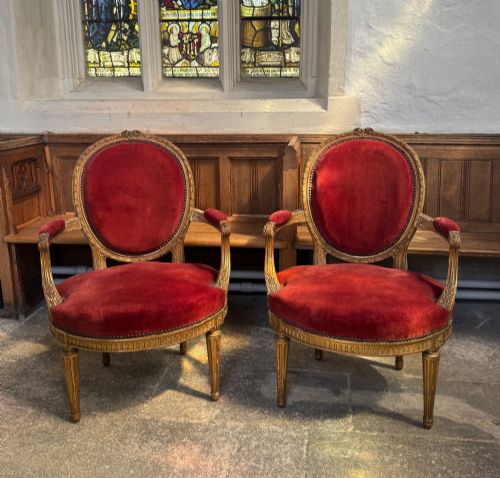
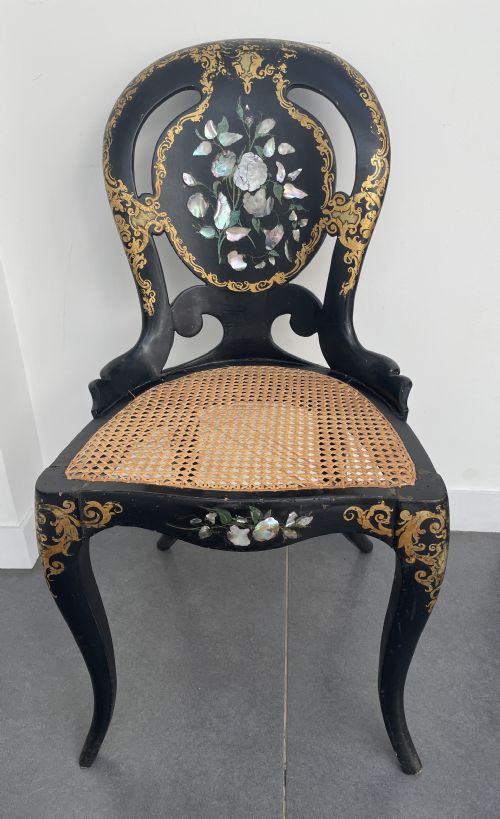
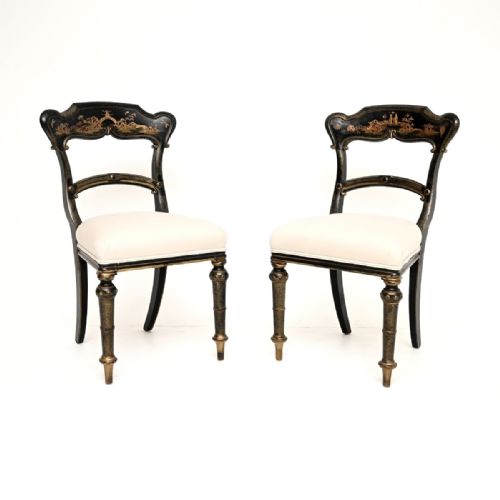
Gilt Accent Chair
A gilt accent chair brings a flash of gold leaf and decorative carving into a room, spanning centuries of continental and English craftsmanship.
Gilt Accent Chair
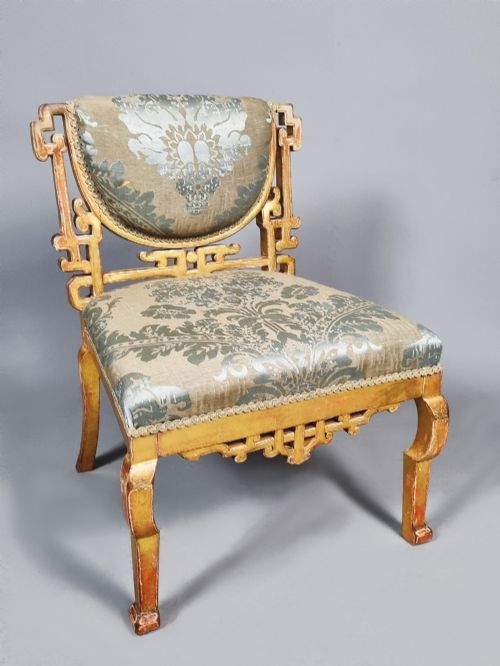
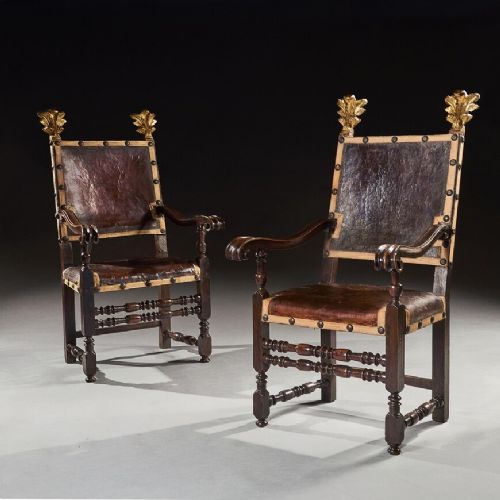
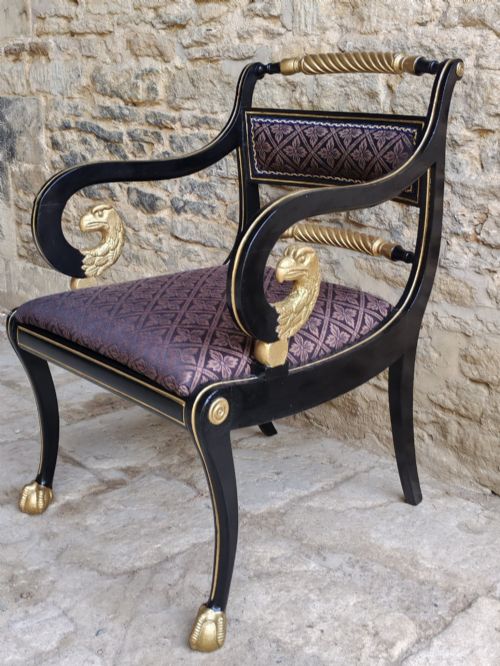
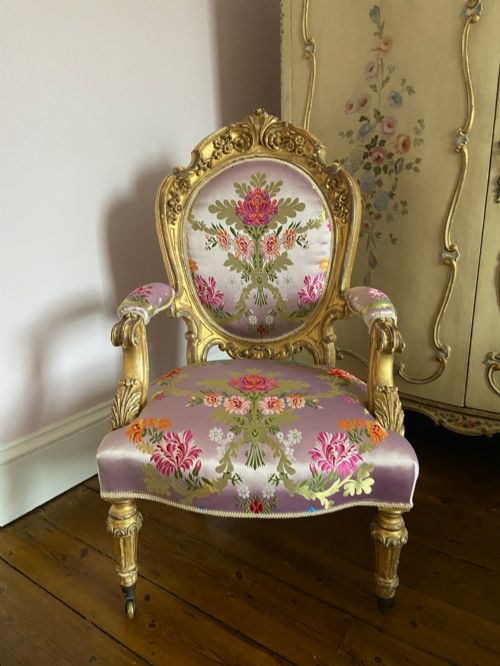
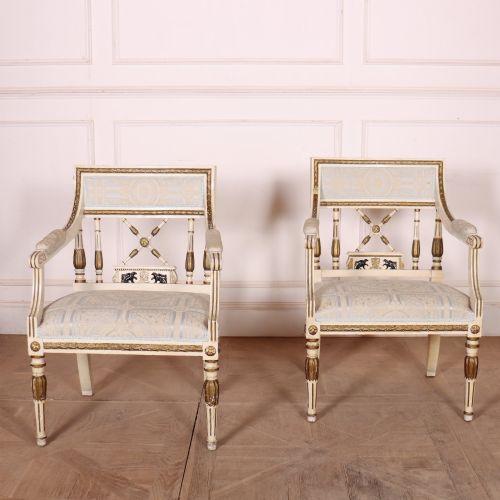
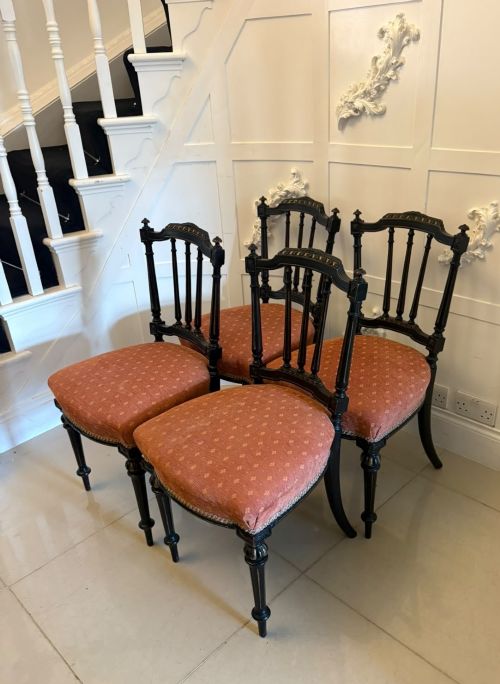
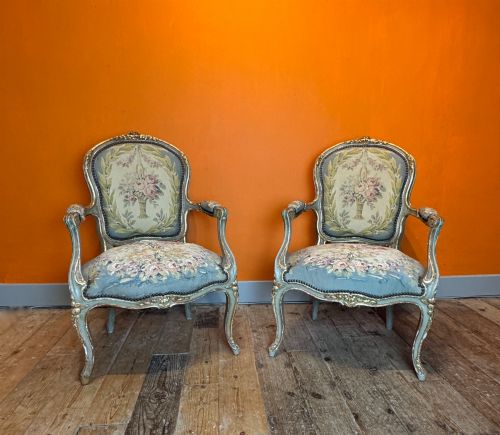
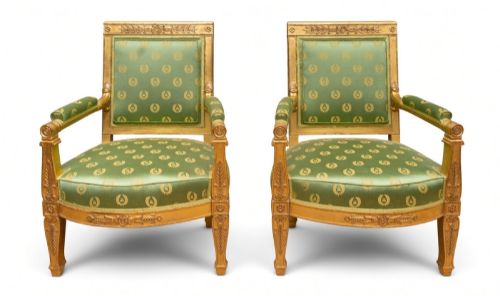
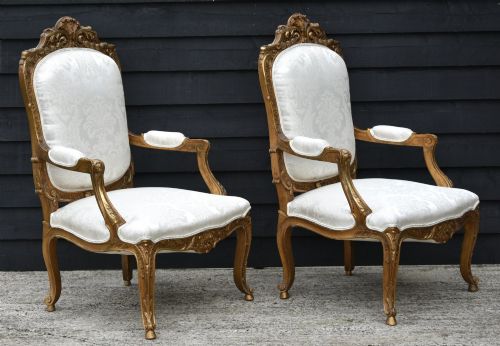
When you search for a gilt accent chair, you encounter a varied selection of seating forms created to catch the eye in reception rooms, salons and bedrooms. The listings here encompass French bergères, English Regency library seats, Italian baroque armchairs and Victorian salon pieces.
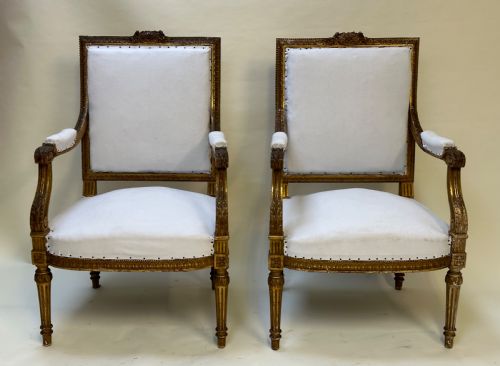
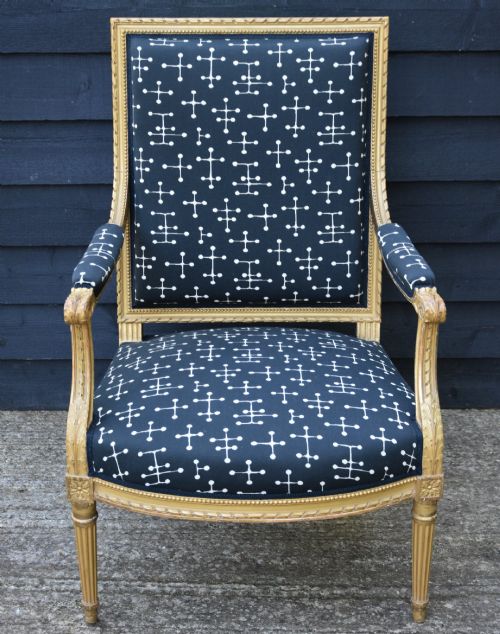
The most common versions met on this page are 19th-century French giltwood armchairs and revival pieces adopting Louis XVI style. These items combine structural wood frames with gilded surfaces, often paired with contemporary or period upholstery in silk, velvet or tapestry.
How they were made
Carvers shaped solid timbers such as beech, walnut and mahogany before applying thin sheets of gold leaf over a prepared ground layer. Ebonised wood and faux rosewood frequently appear alongside parcel-gilt details to create contrast.
Upholstery techniques range from traditional webbing and stuffing with horsehair to modern silk and velvet coverings fastened with decorative brass tacks. Ormolu mounts and mother of pearl inlay occasionally supplement the carved wood structures.
The listings feature materials including giltwood, ebonised wood, brass, velvet, silk and mother of pearl.
What varies in quality
The standard of a gilt accent chair rests upon the crispness of the hand-carved ornamentation and the integrity of the gilded surface. Deeply undercut foliage and scrolls indicate a maker who spent significant time refining the wooden skeleton before gilding.
Original gilding showing honest signs of age differs substantially from later repainting or heavy-handed restoration. The quality of the underlying joinery and the selection of secondary timbers further distinguish standard production items from workshop pieces.
Waugh and Son·Jacob-Desmalter·Blaise Maucuy
The Gilt Accent Chair Glossary
- Giltwood
- Wood covered with a thin layer of gold leaf. This finish defines the primary aesthetic of many antique salon chairs.
- Fauteuil
- An open-armed upholstered armchair with exposed wooden arms. French makers popularised this form during the 17th and 18th centuries.
- Bergère
- An enclosed upholstered armchair with padded sides. These comfortable seats often feature exposed carved giltwood frames.
- Parcel-gilt
- Partially gilded, leaving sections of the underlying wood or painted surface visible. This technique highlights specific carved details.
- Ormolu
- Gilded bronze used for decorative mounts on furniture. It adds metallic contrast to wood and fabric surfaces.
- Chinoiserie
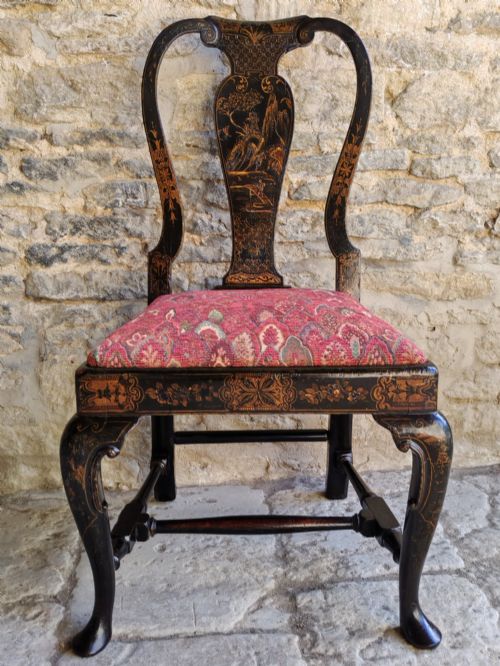
- European decorative art influenced by Chinese artistic styles. This aesthetic appears on lacquered and painted chairs.
Gilt Accent Chair: Frequently Asked Questions
How do I identify a Louis XVI style chair?
Louis XVI style seating is characterised by straight fluted legs, carved rosette motifs and geometric frames like ovals or rectangles. These elements depart from the curved lines of earlier rococo designs.
Craftsmen working in the 19th century frequently revived these classical proportions, producing giltwood armchairs that mirror 18th-century royal French aesthetics.
Can I use an antique gilt chair daily?
Antique gilt chairs serve well for occasional seating in low-traffic areas of a home. Their delicate carved frames require thoughtful placement away from heavy daily wear.
Checking the structural joints and the strength of the upholstery ensures the chair remains stable for gentle sitting.
How should I clean a gilded wood frame?
Dust gilded surfaces gently with a soft, dry ostrich feather duster or a clean microfibre cloth. Avoid using water, liquid cleaners or chemical polishes, which strip delicate gold leaf.
Professional conservators should handle any repairs to flaking or damaged gilding.