
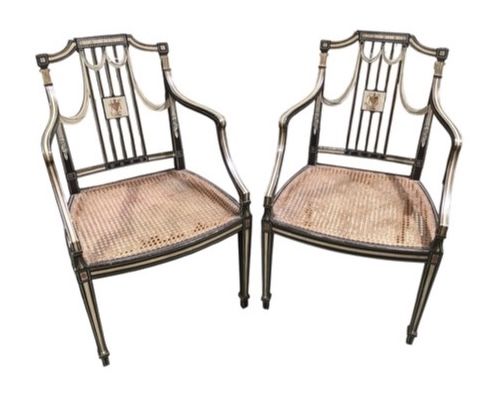


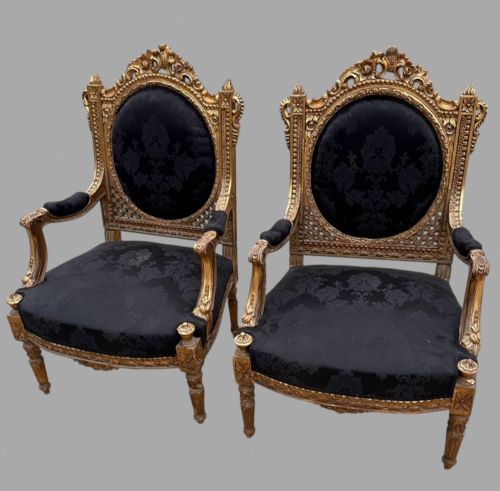

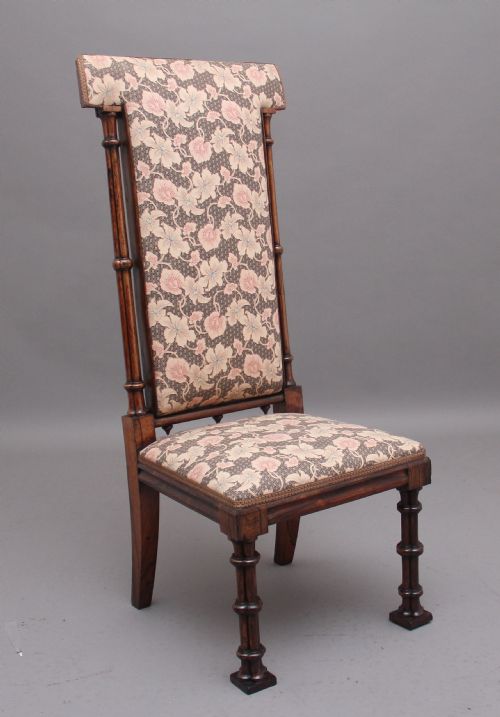

Regency Revival Chairs
Regency revival chairs bring classic neo-classical elegance to modern interiors, combining ancient architectural lines with comfortable nineteenth- and twentieth-century seating.
Regency Revival Chairs
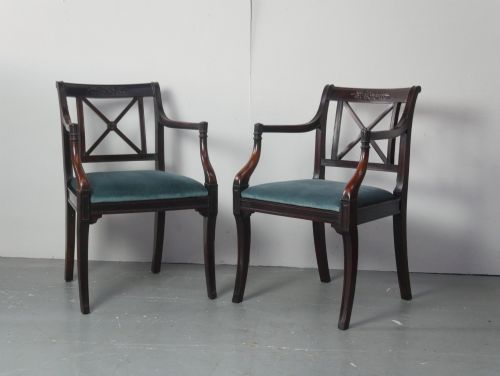
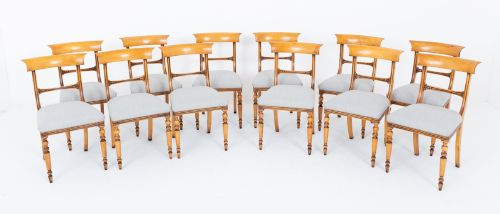
Regency revival chairs draw inspiration from the refined neo-classical aesthetics of the early nineteenth century, reimagined by later makers during the Victorian and Edwardian eras. Buyers searching for regency revival chairs encounter various forms, ranging from single library armchairs to extensive matched dining sets numbering up to twelve pieces.
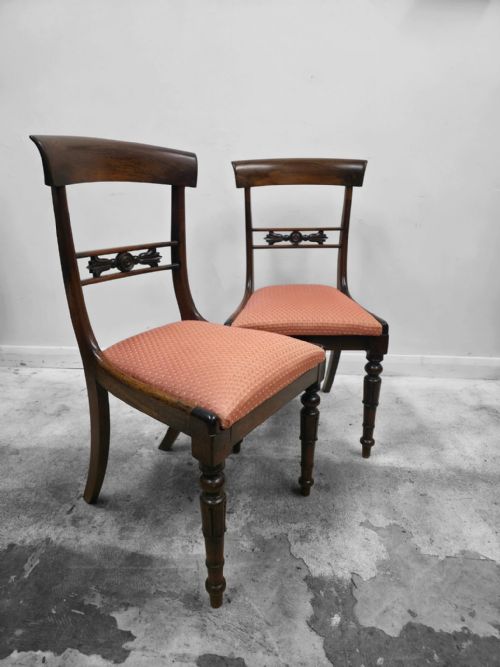
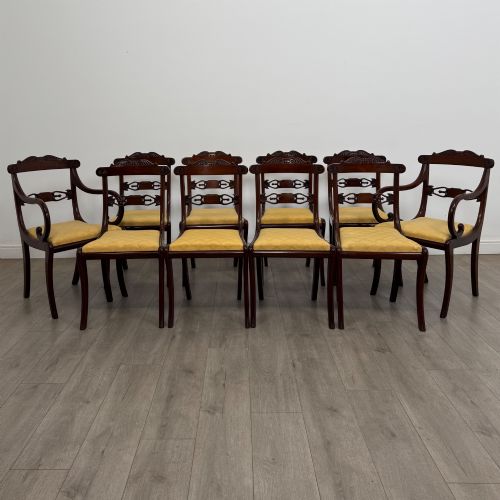
Makers of these later revival pieces focused heavily on traditional dining configurations, often providing sets comprising several standard side chairs alongside designated carvers with elbows. Individual library chairs and open armchairs also appear, showing how versatile the neo-classical idiom remained long after its initial Regency heyday.
Materials and Construction
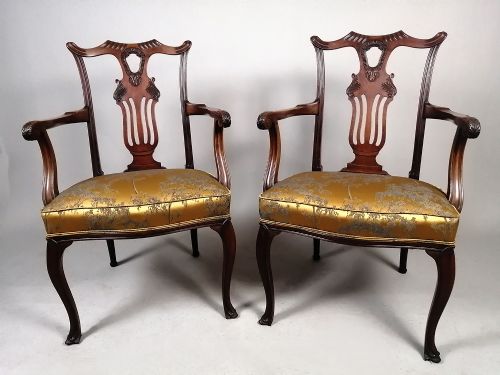
Craftsmen relied primarily on mahogany and walnut as the foundational timber for these frames, frequently incorporating satin birch, satinwood, and ebonised wood to achieve striking contrast. Timber selection dictated the structural integrity of slender members like lyre backs and pierced splats.
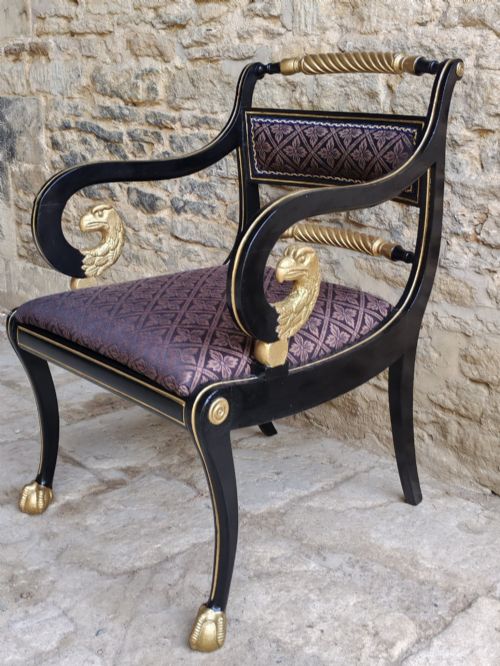
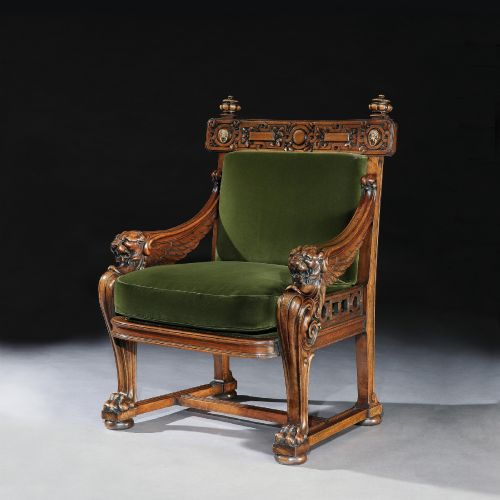
Surface enrichment often involved intricate brass inlay, gilded wood details, and simulated faux rosewood finishes that imitated exotic timbers. Upholstery materials included traditional fabric and plush velvet, supporting the comfort demanded by dining and library seating.
The inventory spans the nineteenth and twentieth centuries, capturing authentic Regency pieces alongside Edwardian and later revival interpretations.
Assessing Quality and Execution
The distinction between standard commercial seating and exceptional cabinetwork lies in the crispness of the hand carving and the precision of applied brass details. Superior examples exhibit tightly fitted joinery in the frame and carefully selected grain patterns across mahogany splats and rails.
Sets maintain their value based on uniformity across the entire group, especially when dealing with large dining collections of ten or twelve chairs. The handling of secondary woods and the fidelity to neo-classical proportions further separate ordinary revival pieces from those executed with superior craftsmanship.
Thomas Clarkson & Sons·Richard Hicks Bridgens·Thomas Hope·Thomas Chippendale
The Regency Revival Chairs Glossary
- Regency revival
- A stylistic movement occurring mainly in the late nineteenth and early twentieth centuries that resurrected the neo-classical motifs of the Regency period. Cabinetmakers reproduced forms featuring saber legs, scroll arms, and classicized splats.
- Lyre back
- A chair back shaped in the symmetrical outline of an ancient stringed musical instrument. This motif became prominent during the Regency era and remained popular in later revival designs.
- Monopodia
- A furniture support carved as a single lion's leg and paw, derived from classical Roman stone tables. It appears on grand nineteenth-century armchairs inspired by designer Thomas Hope.
- Prie-dieu
- A devotional chair featuring a low seat and a high, padded top rail designed for kneeling and prayer. These ecclesiastical seats occasionally share architectural vocabulary with contemporaneous revival seating.
- Bar back
- A horizontal curved top rail or slat spanning the uprights of a chair back, typical of dining seating from the Regency period onwards.
Regency Revival Chairs: Frequently Asked Questions
How do I date a revival chair?
Dating relies on examining timber preparation, tool marks, and the specific characteristics of the revival period, which often spans from the late Victorian era through the Edwardian period and the nineteen-twenties.
Makers working in these later decades frequently reinterpreted earlier Regency forms using machine assistance alongside traditional hand-finishing techniques.
What is the difference between a carver and a side chair?
Carvers are armchairs traditionally placed at the heads of a dining table or used as standalone accent pieces, featuring supportive elbow rests.
Side chairs lack arms, allowing multiple pieces to tuck neatly alongside one another around a dining table without crowding.
Where were these chairs used historically?
These seating forms served primarily in formal dining rooms, libraries, and elegant drawing rooms where neo-classical interior schemes predominated.
Library chairs and prie-dieu seats fulfilled specific domestic and devotional functions, offering ergonomic support for reading or quiet contemplation.
How do I care for antique mahogany and velvet?
Mahogany surfaces benefit from occasional waxing with natural beeswax to nourish the timber and maintain a deep, protective sheen.
Velvet upholstery requires gentle brushing to prevent crushing of the pile, avoiding direct sunlight to preserve the richness of the textile.