
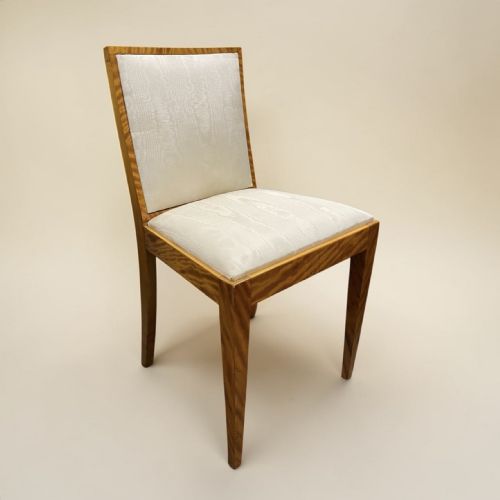


1920s Dining Chairs
These 1920s dining chairs bring distinct period character to a room, spanning revival styles and the sleek lines of Art Deco.
1920s Dining Chairs
When you search for 1920s dining chairs, you encounter a diverse mix of period furniture that reflects both traditional revivals and modern design movements of the early twentieth century. The selections available range from sturdy oak and walnut seating to elaborate dining sets created in continental workshops.
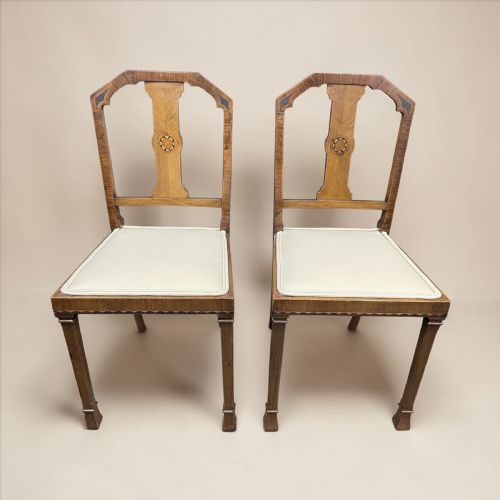
The most frequent examples on this page balance functional dining use with decorative period aesthetics, drawing on historical forms such as Queen Anne, Jacobean, and Louis XV styles alongside geometric Art Deco interpretations. Buyers often find single side chairs, pairs of armchairs, and larger matched sets suited for traditional and eclectic interiors alike.
How they were made
Joinery and framing rely heavily on solid timbers such as oak, walnut, mahogany, and elm, often shaped with traditional turning, barley twist legs, or curved bentwood techniques. Finer dining suites incorporate decorative veneers including burr walnut, burr maple, calamander, macassar, and ebony to create striking patterned surfaces.
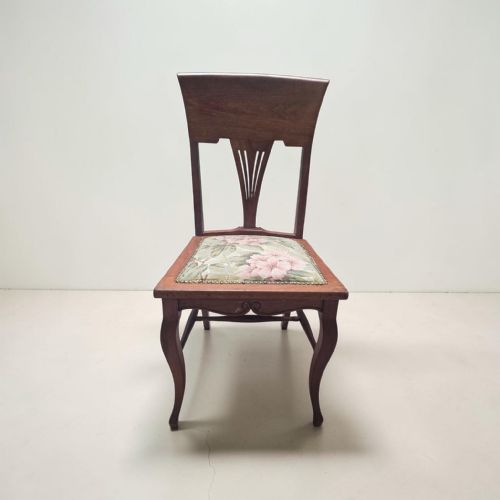
Seating portions utilise traditional materials like leather, fabric, cane, and rush inserts, secured into square backs, ladder backs, or cloud back frames. Painted finishes and brass details appear selectively across specific revival and continental models.
Children join the dining table in style with a miniature Queen Anne revival mahogany chair from the era.
What varies in quality
The standard of execution in these chairs depends greatly on the selection of timber and the precision of the cabinetwork, particularly where complex veneers or hand-carved revival details are involved. Sets that maintain uniformity across every chair command greater interest than assembled groups.
Subtle differences in timber figure, such as the grain pattern in burr walnut or elm, elevate individual pieces. The integrity of the original frame construction and the quality of applied upholstery materials further distinguish standard production from exceptional examples.
Bath Cabinet Makers·Epstein
The 1920s Dining Chairs Glossary
- Art Deco
- A design style characterised by sleek geometric shapes, stylised motifs, and luxurious materials that gained prominence during the 1920s and 1930s. It represents a distinct break from heavy Victorian ornamentation.
- Barley twist
- A decorative turning technique resembling a twisted rope, commonly found on the legs and stretchers of oak and walnut chairs from this era. This style references seventeenth-century furniture traditions.
- Bentwood
- Wood that has been heated and bent into curved structural forms, famously utilised in chairs produced in large quantities during the early twentieth century. It offers lightweight strength and fluid lines.
- Queen Anne Revival
- A style reproducing or reinterpreting eighteenth-century forms, typically featuring cabriole legs and pad feet. Pieces in this category often utilise walnut or mahogany.
- Rush seat
- A traditional seating surface woven from dried marsh rushes, providing a durable and textured base. It appears frequently on ladder back country chairs.
1920s Dining Chairs: Frequently Asked Questions
How do I spot Art Deco dining chairs?
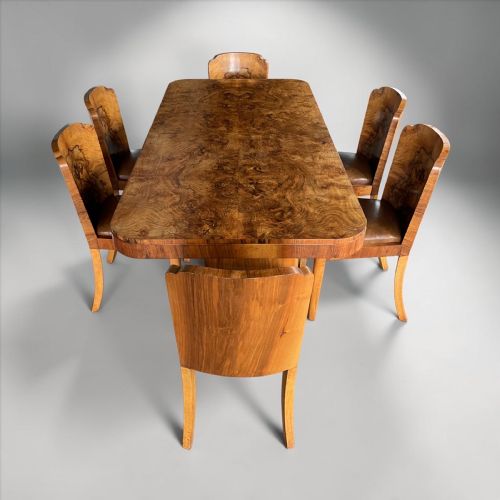
Art Deco dining chairs are distinguished by geometric profiles, streamlined silhouettes, and the use of exotic veneers such as burr walnut and macassar. They often feature curved cloud backs or architectural frames.
Unlike traditional revival pieces, these chairs emphasise modern elegance and minimal ornamentation while retaining practical comfort for dining.
Are large sets of 1920s chairs common?
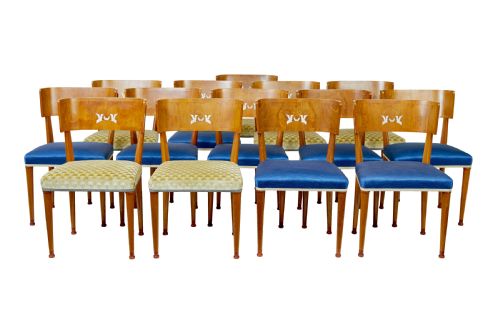
Matched sets of eight or ten chairs do appear, though smaller sets of four or six, along with pairs and single side chairs, are more frequently encountered. Larger dining suites often include a matching table.
Finding a complete large set usually requires looking across specific revival styles or walnut and oak production from the period.
What wood types should I expect?
Oak and walnut are the most common timbers used in these chairs, supporting both traditional revival styles and early modern designs. Mahogany and elm also appear regularly.
Finer decorative models frequently employ burr walnut, burr maple, or exotic hardwoods for visual impact on prominent surfaces.
How do revival styles differ from original antiques?
Revival pieces produced around 1920 adopt historical motifs from the seventeenth and eighteenth centuries, such as Queen Anne or Jacobean details, but incorporate early twentieth-century construction methods. They offer period aesthetic appeal with the sturdiness of later manufacture.
Examining the internal framing and timber preparation usually clarifies the true manufacturing era of these revival designs.