
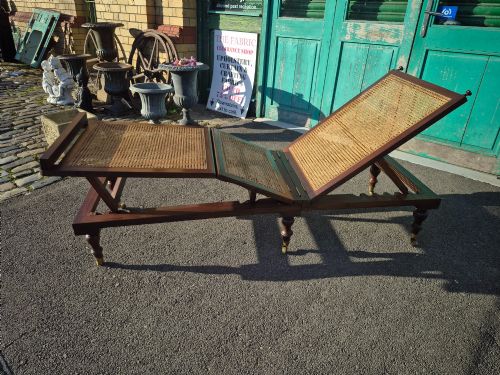
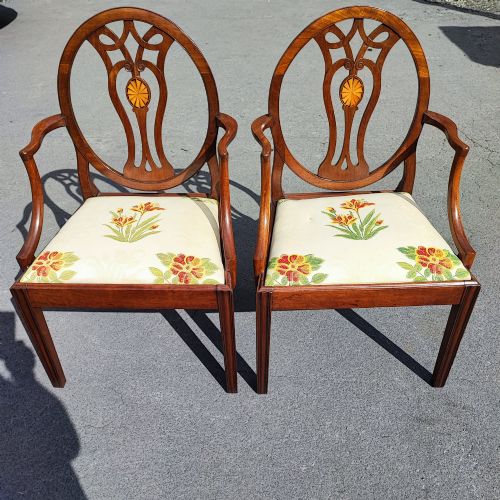
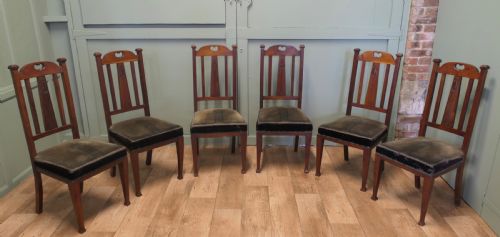
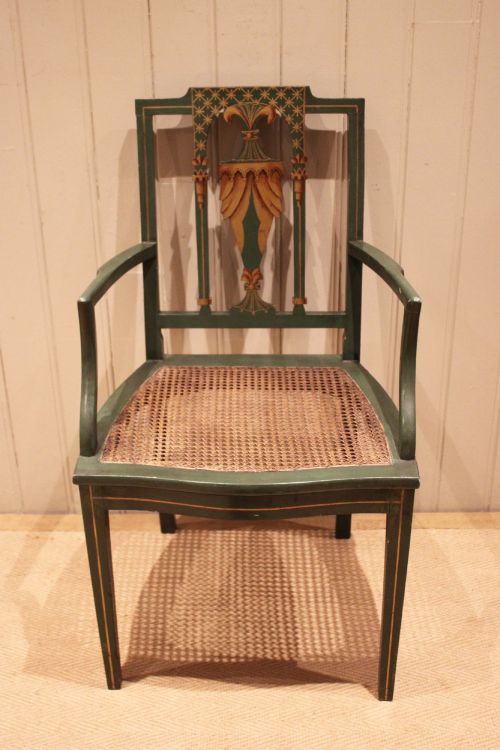


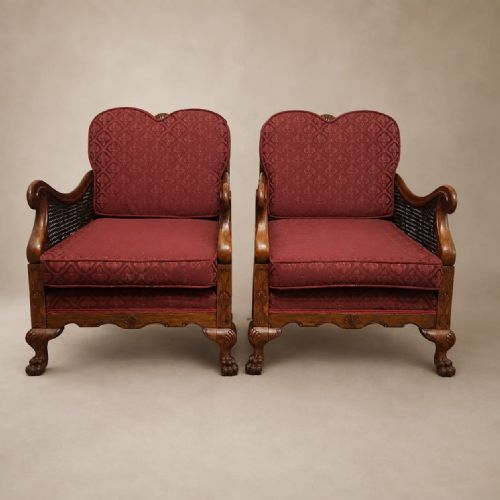
Edwardian Style Chairs
When buyers seek edwardian style chairs, they discover seating that revives Georgian and Chippendale forms through rich mahogany and walnut frames.
Edwardian Style Chairs
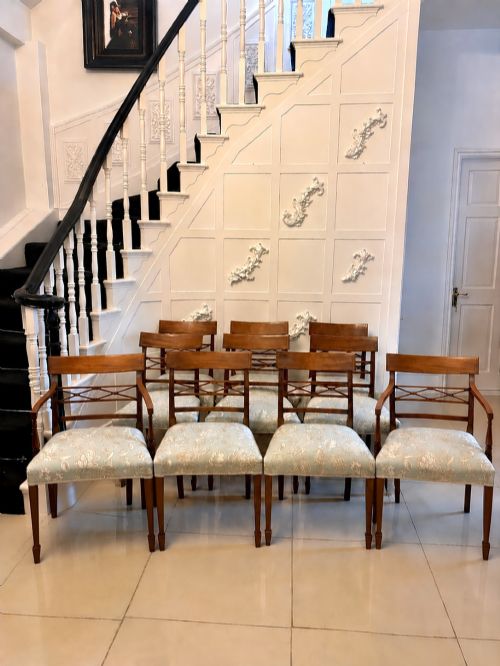
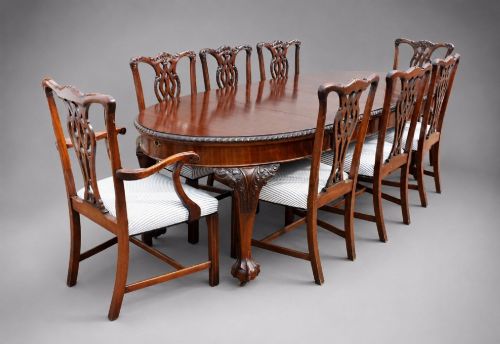
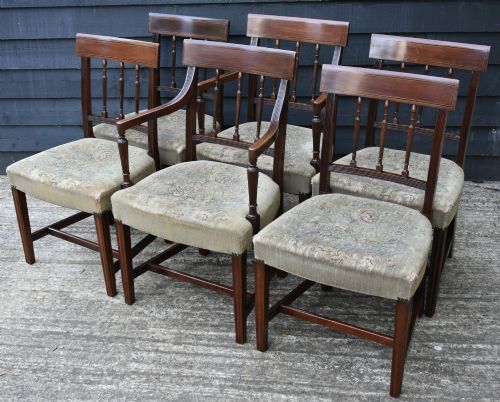
Edwardian style chairs encompass dining sets, armchairs, and salon seating produced around the turn of the twentieth century. These pieces frequently adopt revival aesthetics inspired by eighteenth-century cabinetmakers, drawing heavily on Chippendale, Hepplewhite, and Sheraton vocabulary.
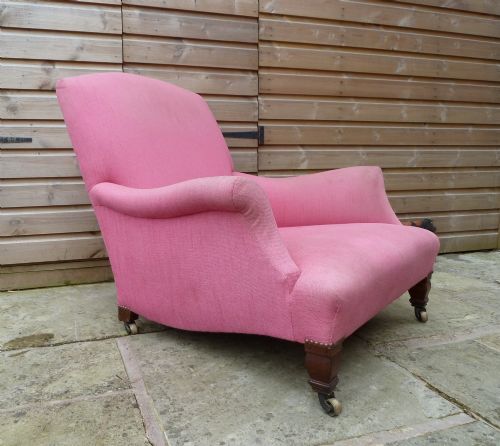
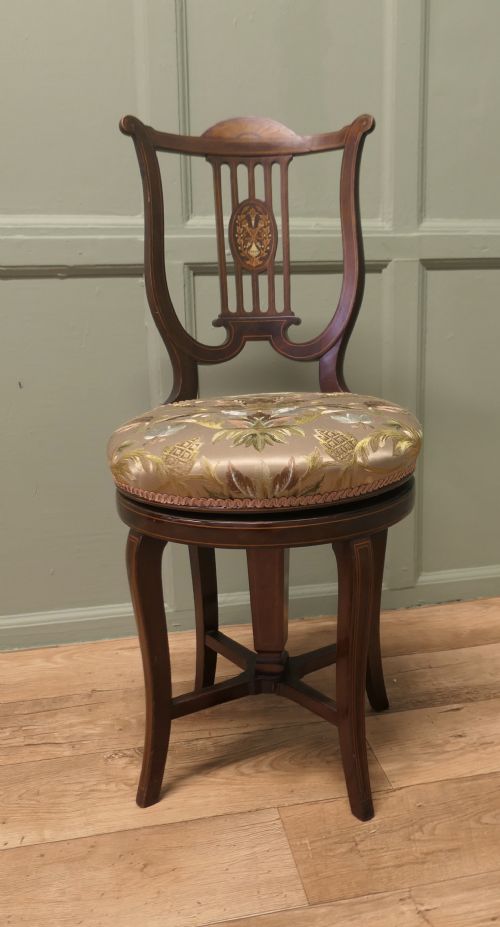
Dining chairs and carvers appear often in mahogany, while occasional chairs utilise satinwood, maple, or walnut. Alongside formal dining suites, the category includes low armchairs, tub chairs, and music chairs suited to drawing rooms.
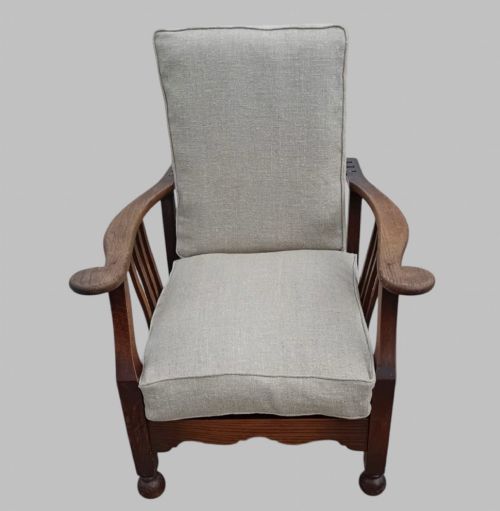
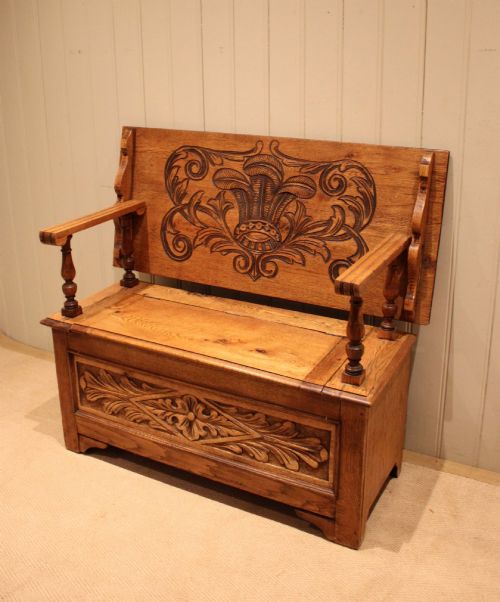
Makers of the era also engaged with Arts and Crafts ideals, producing solid oak and rush-seated chairs that contrast with the polished formal mahogany models.
Materials and Construction
Timbers like solid mahogany, figured walnut, and oak form the structural foundation of these chairs, paired with cane panels, rush seating, and diverse upholstery fabrics. Frame construction relies on traditional joinery, often incorporating carved splats, inlay work, and painted surface decoration.
Period styles span from Victorian and Edwardian production to specific revivals including Sheraton, Hepplewhite, and Arts and Crafts.
Craftsmanship and Proportion
The distinction between tiers rests upon the crispness of hand-carved details, such as ball and claw feet, blind fretwork, and shield backs. Superior examples maintain balanced proportions and utilise dense, well-figured timber stocks without excessive reliance on secondary woods.
Joinery rigidity and the preservation of original finish or patination determine the standing of individual sets. Matching dining sets with intact carver armchairs command particular attention for their uniformity.
Howard and Sons·Maple and Co·Waring and Gillow·Morris and Co·Whytock and Reid
The Edwardian Style Chairs Glossary
- Carver
- An armchair designed to match a set of dining chairs, usually featuring elbow rests.
- Splat
- The vertical central strip of wood in the back of a chair, often carved or pierced.
- Bergère
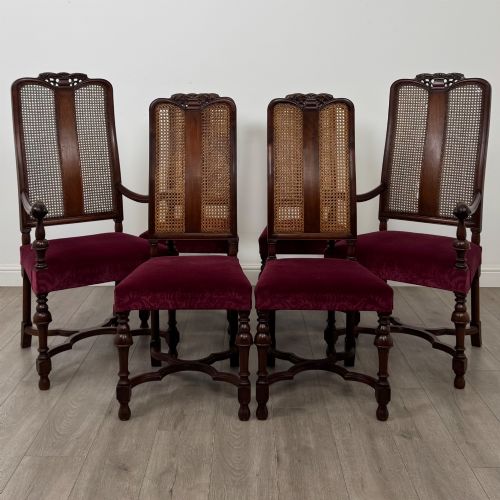
- An enclosed upholstered armchair with a wooden frame and cane-work sides or back.
- Shield Back
- A chair back shaped in the outline of a heraldic shield, popular in Hepplewhite designs.
- Inlay
- A technique of inserting pieces of contrasting timber or metal into a wood surface to form a pattern.
Edwardian Style Chairs: Frequently Asked Questions
How do I identify Edwardian dining chairs?
These dining chairs frequently imitate eighteenth-century revival styles like Chippendale and Hepplewhite while employing turn-of-the-century manufacturing methods.
Look for lighter timber frames, mahogany construction, and specific revival motifs that distinguish them from earlier Victorian seating.
Are these chairs suitable for daily use?
Solid mahogany and oak frames provide robust structural integrity suited to everyday seating at a dining table.
Upholstered and caned examples benefit from periodic checks to webbing and cane panels to ensure lasting comfort.
What is a carver chair?
A carver is an armchair built to match a set of single dining chairs, typically placed at the head of a table.
These pieces share the same timber, leg style, and back design as the accompanying dining chairs but include armrests.
How do revival styles differ from originals?
Revival chairs produced around 1900 incorporate machine-assisted woodworking alongside traditional hand-finishing techniques.
They replicate historical forms such as Queen Anne or Sheraton designs while using the timber selection and hardware typical of the Edwardian period.