



Gillows Tea Table
A gillows tea table brings the exacting cabinet-making of Lancaster and London into a room with understated authority.
Gillows Tea Table
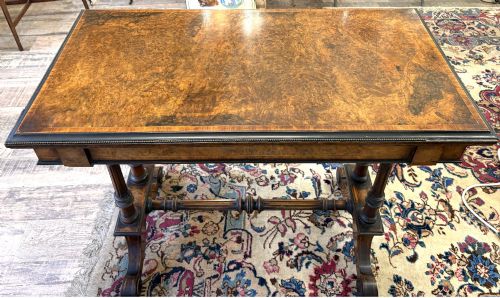
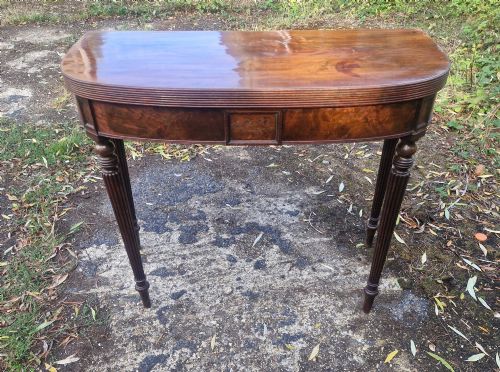
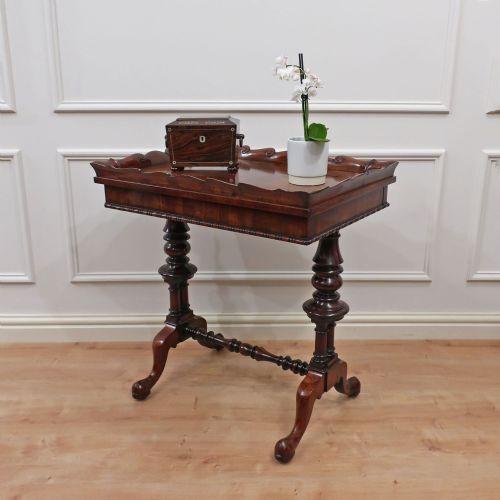
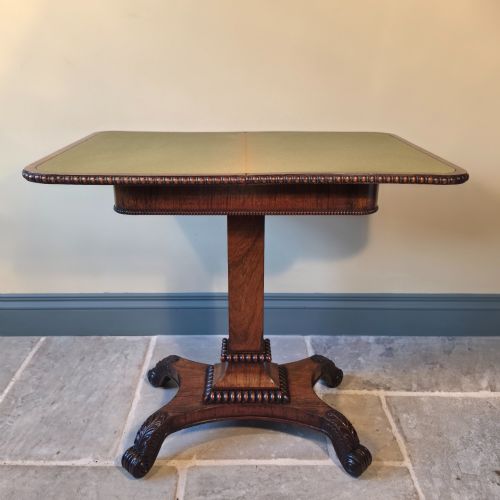
When you search for a gillows tea table, you encounter pieces spanning the Regency, Victorian, and later nineteenth-century periods, created in both mahogany and rosewood. These items often take the form of fold-over tea tables, console designs, and related card or side tables reflecting the workshop's output.
The version you are most likely to meet on this page is an early nineteenth-century mahogany or rosewood fold-over tea table, frequently attributed to or designed in the manner of the firm. Pieces range from marked examples to those bearing the characteristic lines of Lancaster and London makers.
How they were made
Makers utilised dense timbers such as mahogany, flame mahogany, and rosewood, often selecting veneers to create figured surfaces on tops and friezes. Brass castors, mounts, and baize linings appear across card and tea variants.
Construction relied on stable secondary woods like oak, paired with precise joinery for fold-over mechanisms, tea caddy interiors, and robust pillar or leg supports.
Gillows Tea Table Retail Price Guide 2026
Typical asking prices for gillows tea table among the pieces listed under this phrase on Sellingantiques today, from the lower quarter to the upper quarter. They describe what is for sale here now, not the wider market.
Tea caddies inside teapoys occasionally retain traces of fragrant nineteenth-century leaves.
What varies in quality
The grade of timber selection distinguishes standard workshop production from finer outputs, particularly in the figuring of flame mahogany and rosewood veneers. Crispness of carved detail and the weight of brass elements also mark the distinction.
Integrity of the mechanism and the preservation of original secondary timbers define the survival quality of a piece, separating well-maintained examples from heavily restored ones.
Gillows of Lancaster and London·Gillow
The Gillows Tea Table Glossary
- Fold-over tea table
- A form featuring a hinged top that rotates and opens to double its surface area for evening hospitality. It often conceals a shallow well beneath the top.
- Teapoy
- A small box or chest mounted on a pedestal or legs, designed to store loose tea leaves and equipment. Examples often include interior caddies.
- Flame mahogany
- A veneer cut from the fork of the mahogany tree, producing a distinctive flickering flame pattern. It was favoured for principal surfaces during the Regency period.
- Goncalo Alves
- A dense, exotic timber with striking contrasting dark brown and light figuration. It was utilised for select nineteenth-century tables.
- Amboyna
- A highly figured burl wood used for decorative mounts and inlay work on Victorian centre tables.
Gillows Tea Table: Frequently Asked Questions
How do I identify a real gillows tea table?
Look for documentary evidence such as maker stamps, paper labels, or distinct structural signatures typical of the Lancaster workshops. Attribution often rests on specific turning, timber choice, and high standards of secondary framing.
Compare the construction methods and proportions against documented examples from the same period to establish a firm attribution.
Can I use a tea table every day?
These tables accommodate daily use provided they are treated with care regarding moisture, direct sunlight, and weight on the folding leaves. The hinges and pivoting mechanisms benefit from gentle handling.
Positioning the table away from heat sources preserves the stability of the mahogany or rosewood surfaces.
How do I date a nineteenth-century tea table?
Dating relies on stylistic shifts from the Regency period through the Victorian era, observing leg shapes, timber preferences, and edge mouldings. Earlier pieces often display simpler architectural lines and premium flame mahogany veneers.
Later Victorian interpretations incorporate heavier oak elements and diverse woods like burr walnut.