


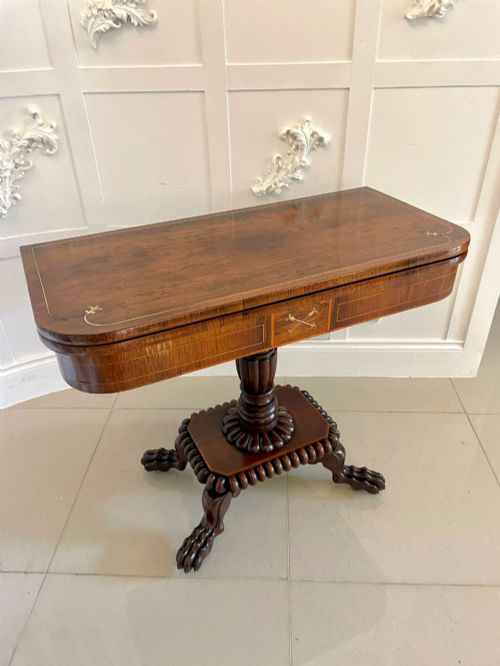
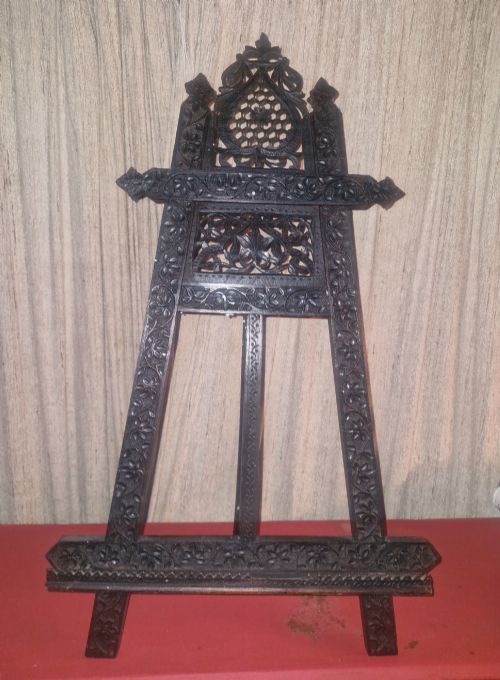
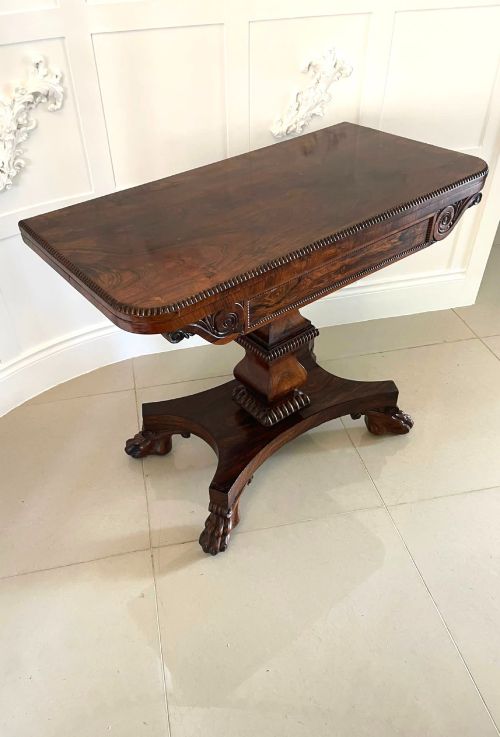
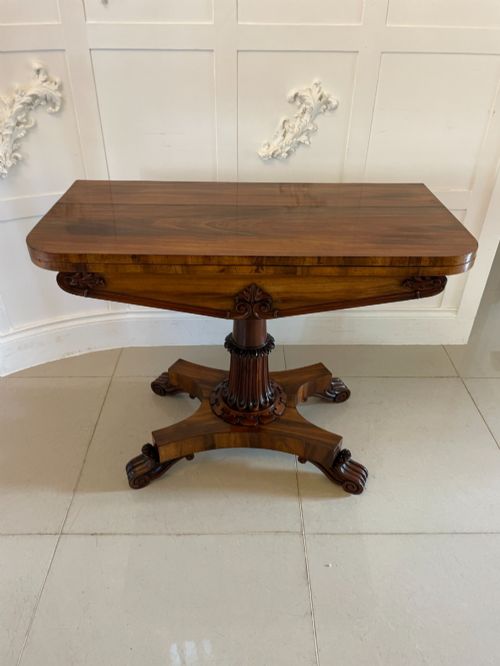
Carved Rosewood Folding Table
A carved rosewood folding table offers a clever surface for cards, tea or display that packs flat when not in use.
Carved Rosewood Folding Table
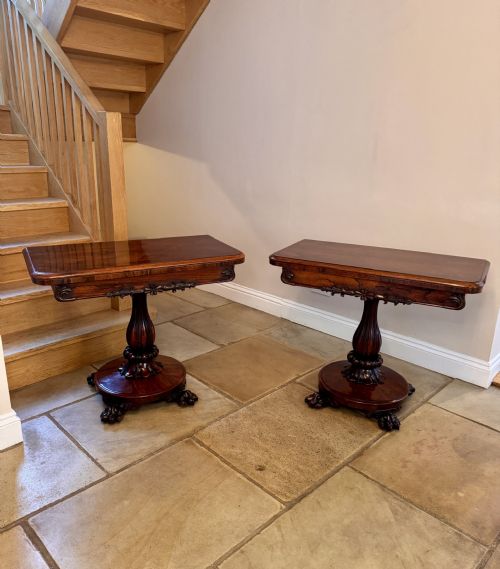
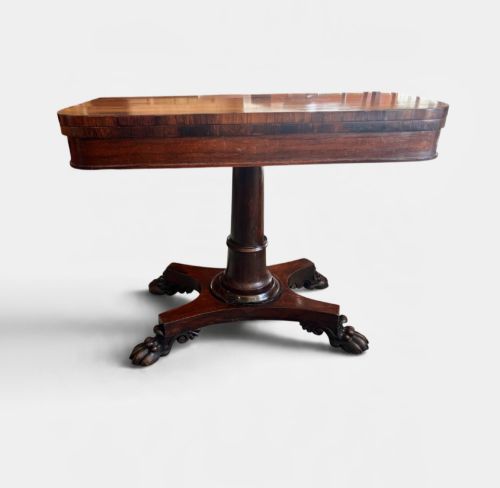
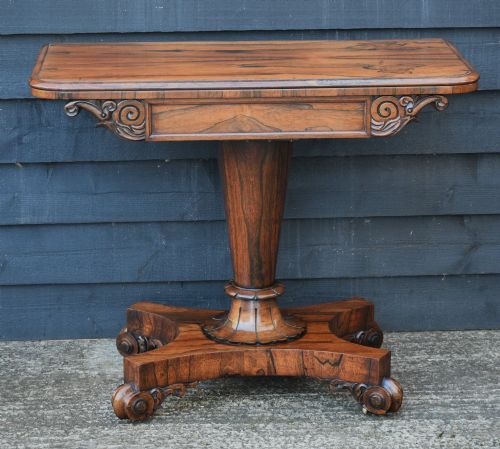
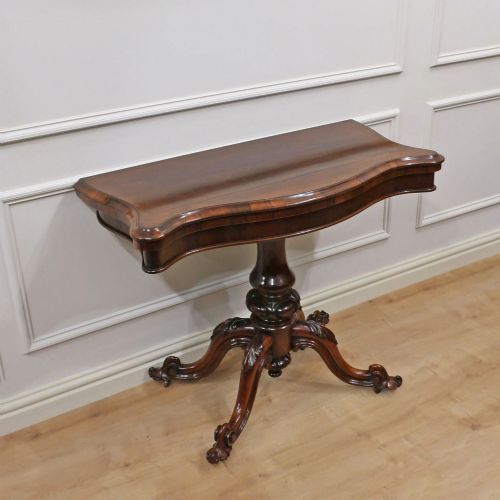
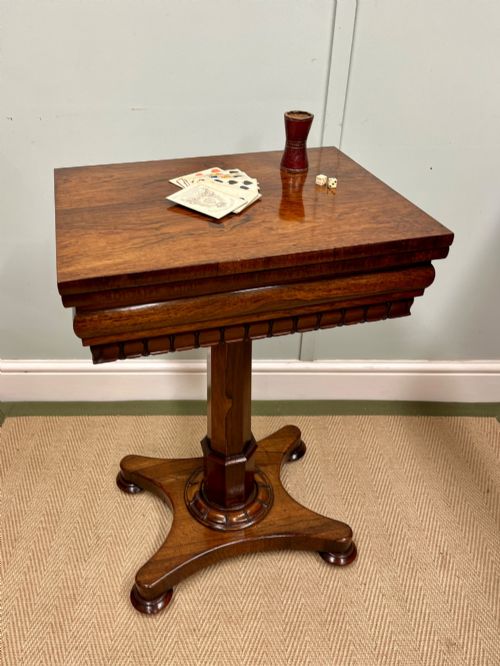
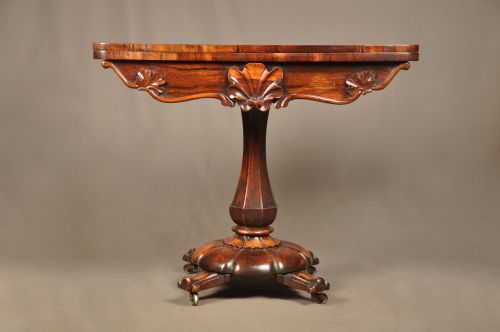
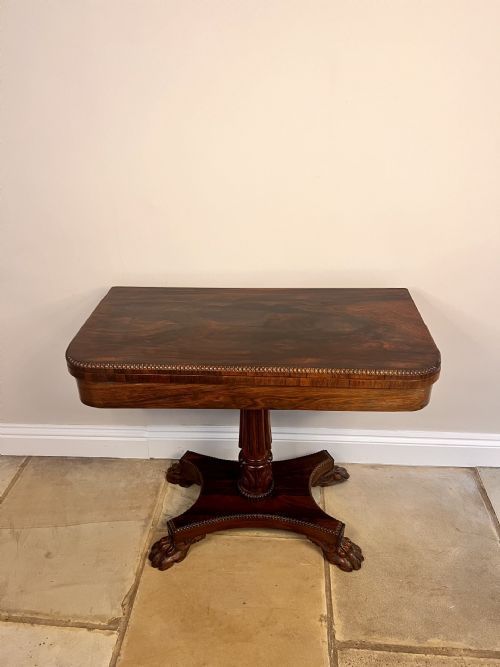
A carved rosewood folding table is primarily a piece designed for social entertaining, appearing most frequently as card, tea, and games tables from the Regency, William IV, and Victorian periods. These tables typically feature a fold-over top supported on a pedestal or pillar base, often revealing a baize-lined surface for play once opened.
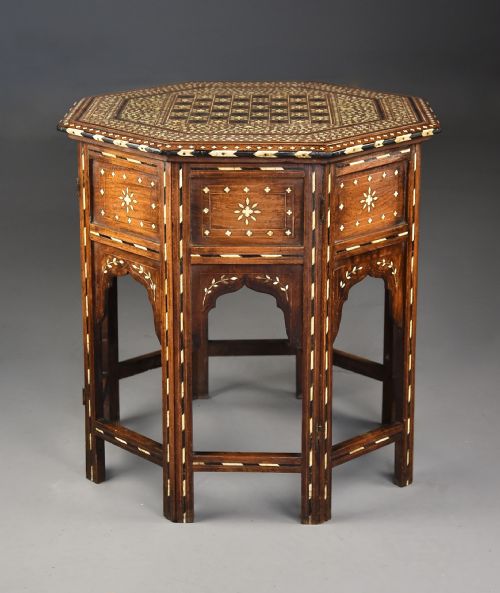
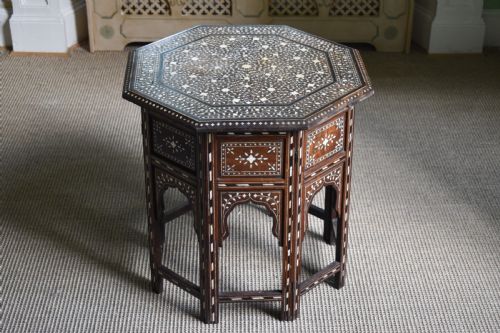
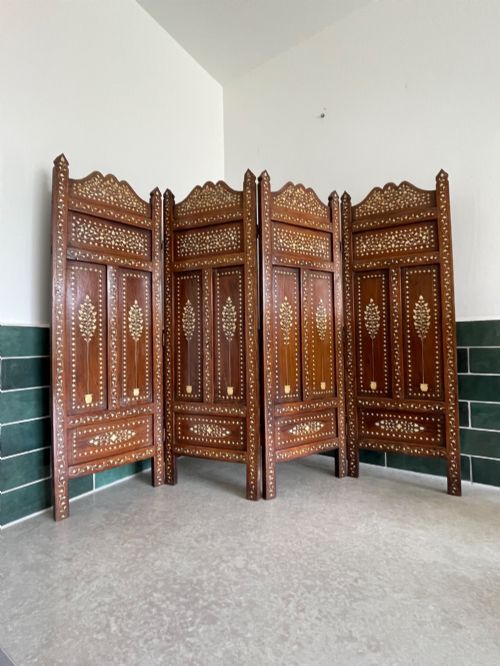
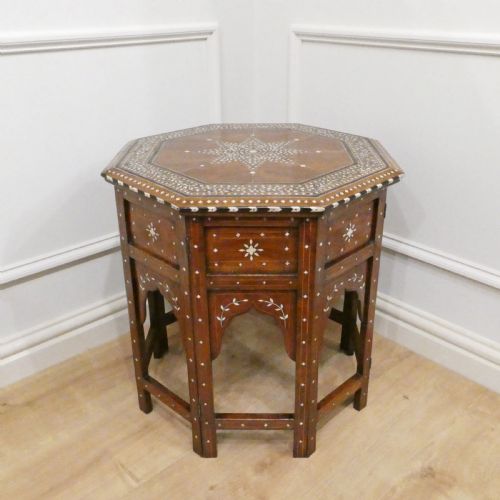
Beyond English cabinet-making, the selection includes Anglo-Indian examples, particularly octagonal occasional pieces from Hoshiarpur. These distinct regional variants introduce complex surface decoration that differs from standard domestic British forms.
Materials and construction
Makers utilised dense tropical hardwood for its dark grain and suitability for sharp hand-carving. Brass inlay and contrasting bone elements frequently accent the timber surfaces on finer examples.
Folding mechanisms rely on pivoting tops and hinged leaves, supported by rotational wooden actions or concertina frames. Pedestal bases anchor the structure, frequently resting on carved platforms with concealed castors.
Carved Rosewood Folding Table Retail Price Guide 2026
Typical asking prices for carved rosewood folding table among the pieces listed under this phrase on Sellingantiques today, from the lower quarter to the upper quarter. They describe what is for sale here now, not the wider market.
Some nineteenth-century tables hide clever internal wells beneath the folding top to store small ivory gaming counters and decks of cards.
Judging the standard of execution
The crispness of the timber carving dictates much of the visual merit, distinguishing deep, undercut foliage from shallow, mechanical shaping. Heavier bases with stable pillar mounts provide better physical balance when the top is rotated or opened.
The precision of the joinery where the fold-over leaves meet reveals the workshop's competence. Superior execution ensures the leaves align flat and flush without excessive play in the hinges.
Gillows·William Trotter
The Carved Rosewood Folding Table Glossary
- Rosewood
- A dense, heavily figured dark timber favoured for high-status nineteenth-century cabinet work. It takes a high polish.
- Card table
- A specialist table with a hinged top that opens to double the surface area for gaming. Interiors often retain baize or felt lining.
- Hoshiarpur
- A centre in northern India known for intricate wood-working traditions. Tables from here feature dense bone and brass inlay.
- Pedestal base
- A central pillar support resting on a platform or footed base rather than four corner legs. This configuration allows seated users more legroom.
Carved Rosewood Folding Table: Frequently Asked Questions
How do I use a folding card table today?
These tables function well as console surfaces against a wall when folded shut, occupying minimal floor space in a hallway or sitting room.
When guests arrive, the top simply unfolds to create a functional surface for drinks, games or casual dining.
What is the difference between a tea table and a card table?
Tea tables generally feature plain or veneered interiors intended for serving refreshments.
Card tables almost exclusively contain lined interiors designed specifically for playing cards and board games.
How can I tell Regency from Victorian examples?
Regency and William IV pieces lean towards cleaner architectural lines, bolder rosewood grain, and sculptural elements like carved dolphin bases or robust pedestals.
Victorian variations frequently introduce heavier mouldings and more ornate, darker carving across the frieze and legs.
Are Anglo-Indian tables constructed the same way?
Anglo-Indian and Hoshiarpur pieces often utilise folding or detachable leg systems distinct from standard European pedestal designs.
Their surfaces are defined by extensive geometric bone inlay rather than plain polished timber veneers.