



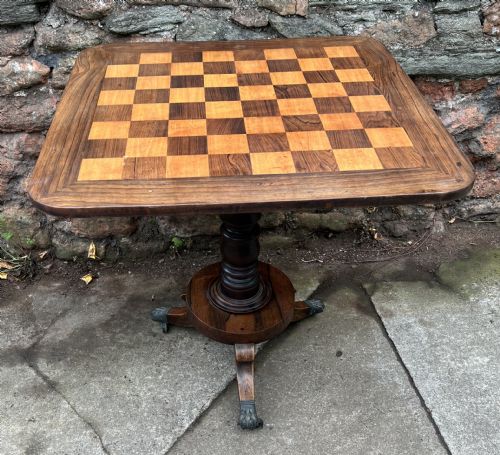


Antique Card Table Paw Feet
An antique card table paw feet brings the refined social spaces of the Georgian, Regency, and William IV periods directly into a modern room.
Antique Card Table Paw Feet
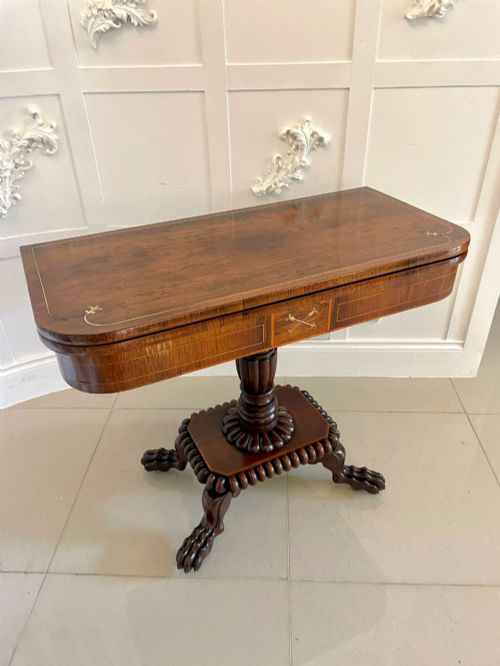
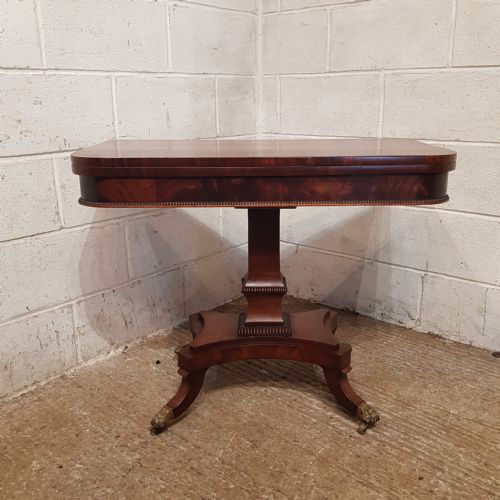
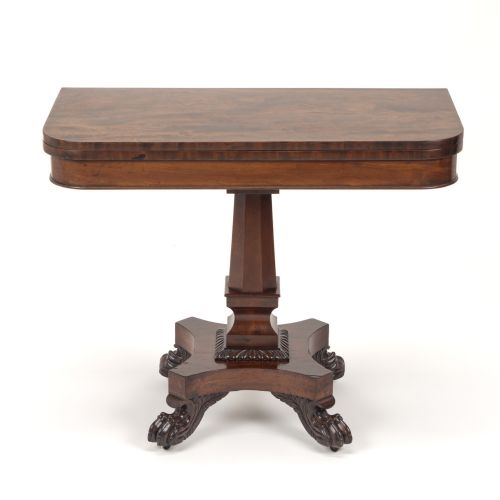
An antique card table paw feet is a dual-purpose piece designed for domestic card games and social gatherings during the eighteenth and nineteenth centuries. These tables typically feature a hinged, fold-over top that opens to reveal a baize-lined playing surface, supported by a central pedestal or pillar resting upon carved paw feet.
The pieces appearing on this page span the Georgian, Regency, and William IV eras, alongside broader nineteenth-century examples. Alongside dedicated card tables, buyers will encounter related forms including games tables, tea tables, side tables, console tables, and occasional tables sharing similar foundational designs.
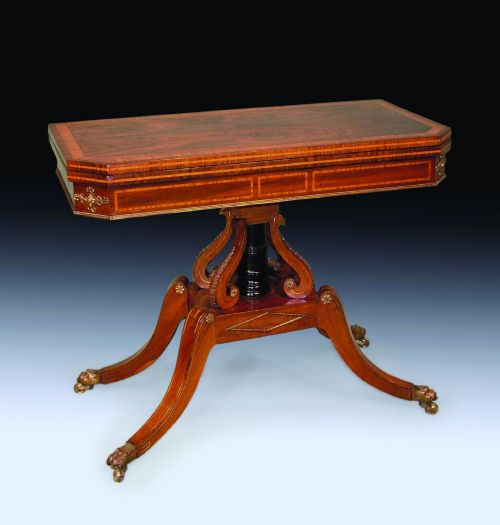
Rosewood and mahogany dominate the selection, often enriched with satinwood, kingwood, birdseye maple, and ebonised wood. Brass inlay, gilded brass mounts, and crossbanding frequently accent the timber frames, demonstrating the decorative ambition of makers working across the late eighteenth and early nineteenth centuries.
How they were made
Cabinet makers utilised dense native and imported timbers, selecting figured mahogany and richly grained rosewood for visible surfaces. Woods such as satinwood and birdseye maple provided contrasting stringing, banding, and veneered panels across the tops and friezes.
Metalwork played a structural and decorative role, with brass inlay set flush into the timber and cast brass mounts applied to pedestals. Carved wooden paw feet anchor the base columns, requiring skilled hand-carving to shape the leonine or scrolling details characteristic of Regency and Georgian joinery.
Antique Card Table Paw Feet Retail Price Guide 2026
Typical asking prices for card table paw feet among the pieces listed under this phrase on Sellingantiques today, from the lower quarter to the upper quarter. They describe what is for sale here now, not the wider market.
Listings span the Georgian, Regency, and William IV periods, featuring rosewood, mahogany, satinwood, and brass inlay.
What varies in quality
The calibre of timber selection and veneer matching defines the upper tier of these tables. Finer examples display continuous, highly figured grain patterns across the fold-over top and precise crossbanding that demonstrates superior cabinet-making competence.
The execution of the carved paw feet and the integration of brass inlay distinguish standard production from exceptional workshop output. Crisply defined carving on the base and immaculate setting of metal mounts indicate a higher standard of craftsmanship.
John McLean·Gillows
The Antique Card Table Paw Feet Glossary
- Fold-over top
- A hinged wooden surface that doubles the top area when opened for gaming or dining. This mechanism swings out to reveal the interior playing surface.
- Crossbanding
- A strip of veneer applied to the border of a tabletop with the grain running perpendicular to the central panel. This technique frames the primary timber and adds visual contrast.
- Pedestal base
- A central column supporting the table body rather than four corner legs. It frequently terminates in platform feet or carved paw supports.
- Baize
- A coarse woolen fabric traditionally used to line the interior playing surface of card and games tables. It provides a soft, non-slip texture for handling cards.
Antique Card Table Paw Feet: Frequently Asked Questions
How do I use an antique card table?
These tables function as side or console tables against a wall when closed, with the top folded flat.
Opening the hinged top reveals a baize-lined surface originally intended for card games and social entertainment.
What woods were used for these tables?
Cabinet makers predominantly utilised mahogany and rosewood for the primary structures and show surfaces.
More decorative examples incorporate satinwood, kingwood, birdseye maple, and ebonised wood for contrasting inlay and veneering.
How do I date a Regency card table?
Regency pieces generally date from the early nineteenth century and often feature distinct classical motifs, rosewood veneers, and brass inlay.
Pedestal bases with carved paw feet become particularly prominent during the Regency, George IV, and William IV periods.
Where should I place a card table at home?
Closed tables fit well against hallway walls, living room perimeters, or beneath windows as slim console surfaces.
Placing them in a study or drawing room allows them to open out as focal conversation pieces when hosting.