

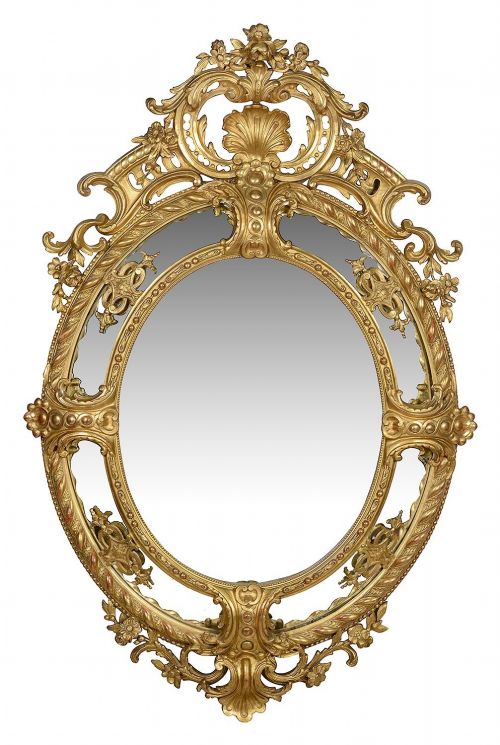

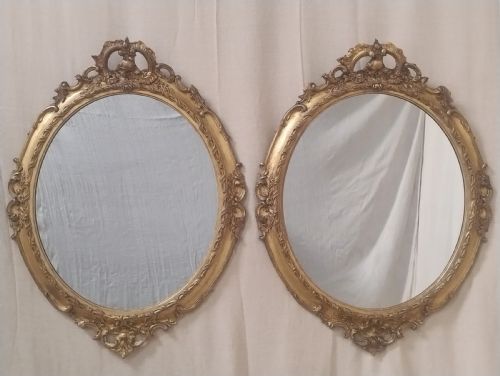
Gilded Wood Oval Mirror
A gilded wood oval mirror brings instant warmth and reflected light to a room, drawing the eye with its curved frame.
Gilded Wood Oval Mirror
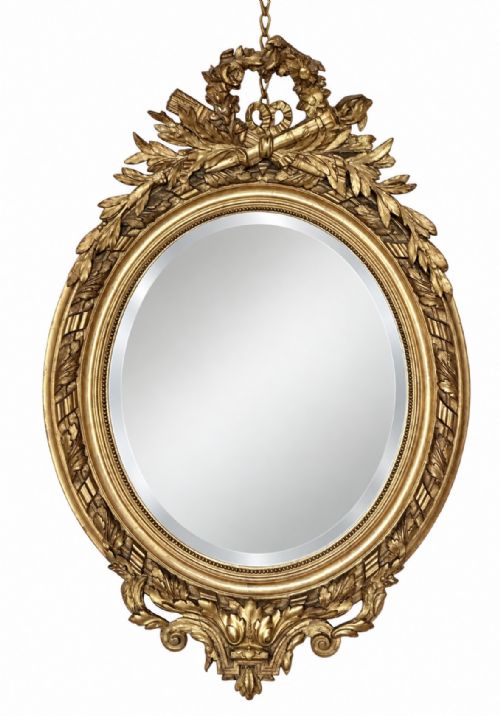
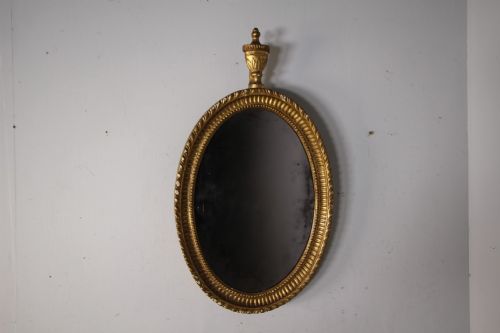
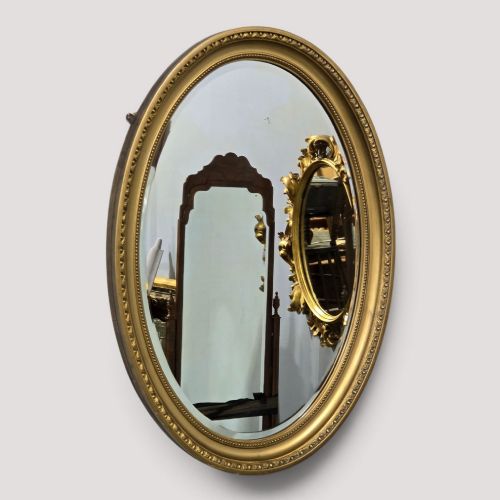
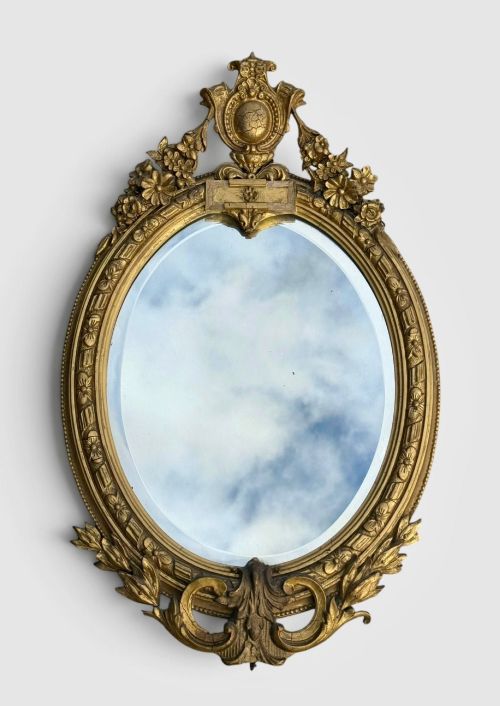
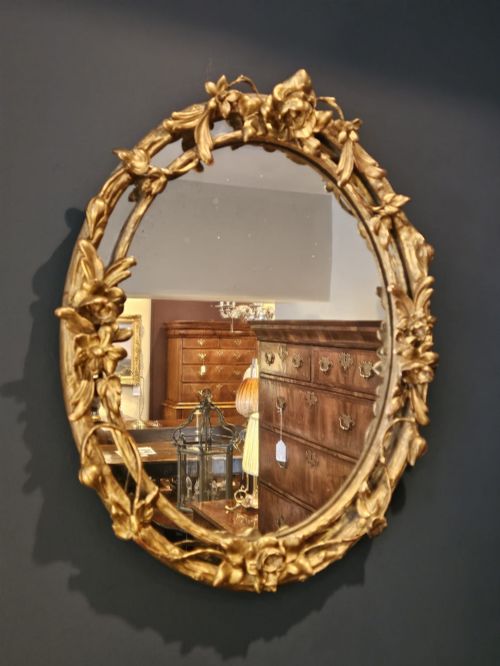
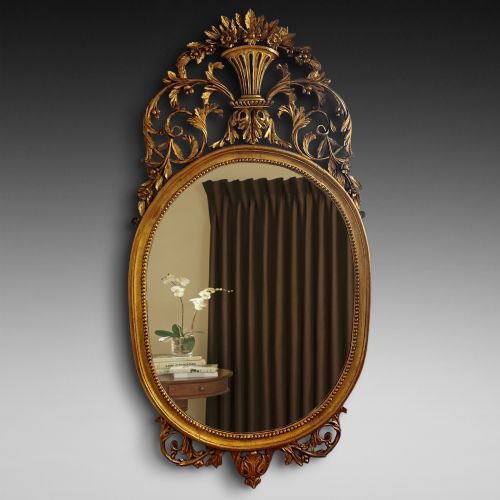
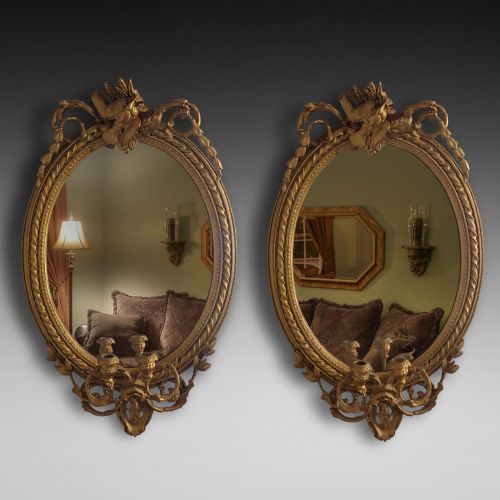
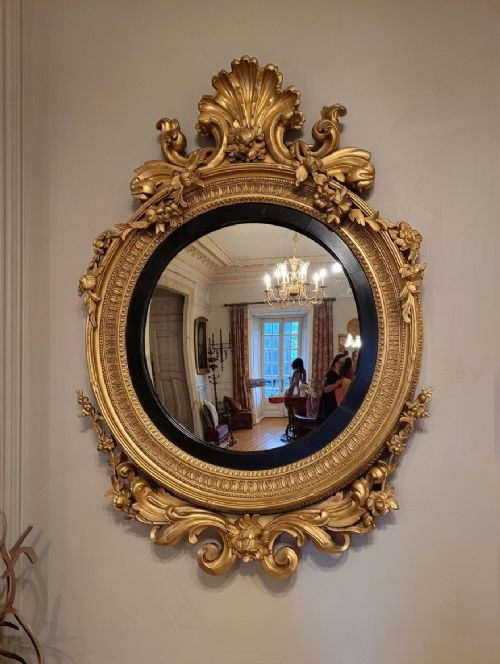
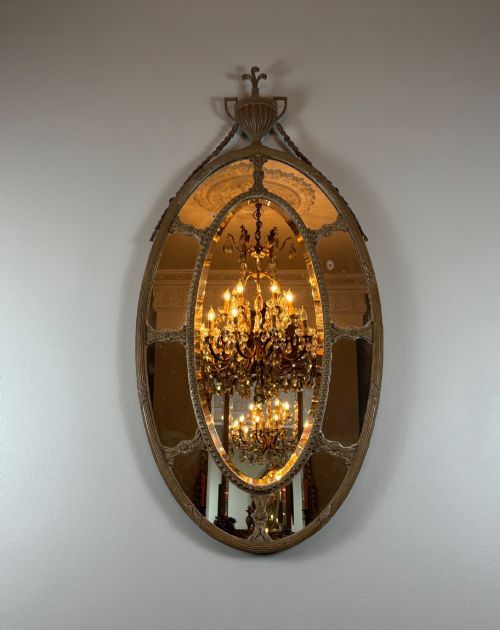
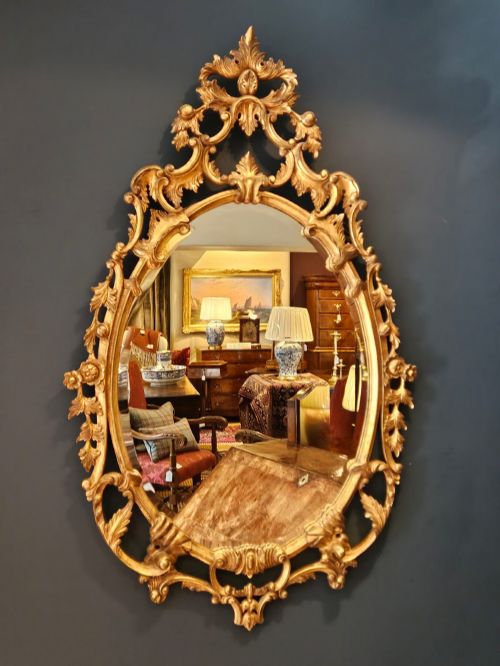
A gilded wood oval mirror is a decorative looking glass defined by its curved frame and metallic finish, appearing across periods from the seventeenth century through the Edwardian era. You will encounter wall mirrors, pier mirrors, and table mirrors shaped in styles ranging from Georgian and Regency to Victorian Rococo Revival. These pieces function both as practical reflective surfaces and as substantial decorative focal points for a hall, drawing room, or overmantel.
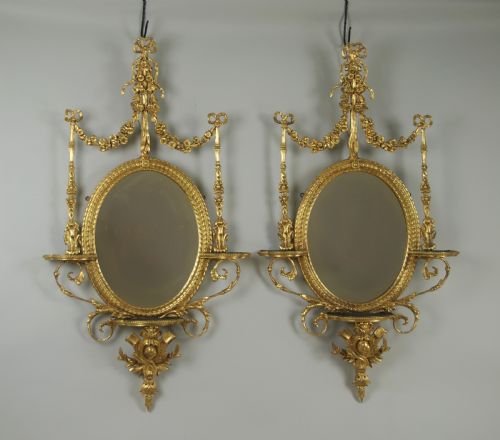
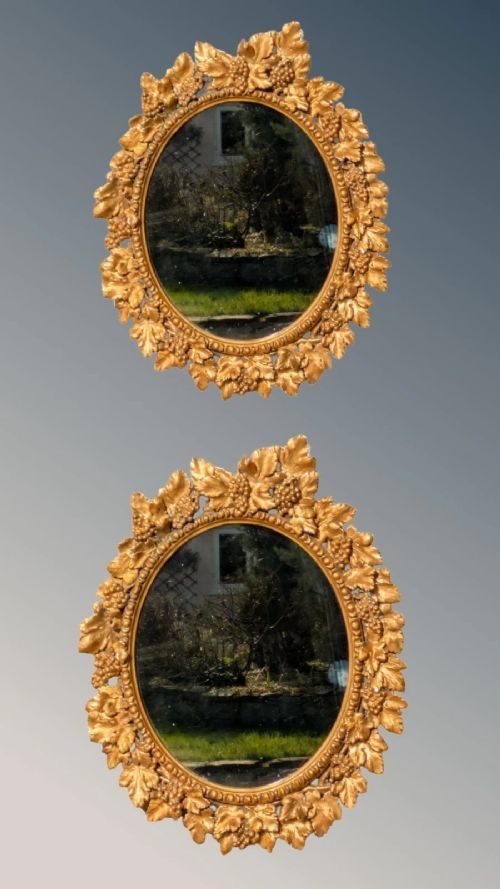
The inventory on this page spans English, French, and Italian origins, demonstrating diverse regional interpretations of the form. Pieces include simple carved wooden frames alongside elaborate examples adorned with urns, swags, vine leaves, and laurel wreaths. Whether you select a compact miniature or an enormous hall mirror, each object reflects the prevailing decorative tastes of its manufacturing period.
How they were made
Makers constructed the foundation of a gilded wood oval mirror using timber or hardwood, often applying layers of gesso to build up intricate carved details such as rosettes, vine leaves, and floral swags. Craftsmen then laid thin sheets of gold leaf over the prepared surface or applied a gilt paint finish to achieve the luminous metallic sheen. This traditional combination of wood, gesso, and gold leaf allowed carvers to execute deep, crisp relief work that catches light from multiple angles.
Mirror glass of the period was set within these frames, sometimes taking the form of border glass or original mirrored glass showing gentle age. Structural elements like display brackets or girandole candle arms were integrated into the wooden frames of specific pieces during construction. The physical depth of the carved wood and composition ornaments gives each frame its distinct sculptural presence.
Listings feature pieces spanning from the 17th Century through the Edwardian period, utilising traditional materials including giltwood, gesso, and gold leaf.
What varies in quality
The distinction between average and exceptional pieces lies primarily in the crispness and depth of the carved woodwork. Hand-carved giltwood with deep, detailed relief work represents a higher standard of craftsmanship than simpler frames relying heavily on moulded composition. The finesse of the gilding itself also determines quality, with genuine gold leaf ageing with a softer, warmer lustre than flat gilt paint.
Proportion and decorative cohesion separate standard examples from masterworks. Pieces featuring well-balanced urns, swags, or figurative friezes demonstrate a higher level of design ambition. The survival of original mirror glass and the structural integrity of the timber frame further elevate the standing of any given mirror.
The Gilded Wood Oval Mirror Glossary
- Giltwood
- Timber that has been coated in gold leaf or gold paint. This finish provides the characteristic metallic brilliance seen on period frames.
- Gesso
- A plaster-like mixture applied to wood frames as a base for carving and gilding. It allowed artisans to shape intricate decorative motifs before applying gold leaf.
- Girandole
- A decorative wall mirror featuring attached candle sconces or arms. These branching holders project light from candles directly onto the reflective glass.
- Pier glass
- A tall mirror designed to hang on the wall space between windows. These pieces often matched console tables placed directly beneath them.
- Overmantel
- A large mirror intended for placement above a fireplace mantelpiece. They are typically wider or taller to command the chimney breast.
- Composition
- A moulded material made from whiting, resin, and glue pressed into decorative shapes. It was frequently used as a faster alternative to hand carving for repeating ornaments.
Gilded Wood Oval Mirror: Frequently Asked Questions
How do I date a gilded wood oval mirror?
Dating relies on identifying stylistic markers, such as the classical symmetry of George III Adam designs or the exuberant curves of Victorian Rococo Revival. Examining the construction of the wooden frame and the backboards offers further clues to the period of manufacture.
Changes in mirror glass manufacturing techniques and the formulation of gesso also assist in determining age. Comparing the decorative motifs against documented periods helps narrow down the decade a mirror was produced.
Where should I hang an oval gilt mirror?
An oval mirror suits spaces where a softer silhouette contrasts against rigid architectural lines. Hallways, living rooms, and above mantelpieces are traditional locations that benefit from reflected light.
Ensure the wall structure can support the weight of the timber and gesso frame before hanging. Positioning the mirror opposite a window maximises the amount of natural light brought into the room.
Are these mirrors fragile?
The combination of timber, gesso, and gold leaf requires careful handling during movement and placement. The protruding carved elements and composition ornaments can chip if subjected to sharp impacts.
Routine maintenance involves gentle dusting with a soft, dry cloth without chemical cleaners. Protecting the surface from direct moisture preserves both the wooden structure and the gilded finish.
What is the difference between giltwood and gilt painted?
Giltwood strictly refers to pieces where thin sheets of gold leaf are applied over a prepared gesso and bole ground. This technique produces a deep, nuanced metallic reflection that ages gracefully.
Gilt painted finishes utilise metallic paint brushed directly onto the surface. Painted versions tend to offer a more uniform appearance with less tonal variation across the carved details.