



Gilded Porcelain Sugar Bowl
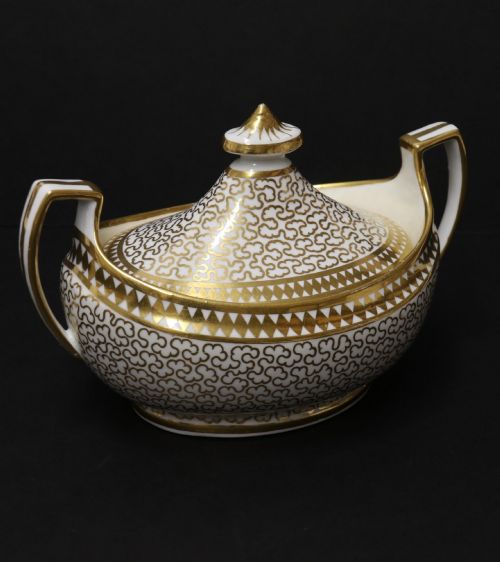
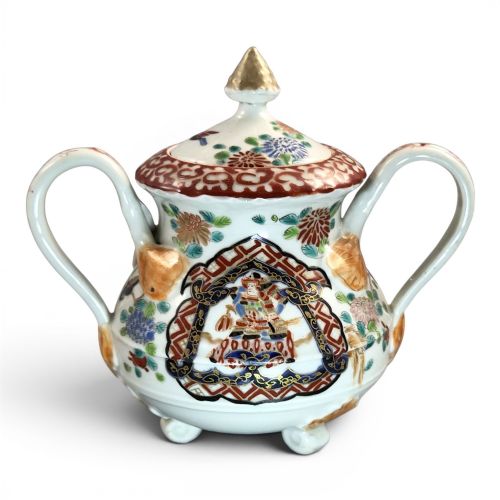
These gilded porcelain sugar bowls are finely potted Regency and Georgian vessels that bring brilliant gold leaf and enamel detail to the table.
What these gilded porcelain sugar bowls are
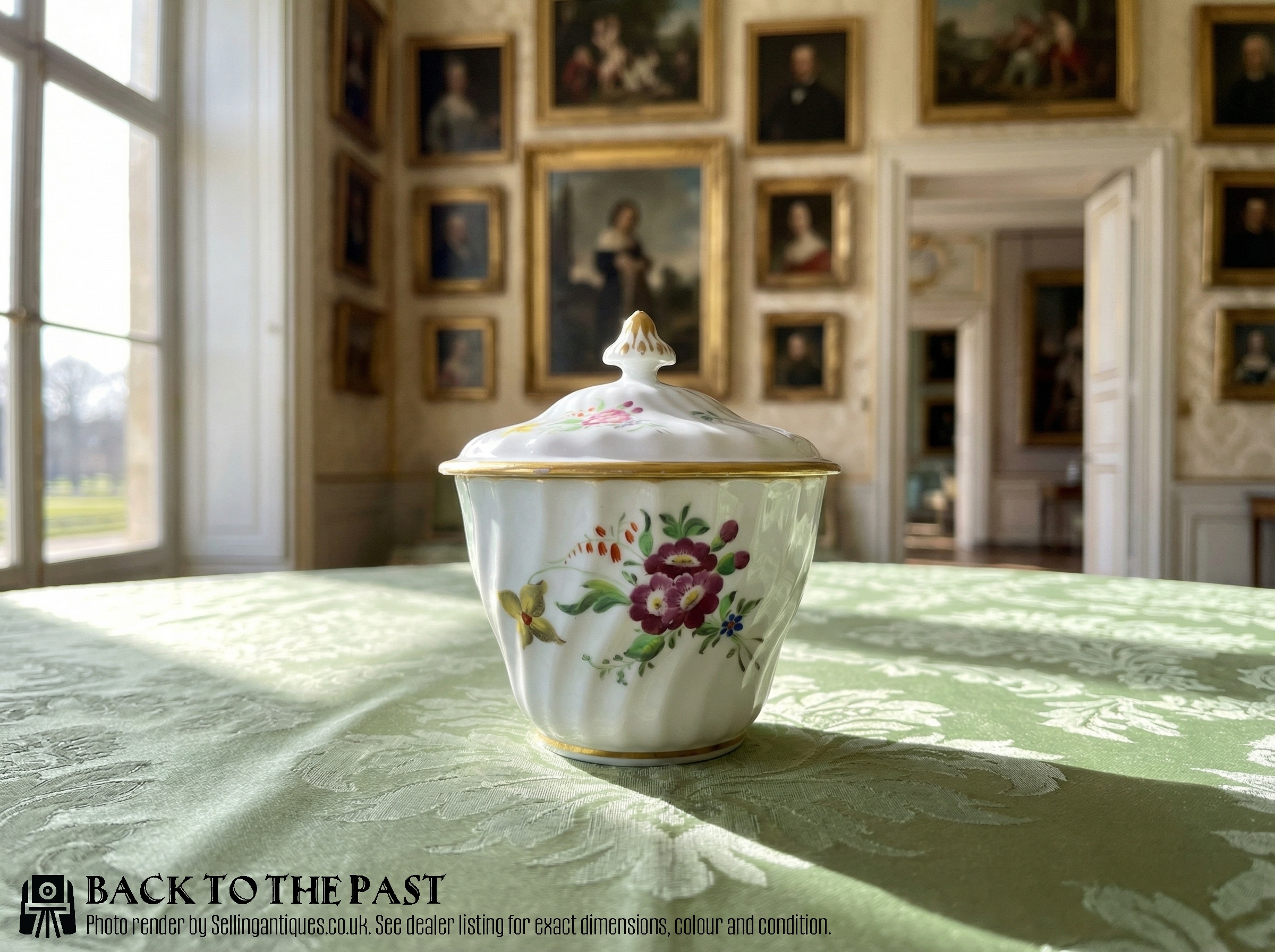
A gilded porcelain sugar bowl is a covered vessel designed for the formal tea service, appearing across the eighteenth and nineteenth centuries in refined domestic settings. These pieces function as lidded containers for loose sugar, often designated in period records as sucriers or sugar boxes with covers.
Buyers browsing this selection will most frequently encounter nineteenth-century examples alongside earlier eighteenth-century forms. The inventory spans the Regency and Georgian eras, showcasing specialised shapes produced by notable English factories.
The forms range from early Flight period Worcester vessels to robust felspar porcelain bodies from the Spode works. Each item demonstrates the distinct stylistic priorities of its respective decade, from late Georgian classicism to Regency elaboration.
How they were made
Makers shaped these sugar bowls using soft-paste porcelain, standard porcelain, and specialised felspar porcelain bodies, which provided a smooth white ground for decoration. Potters then applied vibrant enamel colours by hand before introducing rich gilding to highlight the rims, handles, and finials.
Gold leaf and liquid gilt were meticulously brushed or painted onto the glazed surfaces and subsequently fired in a kiln to bond the metal to the porcelain. This decorative layer frequently defined specific ornamental motifs, such as the Angouleme pattern or designated factory pattern numbers.
Retail Price Guide 2026
Typical UK retail prices for gilded porcelain sugar bowl, calculated from the Sellingantiques database of over a million retail prices indexed since 2003. This retail price guide relies exclusively on Sellingantiques data; no external sources or auction records are used, so the figures do not describe the wider market.
Sweet luxury was guarded under lock and key until these dainty porcelain boxes brought the sugar straight to the drawing room table.
What varies in quality
The refinement of the porcelain body and the precision of the hand-applied enamel work dictate the standing of each piece. Early soft-paste bodies and sophisticated felspar porcelain demonstrate different technical ambitions in weight and translucency.
The density and crispness of the gold leaf application separate standard utilitarian wares from superior factory output. Artisanal control over pattern execution, such as intricate floral motifs or geometric borders, determines the overall sophistication of the vessel.
Chamberlains Worcester·Spode·Ridgway
The Gilded Porcelain Sugar Bowl Glossary
- Sucrier
- A lidded sugar bowl or sugar box used in tea service sets. This term appears frequently in nineteenth-century inventory records alongside the more common description of sugar bowl.
- Felspar porcelain
- An innovative ceramic body introduced in the nineteenth century using felspar minerals to increase durability and whiteness. Spode utilised this specific formula for robust yet refined tablewares.
- Soft-paste porcelain
- An artificial ceramic composition fired at lower temperatures than hard-paste porcelain, common in eighteenth-century English manufactories. It yields a distinctive warm glaze texture.
- Gilt
- A thin layer of gold applied to the porcelain surface for decorative effect. It requires careful kiln firing to achieve a permanent metallic lustre.
- Enamel
- Opaque coloured glass fused to the porcelain body during decoration. It provides the vivid palette seen on Regency patterns.
Frequently Asked Questions
How old are these sugar bowls?
The available pieces span the eighteenth and nineteenth centuries, specifically covering the Georgian and Regency periods.
Manufacturing dates stretch from the late seventeen-eighties through to approximately eighteen-thirty.
What materials were used?
The pieces are constructed from various porcelain bodies including standard porcelain, soft-paste porcelain, and innovative felspar porcelain.
Decorations incorporate hand-applied enamel colours alongside gold leaf and liquid gilt.
How do I identify a Regency sugar bowl?
Regency examples often feature distinct factory pattern numbers, such as those recorded by Spode and Ridgway.
They display the characteristic decorative motifs and material improvements typical of the early nineteenth century.