



Antique Porcelain Sugar Basin
An antique porcelain sugar basin sits at the centre of the tea table, holding loose loaves for daily hospitality.
Antique Porcelain Sugar Basin
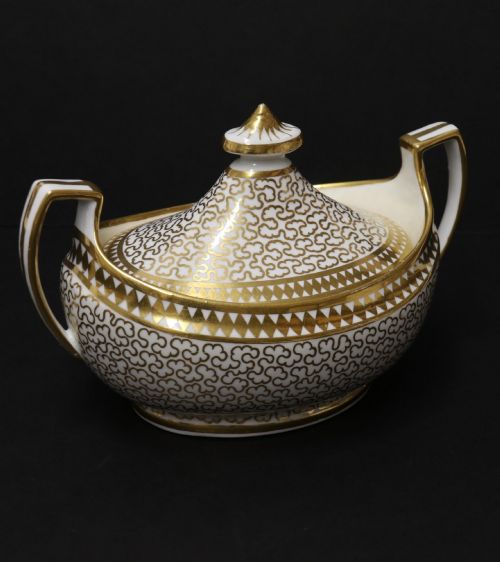
An antique porcelain sugar basin serves as a vessel for sweetening tea, appearing across this selection as covered sucriers, two-handled bowls, and open sugar basins. These ceramic pieces cross several periods, taking forms from the mid-1700s, 18th century, Regency era, 19th century, and 1920s.
The most common versions met here include Worcester and Spode sucriers with matching covers, alongside Japanese Imari and Satsuma sugar bowls. English traditional factories and European makers shape these decorative ceramics into utilitarian vessels that accompanied cream jugs and tea sets.
How they were made
Potters shape these vessels using porcelain, bone china, felspar porcelain, soft-paste porcelain, and earthenware. Soft-paste and hard-paste bodies form the foundational structure before artisans apply decorative glazes.
Makers enhance the surfaces using enamel painting, gold leaf, and gilt details. Certain Japanese examples incorporate specific studio marks, while English factories apply distinct numbered patterns.
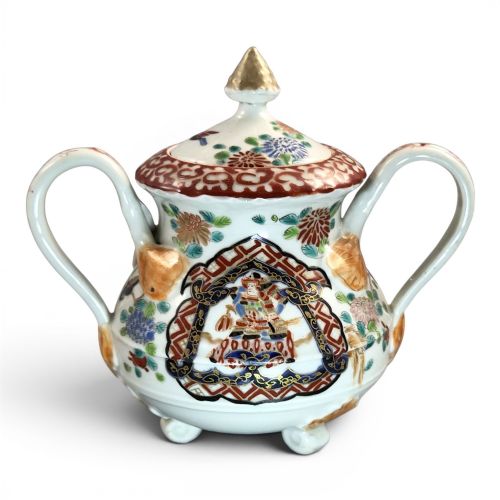
A stoic samurai gazes out from a Meiji period sugar bowl, standing guard over the lumps of sugar.
What varies in quality
The sophistication of the painted decoration separates standard utilitarian wares from finer studio output, visible in the precision of gilt highlights and hand-painted motifs. Enamel work ranges from simple geometric borders to intricate figurative scenes depicting samurai or detailed fruit studies.
The refinement of the porcelain paste itself, from early soft-paste bodies to later felspar and bone china compositions, dictates the translucency and weight of the vessel. The presence of matching covers and distinct factory or studio marks elevates the integrity of the piece.
Chamberlains Worcester·Spode·Fukagawa·Ridgway·Shozan·Richard Ginori·Royal Worcester·Coalport
The Antique Porcelain Sugar Basin Glossary
- Sucrier
- A covered sugar basin designed to hold loaf or loose sugar for the tea service. These vessels frequently feature matching lids and sometimes include twin handles.
- Felspar Porcelain
- A refined ceramic body introduced in the 19th century that offered greater durability and whiteness. Factories like Spode utilised this composition for their tea wares.
- Soft-paste Porcelain
- An artificial porcelain mixture fired at lower temperatures than hard paste, common in 18th-century European production. It possesses a warm tone and distinctive glaze absorption.
- Imari
- A decorative style originating in Japan, characterised by cobalt blue, iron red, and gilt ornamentation. Victorian iterations also appear in English factory production.
- Flight Period
- A specific era of Worcester porcelain production dating to the late 18th century. Pieces from this time carry distinctive factory marks associated with the Flight partnership.
Antique Porcelain Sugar Basin: Frequently Asked Questions
What is a sucrier?
A sucrier is simply the French term for a sugar bowl, frequently used by English porcelain factories in the Regency and 19th-century periods to describe covered sugar basins.
These vessels were standard components of a matching tea service, designed to keep sugar clean and dry on the dining table.
How do I identify a Flight period Worcester basin?
Flight period pieces date to the late 18th century and typically display specific handwritten or impressed factory marks under the glaze.
Examining the paste and the characteristic blue and gilt enamel decoration helps confirm the manufacturing era.
Were all sugar basins sold with covers?
Many sugar basins from the Georgian and Regency periods were produced with matching lids, referred to as sucriers or sugar boxes.
Open sugar bowls also exist, particularly in later 19th-century and 1920s table services where loose sugar presentation changed.
What distinguishes Japanese Imari from English Imari?
Japanese Imari pieces, such as those with Fukagawa marks from the Meiji period, utilise traditional local clays and hand-painted iron red and blue palettes.
English factories like Royal Crown Derby later adopted the Imari aesthetic, applying the distinctive Japanese-inspired motifs to bone china.