


Antique Covered Sugar Basin
These antique covered sugar basin examples bring refined form and delicate craftsmanship to the table.
Antique Covered Sugar Basin
When you search for an antique covered sugar basin, you encounter vessels designed to hold granulated or lump sugar on the dining or tea table. The examples listed here span periods from the 18th century through the 19th century and into the early 20th century.
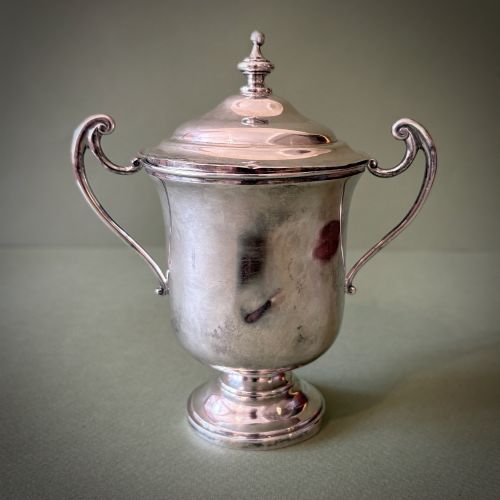
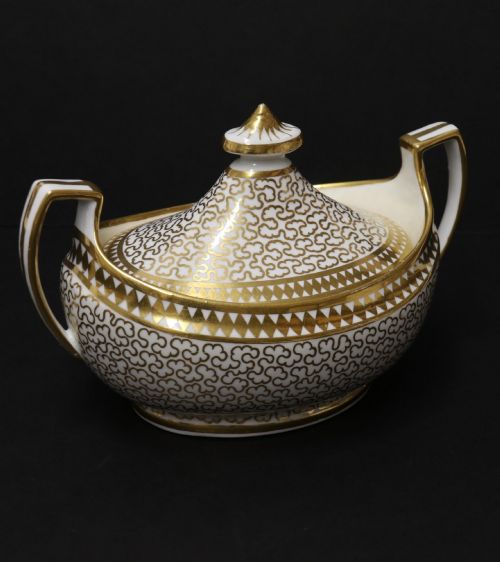
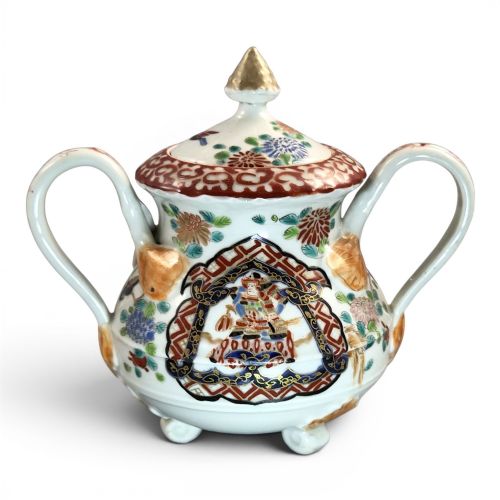
You meet various forms on this page, including porcelain sucriers, glass sugar bowls with covers, and silver vessels. Origins range from English factories like Worcester, Spode, and Chamberlains to French glasshouses and Japanese kilns.
The styles reflect the dominant tastes of their eras, taking in Regency elegance, Victorian Imari patterns, and early American silver forms. Each piece combines a matching lid with a bowl, often featuring handles or specialised decorative motifs.
How they were made
Makers shaped these pieces using fine ceramics such as bone china, felspar porcelain, and standard porcelain, alongside sterling silver and glass. Ceramic versions frequently received hand-painted enamel decoration or gold leaf accents fired in kilns.
Glass pieces utilised techniques like latticinio work incorporating blue cane rims, while silver vessels involved smithing and forming metal into cups and covers. Details such as lion mask handles or specific factory marks were applied during the primary manufacturing process.
The periods represented across these sugar basins span the 18th century, Regency era, 19th century, and the year 1920.
What varies in quality
Quality in these pieces rests upon the crispness of the modelling and the precision of the hand-painted or enamelled decoration. Finer examples display meticulous attention to detail in gilded highlights and painted motifs.
The reputation of the maker or factory plays a significant part in distinguishing standard output from superior work. Material choice also dictates standing, with fine translucent porcelain and heavy silver exhibiting greater refinement than simpler earthenwares.
Chamberlains Worcester·Fukagawa·Spode·Royal Crown Derby·Baccarat·Ridgway·Staffordshire·Worcester·Coalport
The Antique Covered Sugar Basin Glossary
- Sucrier
- A French term commonly used in the trade for a sugar bowl or basin, often supplied with a matching lid.
- Felspar Porcelain
- A ceramic body introduced in the 19th century, known for its durability and whiteness, utilised by factories like Spode.
- Latticinio
- A glass-making technique featuring interwoven white or coloured glass threads embedded within clear glass.
- Imari
- A decorative style inspired by Japanese export wares, characterised by iron red, underglaze blue, and gold detailing.
- Flight Period
- A phase in the history of the Worcester porcelain factory, denoting wares produced under the management of Thomas Flight.
Antique Covered Sugar Basin: Frequently Asked Questions
What is a sucrier?
A sucrier is simply a covered sugar bowl or basin, most commonly found in porcelain tea services from the 18th and 19th centuries.
These vessels held refined sugar for the tea table and generally came as part of a larger matched set of ceramics.
How do I date a porcelain sugar basin?
Dating relies on identifying factory marks on the base, stylistic cues like Regency shapes, and the specific type of ceramic body used.
Changes in enamel colours and gilding techniques across the 18th and 19th centuries also provide clear chronological markers.
Were these sugar basins used daily?
Most of these covered basins served affluent households during formal tea service and dining occasions rather than rough everyday use.
Their survival with matching covers indicates they were treated as valued tablewares and preserved carefully over generations.
How do glass sugar bowls differ from porcelain ones?
Glass sugar bowls rely on the clarity, colour, and manipulation of the glass medium, such as latticinio cane work, for their visual appeal.
Porcelain and earthenware versions achieve their decorative effect through painted enamel patterns, transfer printing, and gilding.