




Gilded Porcelain Statue
When you search for a gilded porcelain statue, you are looking at delicate sculptural ceramic figures enhanced with gold leaf, enamel, and metallic glazes from the eighteenth century onwards.
Gilded Porcelain Statue
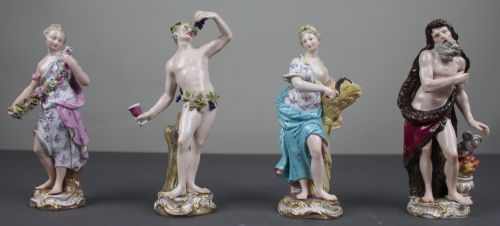
A gilded porcelain statue encompasses a wide array of three-dimensional ceramic forms, including individual figurines, pairs, and elaborate figure groups depicting human subjects, deities, and animals. You are most likely to encounter nineteenth-century European factory productions and Japanese Kutani or Satsuma wares on this page, alongside earlier eighteenth-century examples.
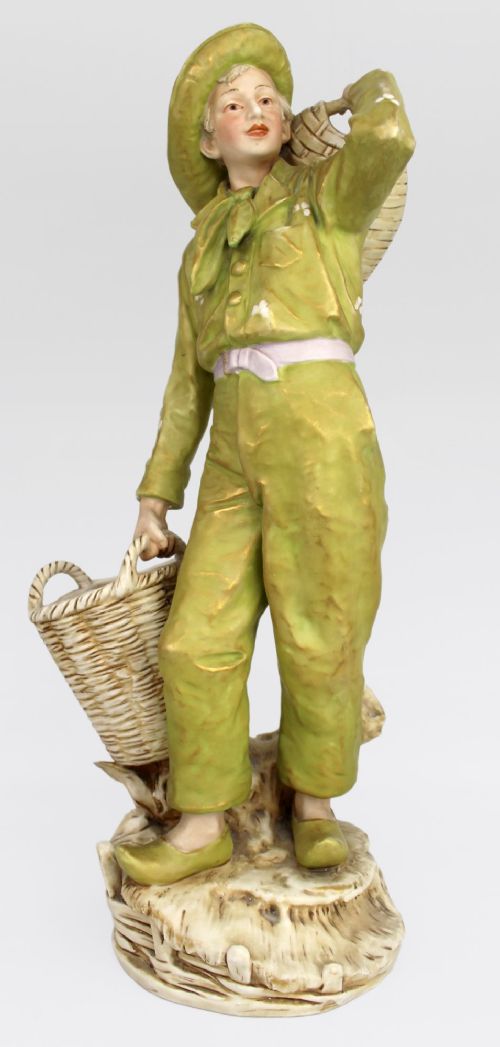
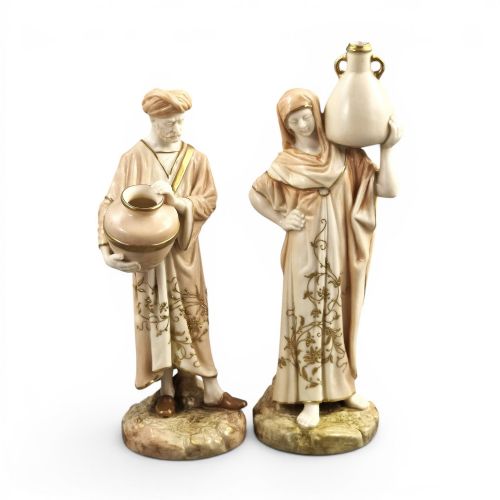
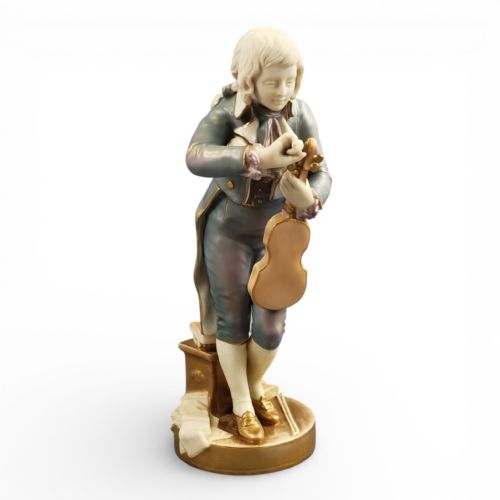
The subjects range from allegorical figures representing the seasons and classical deities to musicians, street vendors, and traditional East Asian immortals. Makers across Britain, continental Europe, and Japan utilised these sculptural forms to showcase technical mastery in modelling and surface decoration.
These works bridge the gap between utilitarian ceramic production and pure sculpture, often designed as decorative centrepieces for mantelpieces and cabinets. Surviving pieces reflect shifting aesthetic movements, moving from ornate Rococo and Neoclassical styles to Victorian Orientalism and Art Nouveau.
How they were made
The primary material is hard-paste or soft-paste porcelain, moulded or hand-modelled into complex shapes before receiving initial firing and detailed underglaze or overglaze painting. Artisans applied enamel colours and gold leaf, gilding, or metallic glazes by hand before a subsequent firing fused the precious metals and pigments to the ceramic body.
European factories such as Meissen, Derby, and Royal Worcester employed specialised modellers and painters to achieve intricate facial expressions and fine drapery. Japanese Kutani and Satsuma pieces often incorporated raised slip decoration known as moriage, combined with dense polychrome enamels and gold leaf highlights.
Gilded Porcelain Statue Retail Price Guide 2026
Typical asking prices for gilded porcelain statue among the pieces listed under this phrase on Sellingantiques today, from the lower quarter to the upper quarter. They describe what is for sale here now, not the wider market.
The listings on this page span from eighteenth-century Georgian and Meissen pieces through to Edwardian Royal Worcester and twentieth-century Art Deco forms.
What varies in quality
Quality rests primarily on the crispness of the initial moulding and the finesse of the hand-painting, particularly in facial details, hair, and the rendering of textiles. Superior pieces retain delicate extremities and intricate lace or floral elements without clumsy restoration.
The application of gold leaf and gilding dictates the visual richness of the object, with finer examples displaying burnished highlights that contrast effectively against the white porcelain body and coloured enamel grounds.
Meissen·Royal Dux Bohemia·Royal Worcester·Bourdois & Bloch·Makuzu Kozan II·Carl Thieme Dresden·Vion et Baury
The Gilded Porcelain Statue Glossary
- Hard-paste porcelain
- A durable ceramic composition containing kaolin and petuntse fired at very high temperatures. It forms a dense, vitrified body that resists scratching.
- Gilding
- The application of gold leaf, powder, or liquid onto the surface of the porcelain. It provides metallic decorative highlights.
- Moriage
- A Japanese ceramic technique using slip trailed from a pastry-bag-like device to build up raised decorative patterns before glazing and firing. This creates a heavily textured surface.
- Enamel
- Vitreous coloured glass fused to the porcelain surface during a secondary low-temperature kiln firing. It allows for vibrant polychrome details.
- Okimono
- A Japanese ornamental figurine designed for display on a tokonoma alcove or household shelf. These carvings and ceramic figures depict deities, animals, and historical figures.
Gilded Porcelain Statue: Frequently Asked Questions
How do I clean a gilded porcelain statue?
Dust the surface gently with a soft, dry brush to prevent accumulation without damaging delicate extremities or worn metallic leaf. Avoid liquid cleaners and harsh detergents that can erode fragile overglaze enamels and historic gilding.
Keep pieces away from direct sunlight and areas prone to heavy moisture fluctuations. Stable indoor environments prevent thermal shock and preserve the integrity of both the ceramic body and the applied gold leaf.
How can I tell eighteenth-century pieces apart?
Early pieces often feature hand-modelled details with distinct tool marks and softer, more fluid facial expressions compared to later mass-produced alternatives. Examination of the unglazed base, known as the footring, reveals characteristic kiln grit and paste colour specific to historical factories.
Factory marks painted or impressed underneath offer further chronological guidance, though many eighteenth-century works relied on subtle stylistic markers rather than clear stamps. Comparing glaze thickness and enamel wear helps confirm the age of the piece.
What is the difference between European and Japanese pieces?
European factories typically focused on Rococo, Neoclassical, and Victorian figural subjects rendered in refined enamel and bright gilding. These works often depict allegorical scenes, nobility, and theatrical characters.
Japanese makers produced traditional subjects such as Buddhist deities, immortals, and animals utilising distinct earth-toned enamels, intricate moriage, and dense gold leaf patterns. The underlying paste and sculptural traditions reflect distinct Eastern aesthetic priorities.