




Gilded Porcelain Pot Pourri
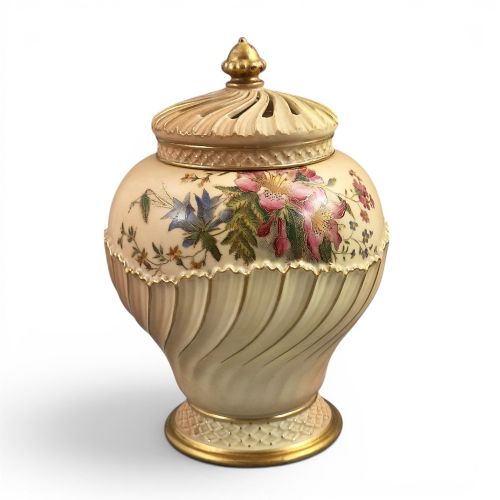
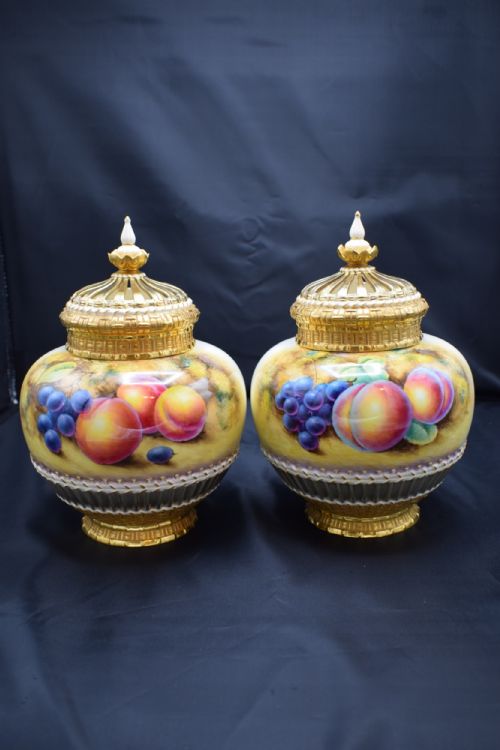
These gilded porcelain pot pourri vessels combine pierced covers with delicate painting, offering a traditional way to fragrance a room.
Gilded Porcelain Pot Pourri
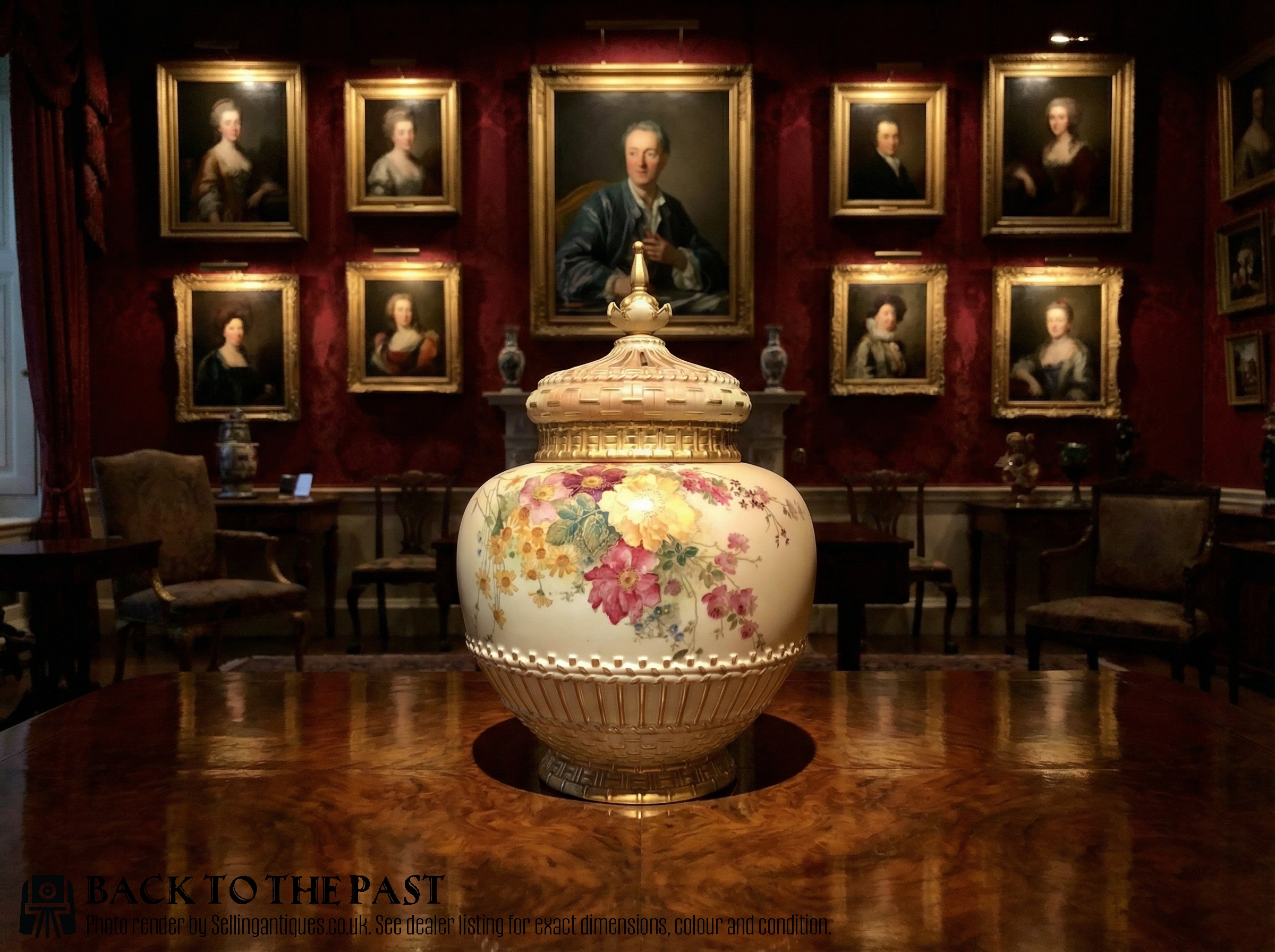
A gilded porcelain pot pourri vessel is designed to hold scented dried plant matter while displaying decorative painting and gilt highlights. The selections here centre on pieces created across the twentieth century and the Edwardian period, including blush ivory ground designs and hand-painted fruit compositions.
Most items take the form of jars, urns, and vases fitted with pierced crown covers to allow the release of fragrance. Forms range from pedestal vases to ovoid jars, alongside matched three-piece garnitures that feature a central vase flanked by covers.
The aesthetic draws heavily on traditional English porcelain styles, utilising soft pastel grounds or vibrant fruit studies framed by heavy gilding. Collectors encounter both small decorative pots and large exhibition-scale jars.
Assessing quality and execution
The distinction between standard items and superior examples rests upon the skill of the artist and the complexity of the painted subject. Hand-painted fruit studies, signed by notable studio artists, command greater attention than simple transfer-printed floral bands.
The application of gilding and the crispness of the pierced cover design further separate ordinary pots from exceptional ones. Heavier, larger ovoid vases with matching crown covers and intact pedestals represent the more ambitious output of this tradition.
Gilded Porcelain Pot Pourri Retail Price Guide 2026
Typical asking prices for gilded porcelain pot pourri among the pieces listed under this phrase on Sellingantiques today, from the lower quarter to the upper quarter. They describe what is for sale here now, not the wider market.
Some covers feature pierced crowns just waiting to whisper yesterday's lavender into today's hallway.
Royal Worcester
The Gilded Porcelain Pot Pourri Glossary
- Blush ivory
- A soft, matte cream-coloured porcelain ground developed to imitate the warm tone of natural ivory. It forms the background for many Edwardian floral designs.
- Gilding
- The application of gold leaf or gold paint to ceramic surfaces. It highlights handles, rims, and pierced lids.
- Pot pourri jar
- A lidded vessel featuring a pierced cover designed to hold dried scented plant material. The perforations allow fragrance to diffuse into a room.
- Garniture
- A set of matched vases or jars, typically comprising three pieces meant to be displayed together on a mantelpiece. Central vases are usually larger than their flanking partners.
Gilded Porcelain Pot Pourri: Frequently Asked Questions
How were pot pourri jars used?
Historically, homeowners filled these ceramic jars with dried flower petals, spices, and aromatic oils to freshen the air in domestic interiors. The pierced crown covers allowed the scent to drift outward while keeping the dried mixture contained.
Today, they are typically displayed as decorative art objects on sideboards, mantels, and tables rather than utilised for active room fragrance.
How do I date an Edwardian pot pourri vase?
Dating relies on identifying the manufacturing period, stylistic traits, and decorative motifs recorded in the piece history. Edwardian examples often feature blush ivory grounds with delicate floral painting and understated gilding.
Later twentieth-century versions frequently showcase bolder hand-painted fruit scenes or artist signatures, shifting away from the softer pastel aesthetics of the early nineteen hundreds.
What makes a pot pourri vase rare?
Distinctive artistic attribution and larger scale elevate certain vessels above standard production pieces. Vases featuring detailed hand-painted fruit studies signed by known studio painters are particularly sought after by collectors.
Complete three-piece sets and exceptionally large ovoid jars with original crown covers also represent less common survivals from the traditional English potteries.