


Gilded Lacquer Tray
A gilded lacquer tray brings hand-painted scenes and lustrous gold leaf directly to a tabletop, offering both decorative presence and practical service.

Gilded Lacquer Tray
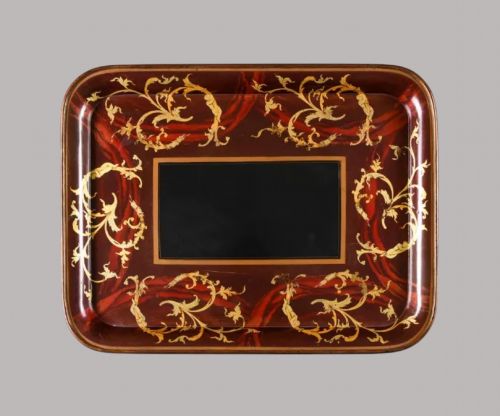
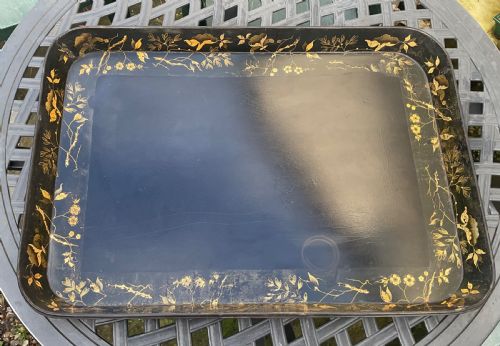
A gilded lacquer tray combines a dark, polished surface with delicate gold leaf work, appearing most frequently in forms dating from the Regency and Victorian periods. Buyers search for these pieces to find serving trays, desk accessories, and occasional tray tables that bring historical character into a room.
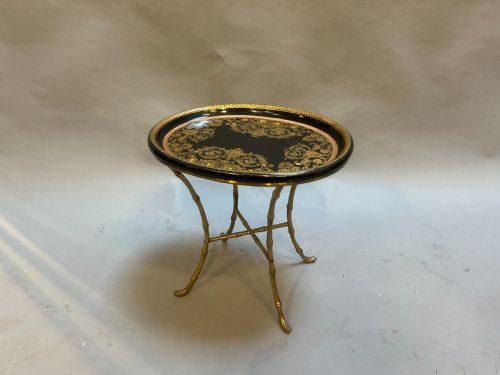
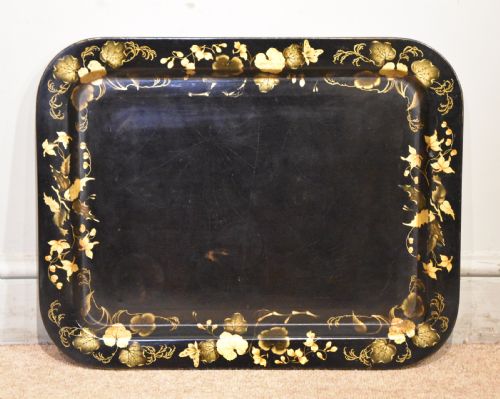
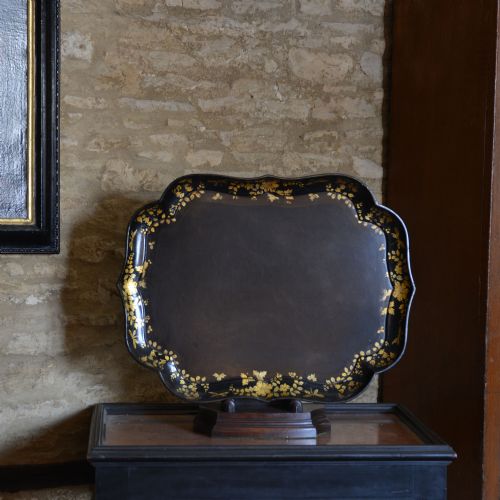
The objects span multiple centuries, stretching from Georgian examples through to Edwardian and George V pieces. Most variations take the form of large oval or rectangular trays, occasionally mounted on stands to serve as coffee tables or side tables.
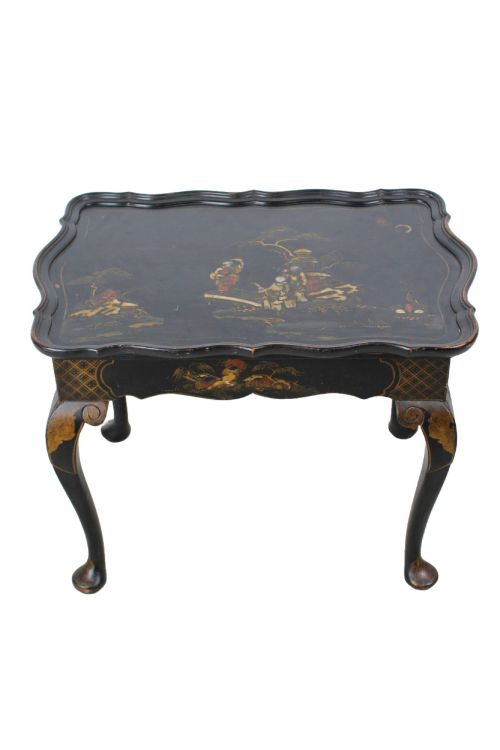
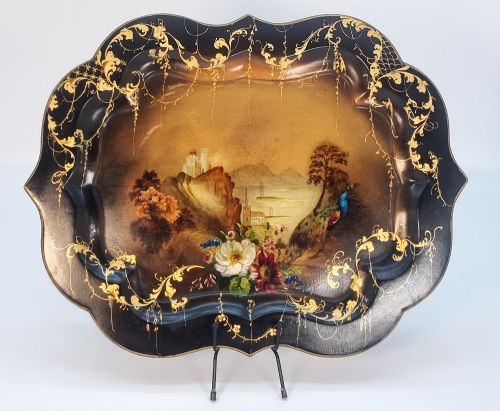
Makers and workshops of the nineteenth century applied detailed Chinoiserie landscapes, hunting scenes, and floral motifs onto the central panels. These pieces function equally well displayed on a wall as hanging trays or resting horizontally on a stand.
How they were made
Craftsmen built the foundations primarily using papier-mâché or metal toleware, moulding the material into sturdy bases before applying successive coats of dark lacquer. This hard, smooth ground provided a stable canvas for the detailed artwork that followed.
Artisans executed the surface designs using hand-painted pigments and applied gold leaf or gilt embellishments to create borders and figurative scenes. Once the paint and gilding dried, protective varnishes were added to seal the surface against daily wear.
Several trays feature surviving hunting scenes where startled foxes outwit enthusiastic hounds across a glittering golden horizon.
What varies in quality
The intricacy and preservation of the original decoration determine the distinction between standard examples and exceptional pieces. Trays retaining unusual original colour schemes, crisp hand-painted hunting scenes, or intact Chinoiserie landscapes command greater attention.
The reputation of the workshop also influences the standing of a piece, with certain prominent nineteenth-century makers producing work of notably finer proportion and finish. The structural integrity of the papier-mâché or metal base, alongside the retention of the original surface gloss, completes the assessment.
Henry Clay·Jennens & Bettridge·Jennens and Bettridge
The Gilded Lacquer Tray Glossary
- Papier-mâché
- A composite material made from paper pulp or layers of paper reinforced with glue, pressed and dried to form a rigid shape suitable for lacquering. It provided a lightweight yet durable base for nineteenth-century trays.
- Toleware
- Painted or lacquered sheet metal utensils and decorative objects produced in England and Europe. These metal pieces often feature gilded borders similar to their papier-mâché counterparts.
- Chinoiserie
- A European artistic style reflecting Chinese motifs and landscapes, popular in decoration throughout the Georgian and Victorian eras. Artisans rendered these imaginative scenes in gold leaf across dark lacquered surfaces.
- Gilding
- The application of gold leaf or powder to a surface to impart a metallic lustre. This technique highlighted borders, figures, and architectural elements on the tray designs.
- Regency
- An architectural and decorative period dating from the early nineteenth century characterised by classical revival motifs and refined elegance. Many of the finest lacquered trays originate from this specific era.
Gilded Lacquer Tray: Frequently Asked Questions
How were gilded lacquer trays used historically?
These pieces served practical roles in wealthy households for carrying tea, beverages, or calling cards across rooms. Servants utilised the large serving trays and tray tables to transport items efficiently.
Over time, many of these functional objects transitioned into purely decorative items, displayed on stands as coffee tables or hung directly on walls to showcase the painted artwork.
Can I use an antique tray for serving food?
While original serving trays were built for daily household tasks, the delicate nature of nineteenth-century lacquer and gold leaf requires careful handling today. Modern moisture and heat can damage the aged varnish and underlying painted decoration.
Most collectors prefer to utilise these pieces for static display, desk organisation, or dry service to preserve the historic surface finish.
What is the difference between papier-mâché and toleware?
Papier-mâché consists of compressed paper pulp or layered paper sheets treated to create a rigid, lightweight wooden alternative. Toleware refers specifically to items formed from lacquered or painted sheet metal.
Both materials accepted dark lacquer and gold leaf effectively, though papier-mâché allowed for deeper moulded rims and kidney-shaped curves.
How do I date a lacquered tray?
Dating relies on examining the materials, decorative style, and structural form relative to known historical periods. Georgian and Regency pieces often feature distinct Chinoiserie landscapes and specific maker stamps on the underside.
Later Victorian and Edwardian examples introduce alternative motifs, including floral borders and converted table stands from the early twentieth century.