



Gilded Black Tea Tray
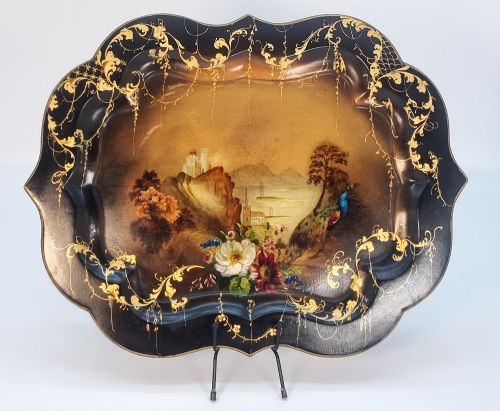
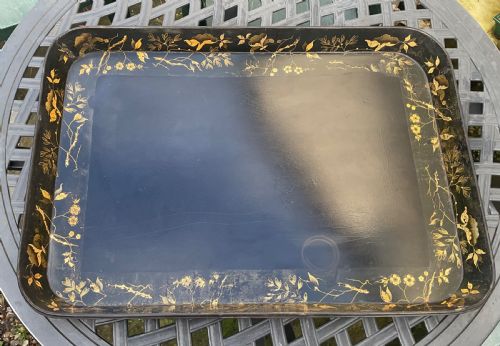
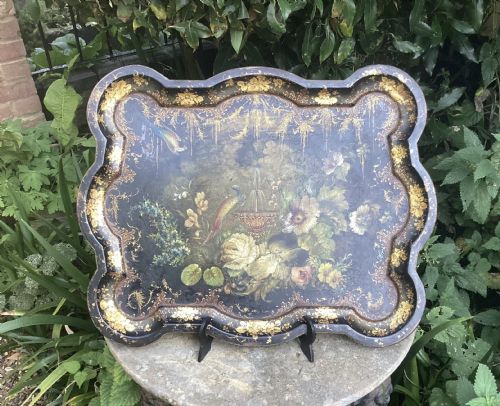
A gilded black tea tray brings dark lacquer and bright leaf together, offering a functional centrepiece that anchors a room with rich contrast.
Gilded Black Tea Tray
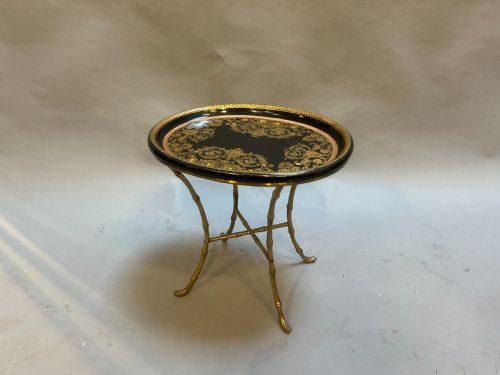
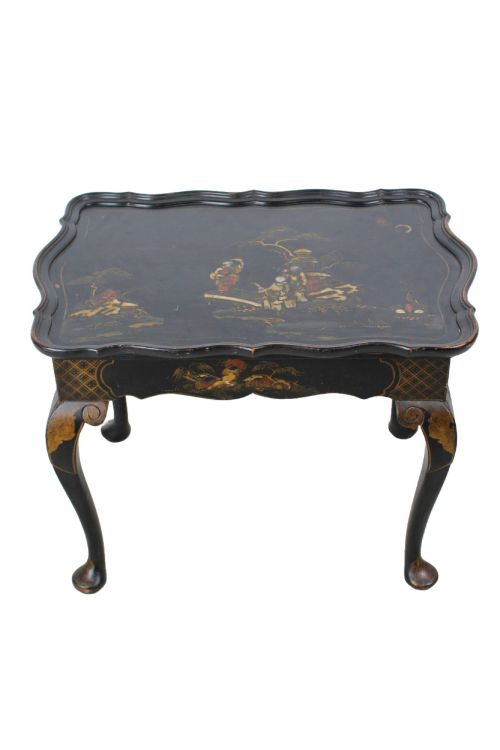
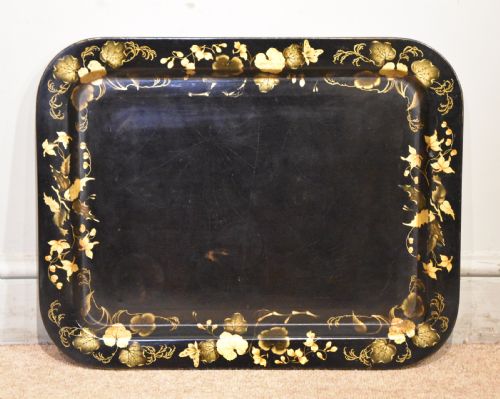
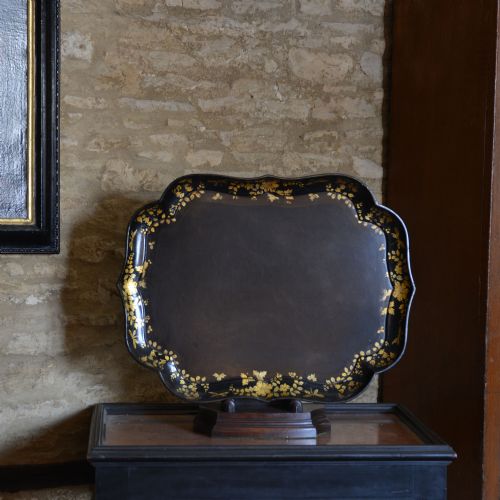
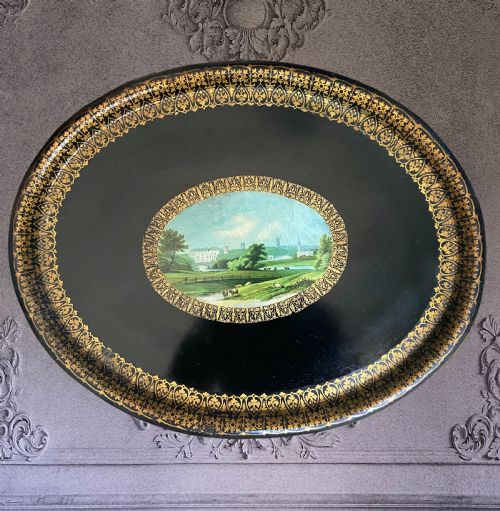
A gilded black tea tray combines a dark lacquered or painted surface with bright metallic decoration, taking forms such as large ovals, kidney shapes, or tray tables mounted on stands. Buyers seeking a gilded black tea tray encounter pieces from the eighteenth, nineteenth, and early twentieth centuries, spanning Georgian, Regency, Victorian, and Edwardian periods.
Most examples found on this page originate from the nineteenth century, particularly the Regency era, alongside French Second Empire toleware and later Edwardian interpretations. These objects served originally for the carriage of porcelain tea services or functioned as decorative displays before finding new life as occasional and coffee tables.
How they were made
Maker workshops constructed the primary bodies of these trays using papier-mâché or sheet iron, known as toleware, built up in layers to achieve rigidity and strength. Artisans then applied black lacquer finishes by hand, building smooth grounds capable of receiving detailed painted scenes and gold leaf decoration.
Gilding involved the careful application of gold leaf or gilt embellishments to borders and central motifs, often accompanied by hand-painted landscapes, hunting scenes, or Chinoiserie designs. Selected pieces integrated wooden frames or were adapted later into side and coffee tables.
Listings feature papier-mâché, lacquer, and sheet iron as primary materials across the nineteenth and eighteenth centuries.
What varies in quality
The sophistication of the painted detail and the crispness of the gilt work distinguish superior trays from simpler workshop output. Skilled hands achieved subtle shading in landscapes and precise execution in Chinoiserie motifs, whereas lesser pieces display heavier, more mechanical application.
The integrity of the papier-mâché or metal foundation and the preservation of the original black lacquer surface govern the overall standard. Pieces signed or stamped by prominent makers retain greater distinction through their documented craftsmanship.
Henry Clay·Jennens & Bettridge
The Gilded Black Tea Tray Glossary
- Papier-mâché
- A composite material made from paper pulp or layers of paper bound with glue, pressed, and dried to form a rigid board suitable for lacquering. It provides a lightweight yet durable base for decorative trays.
- Toleware
- Painted or lacquered sheet metal, typically iron, shaped into domestic items such as trays and vessels. This material allowed for sturdy serving pieces finished with dark grounds and gilt decoration.
- Chinoiserie
- A European artistic style reflecting Chinese motifs and decorative techniques, popular during the eighteenth and nineteenth centuries. It appears on lacquer trays through stylised figures, landscapes, and pavilions.
- Lacker
- A durable resin finish applied in multiple coats to create a smooth, glossy surface resistant to moisture. Dark lacquer serves as the foundational dark background for contrasting gold leaf.
- Gilt
- A thin layer of gold or gold-like material applied to surfaces to provide decorative enrichment. It catches the light against black lacquer grounds on borders and painted scenes.
Gilded Black Tea Tray: Frequently Asked Questions
What are these trays made of?
These trays are constructed primarily from papier-mâché or sheet iron, known as toleware, which provided a durable foundation for daily use.
Craftsmen built these cores in layers before sealing them with dark lacquer and embellishing them with paint and gold leaf.
How were they used originally?
Originally, these trays carried heavy ceramic tea services from kitchens to parlours and drawing rooms, supported by their sturdy construction.
Many examples were also placed upon folding stands to serve as temporary tables during social gatherings.
Are these trays suitable as coffee tables?
Many of these pieces function successfully as coffee tables or side tables when mounted on appropriate period or later stands.
Their generous proportions and decorative surfaces make them practical centrepieces for modern seating areas.
How do I identify a Regency period tray?
Regency examples frequently display characteristic neoclassical motifs, bolder gilt borders, or sophisticated Chinoiserie scenes painted onto papier-mâché.
Proportions tend to be generous, with deep ovals and shaped edges reflecting the design preferences of the early nineteenth century.