


Gilded Ivory Ceramics
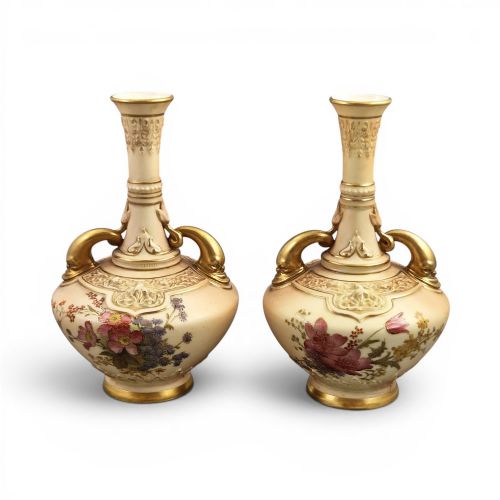
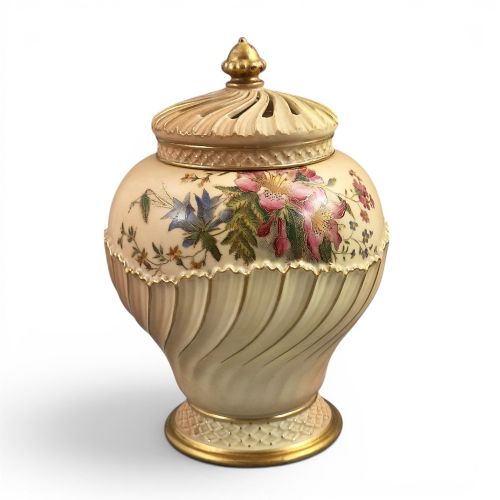
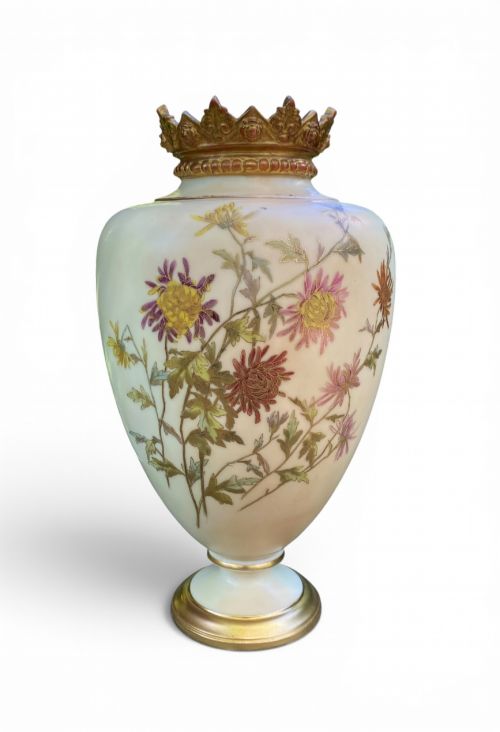
These gilded ivory ceramics combine soft blush porcelain grounds with rich gold leaf detailing, bringing refined late nineteenth and early twentieth century elegance to any room.
Gilded Ivory Ceramics
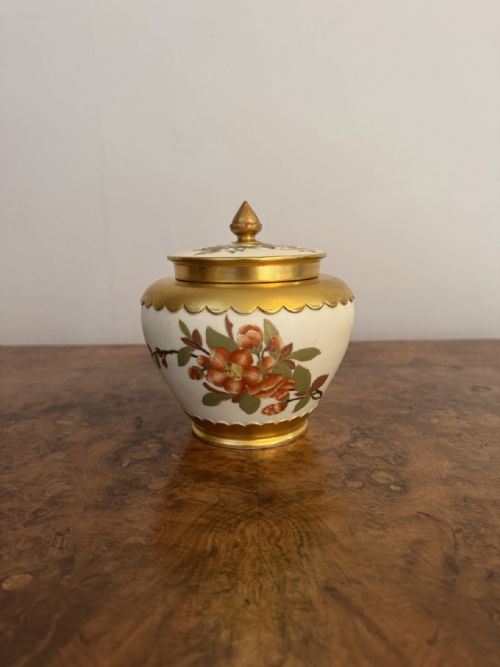
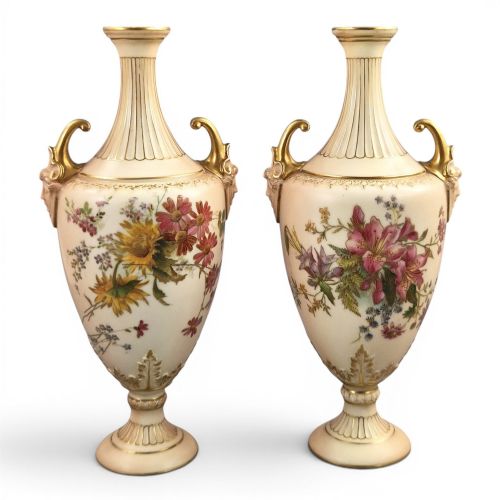
Gilded ivory ceramics span the Victorian, Edwardian, and early twentieth century periods, taking the form of vases, ewers, potpourri pots, jardinières, and figurative works.
The pieces on this page are predominantly British in origin, featuring porcelain bodies decorated with blush ivory tones and detailed gold gilding.
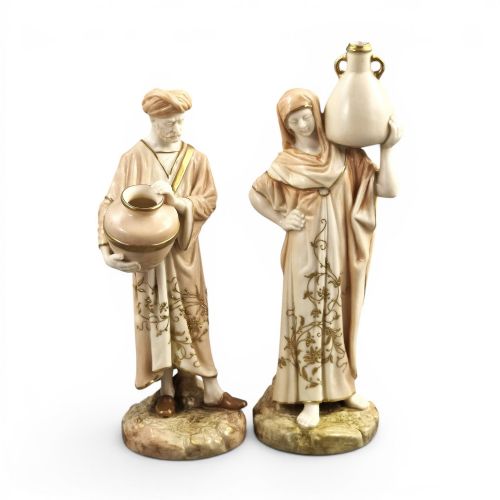
Forms range from simple shell dishes and serving trays to elaborate figures such as water carriers, musicians, and dancers modelled by prominent designers.
Assessing Quality
Quality rests in the precision of the modelling and the delicacy of the hand-painted decoration, particularly on figurative pieces and floral vases.
The crispness of the gilt work and the depth of the enamel painting separate standard production items from masterworks designed by leading modellers.
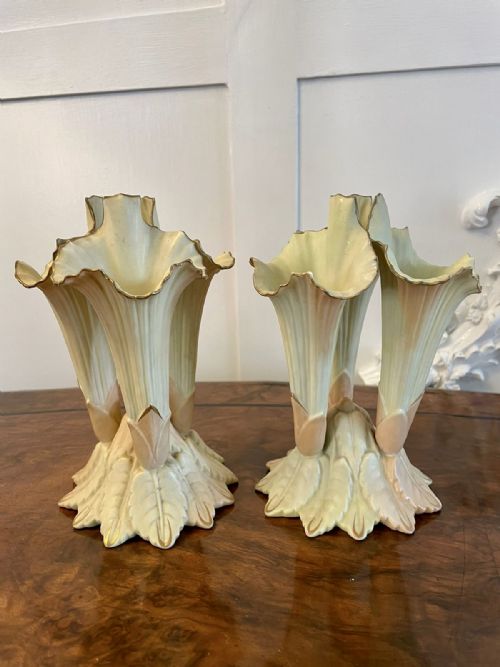
Listings feature porcelain forms including spill vases, milk jugs, and figural groups decorated with gold leaf and enamel.
Royal Worcester·Locke And Co·James Hadley·Carlton Ware·Royal Dux·Jas Stinton
The Gilded Ivory Ceramics Glossary
- Blush ivory
- A soft, matte ceramic ground developed to resemble ivory, providing a pale backdrop for floral painting. It forms the basis of many Victorian and Edwardian decorative pieces.
- Ewer
- A large jug with a wide spout and elaborate handle, often used historically for water or wine. In these ceramics, ewers serve as decorative centrepieces with intricate gilt embellishments.
- Potpourri
- A mixture of dried petals and spices placed in a pierced jar to scent a room. Lidded potpourri pots feature perforated bodies to release fragrance while concealing the contents.
- Jardiniere
- An ornamental ceramic pot designed to hold a plant or floral arrangement. These vessels often incorporate moulded rustic bases or handles.
- Gilding
- The application of gold leaf or gold paint to ceramic surfaces. It highlights handles, rims, and raised motifs.
Gilded Ivory Ceramics: Frequently Asked Questions
How do I care for gilded ivory ceramics?
Dust these porcelain pieces gently with a dry, soft cloth to protect the delicate enamel and gold leaf details.
Avoid using water, chemical cleaners, or abrasive materials, which can damage the soft blush ivory glaze and wear away the gilding over time.
What periods do these pieces come from?
The selection spans the late nineteenth century through to the early twentieth century, encompassing Victorian and Edwardian manufacturing eras.
Most items date from the height of the blush ivory production era around eighteen eighty to nineteen twenty.
Were these items used or decorative?
Many items, such as vases, ewers, and figurines, served primarily as decorative ornaments in formal Victorian and Edwardian drawing rooms.
Other objects, including teapots, tea trios, and serving trays, combined functional utility with ornate painted and gilded designs.
How do I identify the age of a piece?
Inspect the base for factory marks, pattern numbers, and date ciphers used by British potteries during the Victorian and Edwardian periods.
Stylistic elements, such as Aesthetic Movement motifs or Art Nouveau curves, also help narrow down the decade of manufacture.