

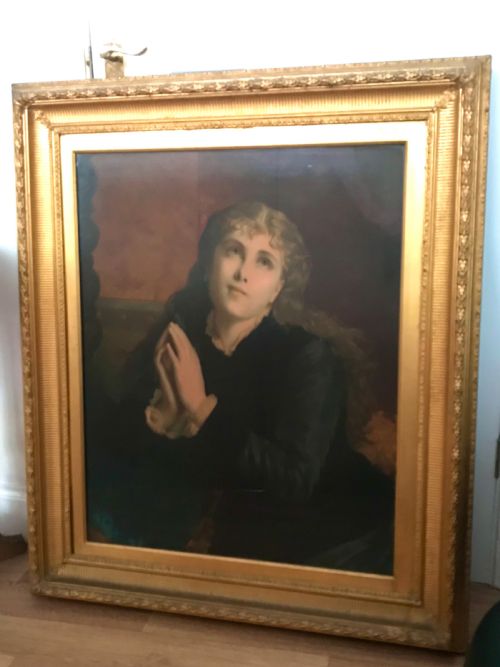


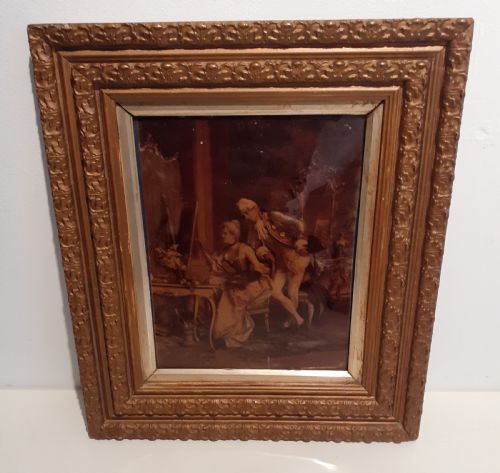


Gilded Framed Glass Print
A gilded framed glass print brings luminous depth and rich texture to a wall, capturing centuries of meticulous reverse painting and print transfer techniques.
Gilded Framed Glass Print
The assortment includes reverse glass mezzotints, religious portraits, classical scenes, and intricate crystoleums set within ornate gilt wood frames. These works showcase subjects ranging from equestrian sporting art and continental landscapes to allegorical compositions like La Bonne Mere and Feeding the Poor.
Most items on this page lean heavily toward Georgian and nineteenth-century craftsmanship, capturing the decorative taste of collectors who value historic wall art with authentic period framing. Every piece unites delicate imagery on glass with the rich, reflective warmth of original or period-matching gilding.
How they were made
Makers applied prints or hand-painted pigments directly onto the reverse side of glass panels, sealing the delicate work against dust and atmospheric moisture. This reverse application required precise reversal of the image during creation so that it appeared correctly oriented when viewed through the front of the glass.
Gilded wood, gesso, and gold leaf formed the heavy frames that protected these fragile glass panels and provided a brilliant architectural border. Artisans carved wooden mouldings, applied layers of gesso to smooth the surface, and meticulously laid gold leaf to catch the light around the artwork.
St Peter peering through eighteenth-century glass proves that even saints appreciated a secure, gilded boundary.
What varies in quality
Quality rests heavily on the crispness of the transfer or painting beneath the glass and the preservation of the pigment against flaking or fading. Finer examples display meticulous hand-colouring and stable adherence of the image to the glass surface without widespread lifting.
The craftsmanship of the surrounding gilt frame dictates much of the visual impact, separating standard mouldings from deeply carved gesso frames with original gold leaf. Superior pieces retain their early or original frames, whereas lesser examples often feature later or replacement surrounds that alter the historic balance of the object.
Robert Sayer·Abraham Cooper·Schweninger
The Gilded Framed Glass Print Glossary
- Reverse glass painting
- An artwork painted or transferred directly onto the back of a glass panel so that the finished image is viewed through the front. This technique gives the colours a luminous, glassy depth that standard canvas or paper cannot replicate.
- Crystoleum
- A Victorian method of applying a paper engraving to glass, making it transparent, and then hand-colouring the reverse before sealing it. The finished piece creates a layered, three-dimensional painted effect.
- Mezzotint
- A printmaking process of the intaglio family where tones are created by roughening the copper plate with a rocker. It allows for subtle gradations of light and shade, making it ideal for reproducing paintings on glass.
- Gesso
- A plaster-like mixture applied to wood frames to create a smooth surface for gilding. Skilled carvers and gilders used it to build up relief ornamentation before laying gold leaf.
- Eglomise
- A historic technique of cold painting and gilding on the reverse of glass using leaf metal. It produces a mirror-like, highly decorative metallic finish often utilised for borders and framing elements.
Gilded Framed Glass Print: Frequently Asked Questions
How do I clean a glass print?
Dust the gilt frame gently with a dry, soft brush and avoid spraying liquid cleaner near the edges where moisture can seep behind the glass.
Because the artwork sits on the reverse of the glass, any liquid entering through the back can permanently damage the pigment or lift the print.
Are these prints original to their frames?
Many pieces retain their period gilt frames, which were specifically chosen or made to house the fragile glass panels securely.
Checking the fit at the back and the wear on the gilding helps determine whether the frame has held the glass since its original creation.
What is the difference between a crystoleum and a reverse glass print?
A reverse glass print involves painting or transferring an image directly onto the glass panel during the eighteenth or early nineteenth century.
A crystoleum is a specifically Victorian development that uses a transparent paper print pasted face-down on glass, backed with hand-applied oil paint for depth.
Where should I hang a gilded glass print?
Display these pieces away from direct sunlight and damp walls, as ultraviolet light fades pigments and moisture attacks the silvering or gesso.
Choose an interior wall where artificial lighting can catch the gold leaf without subjecting the fragile glass to heavy vibrations from doors.