




Framed Victorian Chromolithograph
These framed victorian chromolithographs bring richly layered colour printing and period subjects straight from nineteenth-century walls into modern spaces.
Framed Victorian Chromolithograph
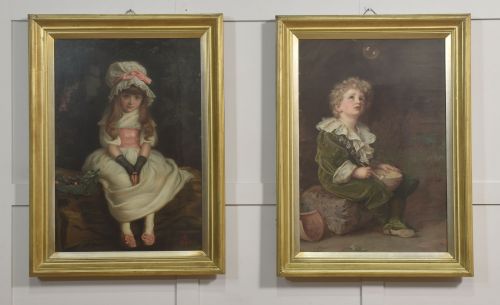
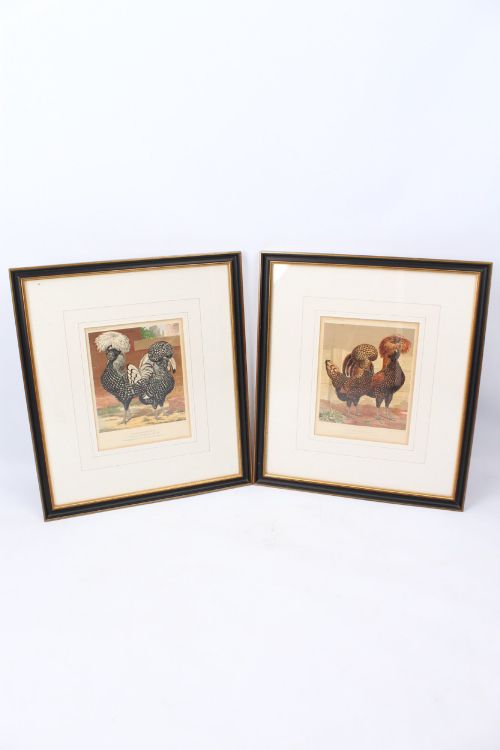
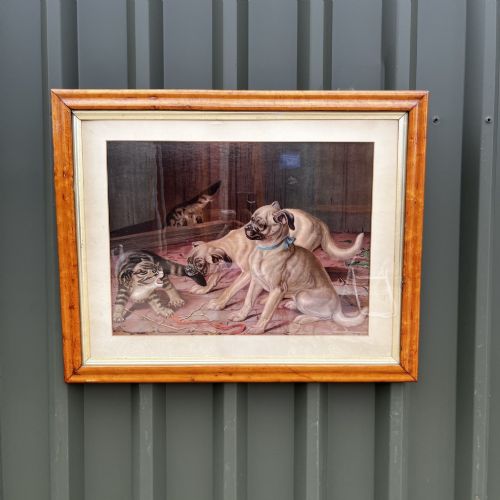
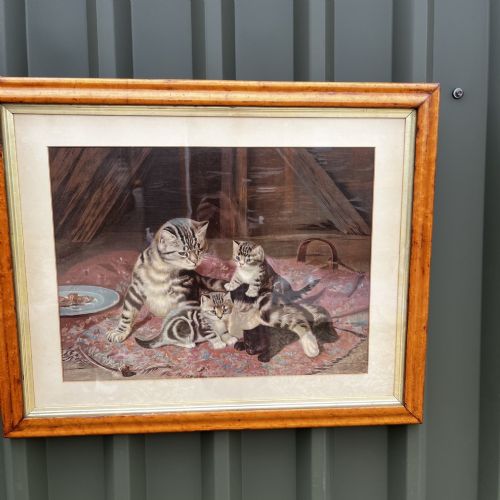
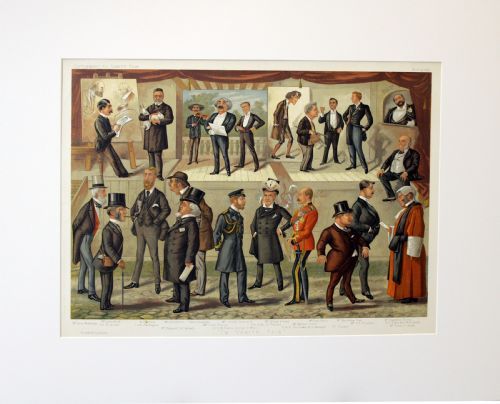
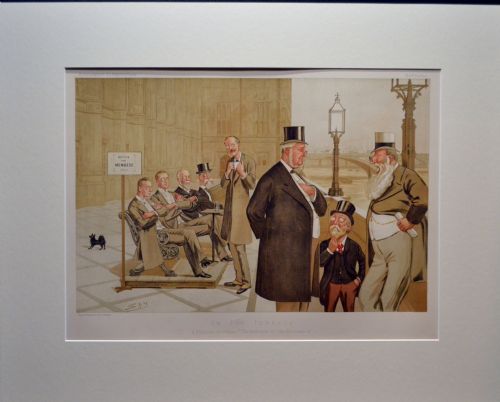
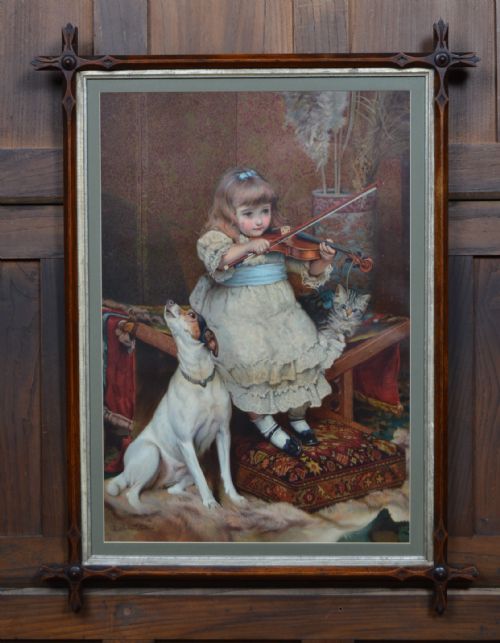
A framed victorian chromolithograph represents a multi-layered colour print produced during the nineteenth and early twentieth centuries, capturing subjects from domestic animal scenes to satirical periodical plates. Buyers searching for this phrase encounter various framed formats including advertising prints, double-page periodical lithographs, and botanical engravings.
The selection ranges across Victorian, Late Victorian, and Edwardian periods, frequently presented behind glass within wooden, gilt, or carved frames. Domestic animal studies featuring pugs, cats, and chickens sit alongside Vanity Fair caricatures and advertising plates by known artists.
How they were made
Production relied on multi-stone lithographic printing, where separate limestone blocks applied distinct ink colours successively to paper to build a vibrant image. Printers used mount board to secure the sheet before framing the completed work behind glass in wood, oak, or gold leaf gilt surrounds.
The listings on this page include paper prints set behind glass within wood, oak, and gold leaf gilt frames spanning the nineteenth and early twentieth centuries.
What varies in quality
Quality rests upon the precision of the colour registration during printing and the preservation of the paper beneath the glass. Finer examples display sharp ink saturation and original framing materials such as carved wood or period gilt mouldings that match the era of the print.
Horatio Henry Couldrey·Charles Burton Barber
The Framed Victorian Chromolithograph Glossary
- Chromolithograph
- A multicoloured print produced by applying distinct layers of lithographic ink from separate stones. This technique achieved deep hues without hand colouring.
- Chrystoleum
- A photograph or print applied to glass, hand-painted from behind, and clarified with oil or varnish to create a translucent coloured picture.
- Gilt
- A thin layer of gold leaf or gold-coloured pigment applied to wooden frame mouldings. It provides a reflective decorative surface.
- Mount board
- Heavy paperboard placed inside the frame to separate the print from the glass. It protects the paper surface from condensation.
Framed Victorian Chromolithograph: Frequently Asked Questions
What is a chromolithograph?
A chromolithograph is a picture produced through a planographic printing process that uses multiple lithographic stones to build up rich colour layers.
Printers applied each shade individually to achieve a vibrant, painting-like finish without manual watercolour additions.
How should I hang these prints?
These framed pieces require placement away from direct sunlight to prevent the coloured inks and paper from fading over time.
Stable indoor humidity also protects the wooden frames, mount boards, and glass from moisture damage.
Are Vanity Fair prints chromolithographs?
Many Vanity Fair plates employ lithographic colour printing techniques to render the distinctive satirical portraits and group scenes.
These double-page periodical insertions capture notable political, social, and military figures of the era.
What distinguishes a chrystoleum?
A chrystoleum involves placing a transparent print onto glass and carefully applying oil paints to the reverse side.
This method produces a glossy, three-dimensional depth unlike standard flat paper prints.