




Antique Dog Picture Print
An antique dog picture print brings character and canine charm to a wall, offering a glimpse into past companionship and sporting traditions.
Antique Dog Picture Print
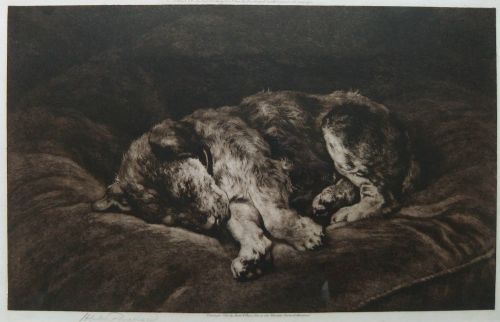
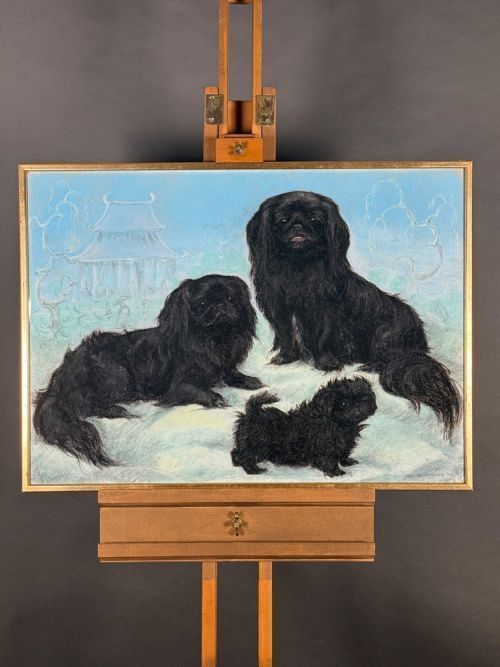
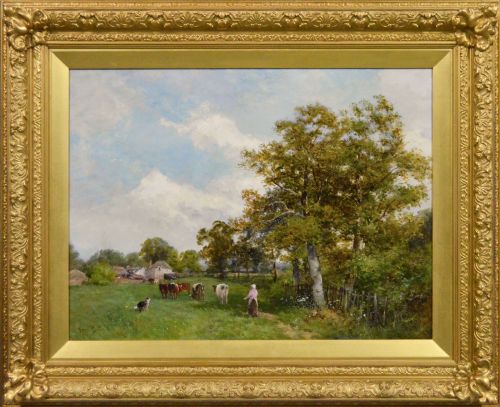
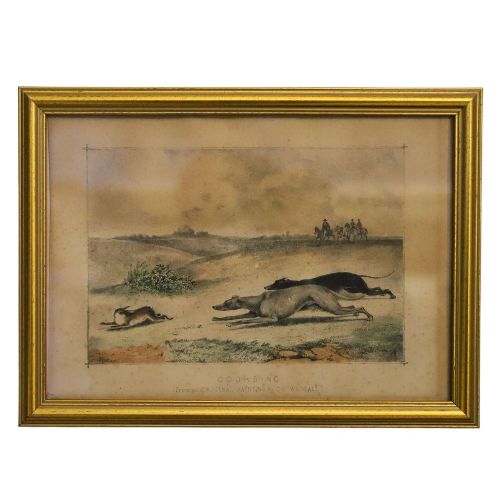
When you search for an antique dog picture print, you encounter a variety of framed works that span multiple centuries and artistic mediums. These pieces capture hounds, lapdogs, and working dogs in settings ranging from pastoral landscapes to intimate domestic portraits.
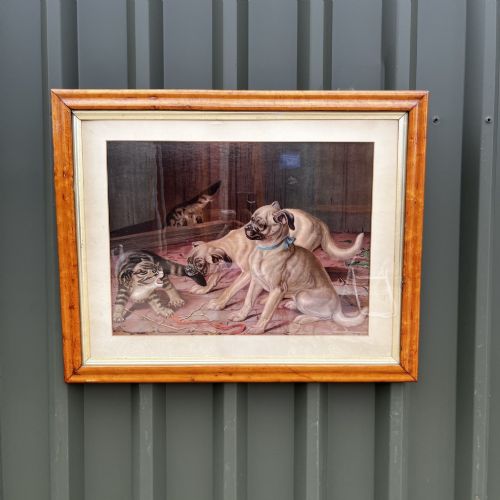
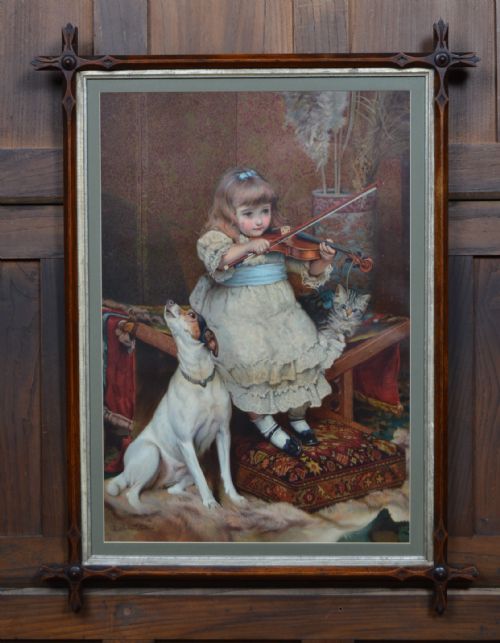
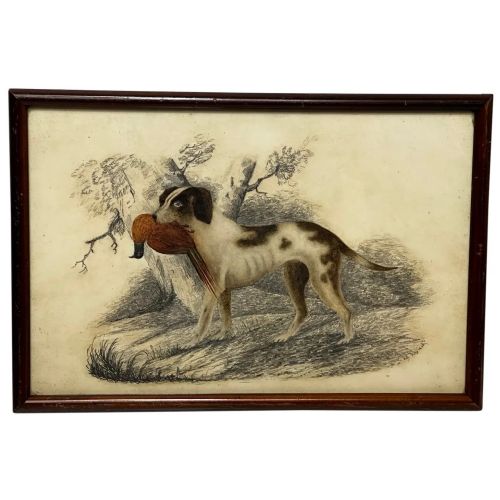
The selection on this page includes original etchings, chromolithographs, watercolours, and oils from periods such as the Georgian, Victorian, and Edwardian eras. Collectors frequently find works depicting specific breeds like pugs, Pekingese, bulldogs, and greyhounds alongside broader sporting scenes.
The forms vary from small oval framed portraits to larger landscape compositions and engravings after notable painters. Each piece reflects the aesthetic preferences and printmaking technologies of its specific decade of origin.
How they were made
Printmakers and artists utilised paper as the primary support, applying ink, watercolour, or pastel to achieve fine detail and tone. Etchings relied on acid-bitten metal plates to hold ink, producing sharp lines that rendered the texture of canine fur with great precision.
Chromolithography employed multiple stones to build up colour layer by layer, creating rich hues for Victorian and Edwardian publishing. These works are frequently housed behind glass within timber frames, sometimes finished in giltwood or gilded wood.
The collection spans multiple distinct artistic movements, including British Sporting Art, Victorian Pastoral, and Early 20th Century Realism.
What varies in quality
The distinction between ordinary and exceptional works often lies in the draughtsmanship and the fidelity of the printmaker's hand. Signed impressions by established artists command attention for their sharper detail and the direct involvement of the creator.
Condition of the paper and the preservation of original pigments also dictate value, alongside the quality of the framing. Early impressions retain crispness in the linework that later copies or worn plates inevitably lose.
Herbert Dicksee·David Bates·C. H. Weigall·Horatio Henry Couldrey·Tom Carr·Charles Burton Barber
The Antique Dog Picture Print Glossary
- Chromolithography
- A multicolour planographic printing technique that uses stone plates to produce vibrant pictorial images. This method allowed publishers to distribute affordable yet colourful dog portraits widely during the nineteenth century.
- Etching
- A printmaking process where lines are bitten into a metal plate with acid before being inked and pressed onto paper. It produces fine, expressive lines well suited to capturing the texture of animal coats.
- Lithograph
- A planographic print pulled from a flat stone or metal plate treated to repel and accept ink selectively. It served as a primary commercial method for reproducing paintings of sporting dogs.
- Giltwood
- Wood carved and coated with gold leaf or a gold-coloured finish. Antique frames utilising this material enhance the visual presence of framed dog artwork.
Antique Dog Picture Print: Frequently Asked Questions
What periods do these dog prints come from?
The pieces span several eras, beginning with Georgian examples and moving through Victorian, Edwardian, and mid-twentieth-century decades. Each period utilised distinct printing and painting methods.
Techniques evolved from early hand-coloured engravings and lithographs to sophisticated etchings and chromolithographs by the early twentieth century.
How do I identify an original etching?
Original etchings typically exhibit plate marks where the edges of the metal plate pressed into the damp paper during printing. Examining the lines under magnification reveals the slight raised ridge of ink characteristic of intaglio processes.
Signatures in pencil beneath the image further indicate an artist's personal involvement in pulling the edition.
How should I frame and hang them?
These works require protection from direct sunlight to prevent the fading of watercolours, inks, and coloured papers. Acid-free mounts prevent chemical damage to the paper over time.
Displaying them away from moisture sources ensures the timber frames and paper supports remain stable for decades.
What is the difference between an engraving and a chromolithograph?
An engraving is carved into a metal plate with a sharp tool, resulting in crisp monochrome lines that are frequently hand-tinted with watercolour. A chromolithograph builds colour through multiple lithographic stones, creating a full-colour pictorial surface.
Engravings rely on line density for tone, whereas chromolithographs rely on overlaid colour dots and patches.