


Antique Framed Glass Art
Antique framed glass art brings together centuries of delicate reverse paintings, mezzotints, and framed mirrors that capture light and colour with remarkable longevity.
Antique Framed Glass Art
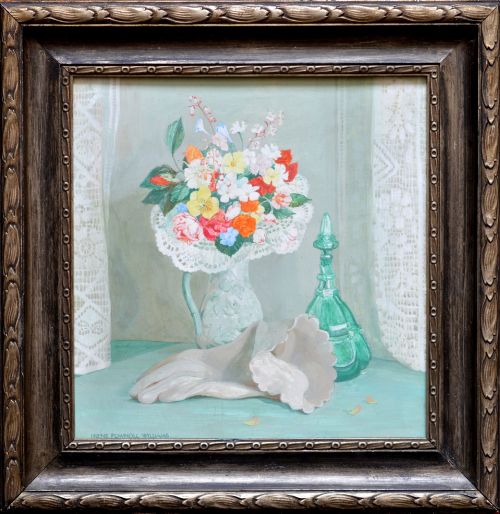
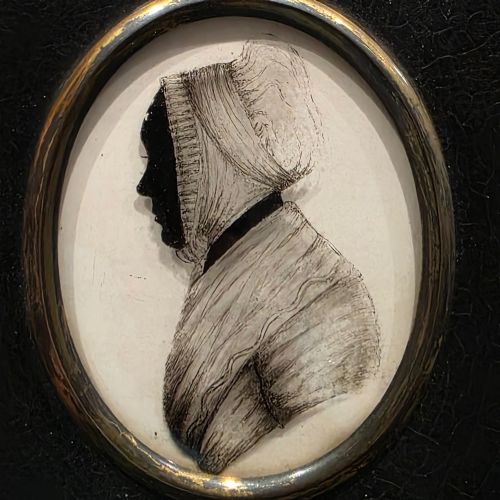
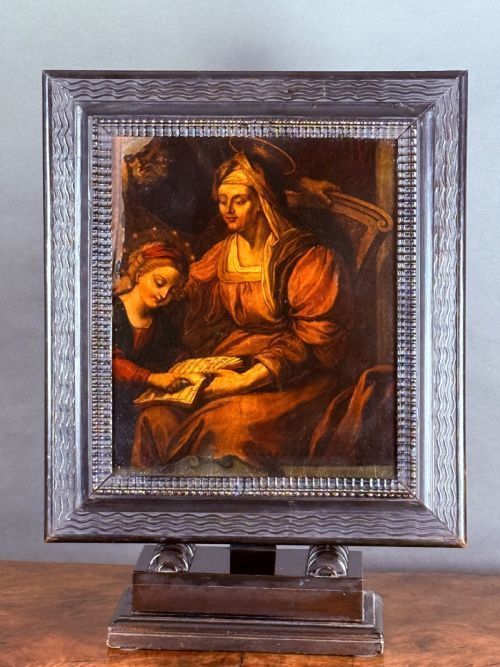
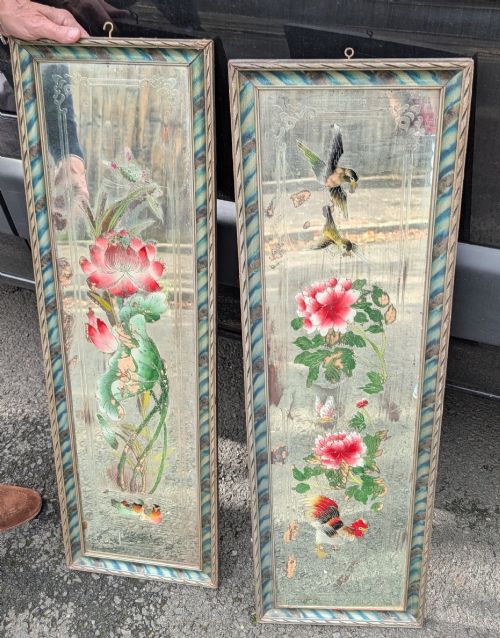
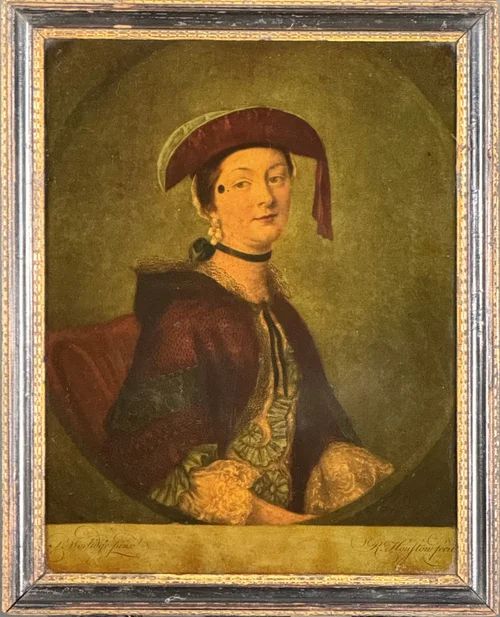
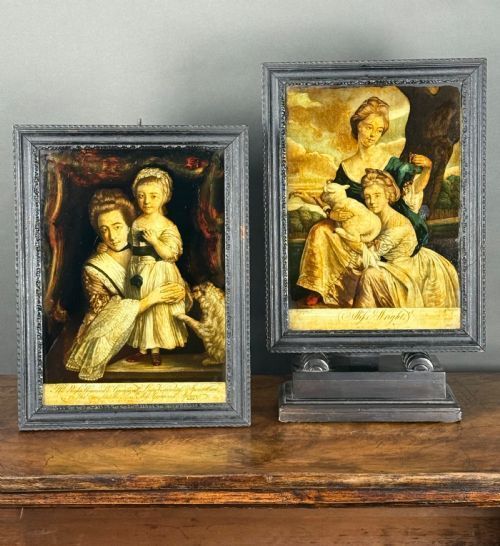
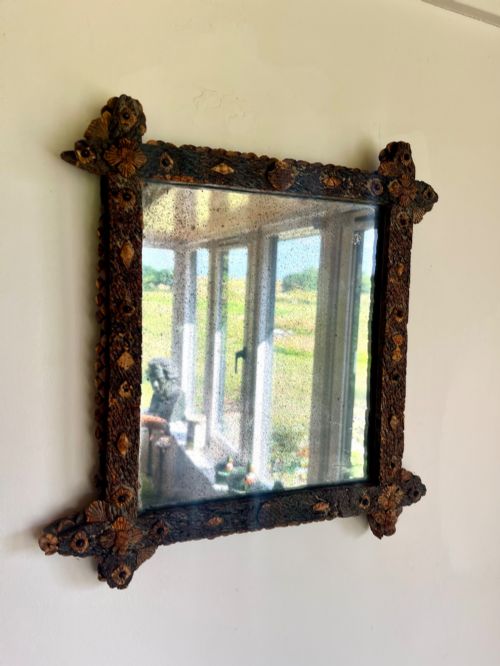
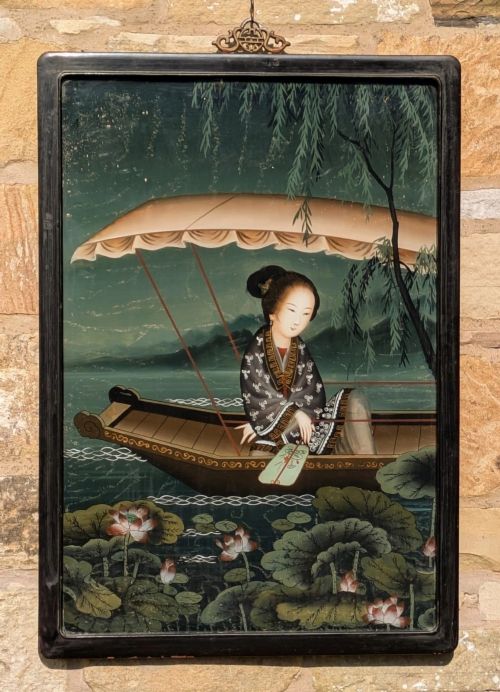
When searching for antique framed glass art, buyers encounter a diverse selection of wall hanging pieces, including reverse glass paintings, mezzotints under glass, portrait miniatures, and decorative mirrors spanning multiple centuries.
The most common examples on this page date from the eighteenth and nineteenth centuries, featuring Georgian and Victorian aesthetic sensibilities across both domestic portraits and religious subjects.
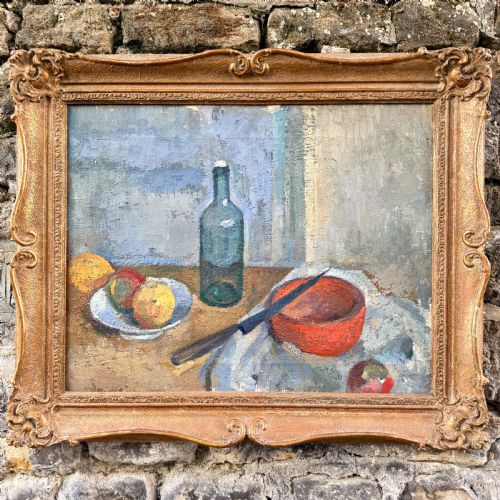
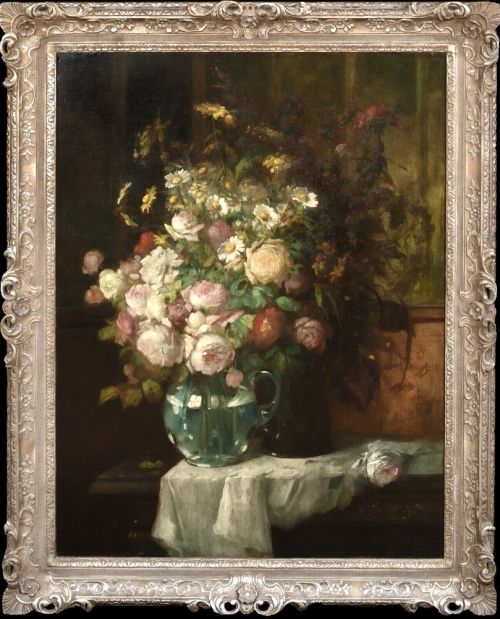
The selection ranges from small silhouettes and devotional shadow boxes to larger still life compositions and hand-sewn silk panels protected beneath glazed timber frames.
Materials and construction techniques
Makers utilised clear glass sheets as the primary protective medium or as the surface for reverse painting, applying oil paint, ink, and gold leaf directly to the rear to be viewed from the front.
Frames were constructed from woods such as oak, walnut, rosewood, and gilt wood, frequently incorporating brass, copper, or ebonised details to secure and accentuate the glazed artwork within.
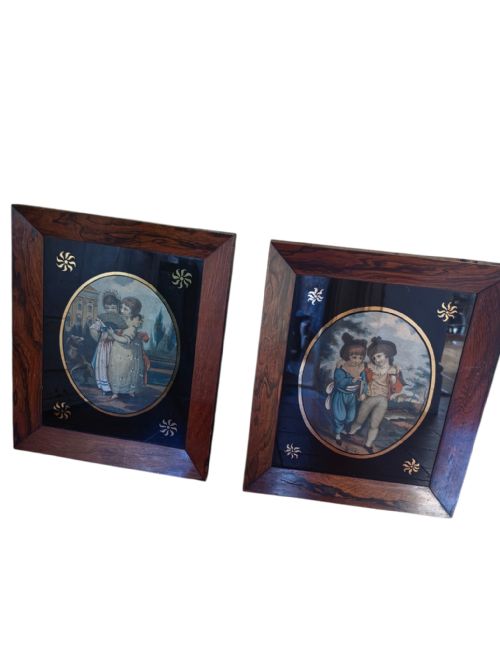
Paper prints, mezzotints, and watercolours were mounted beneath glass panels alongside textiles like silk embroidery and beadwork to shield fragile pigments from environmental degradation.
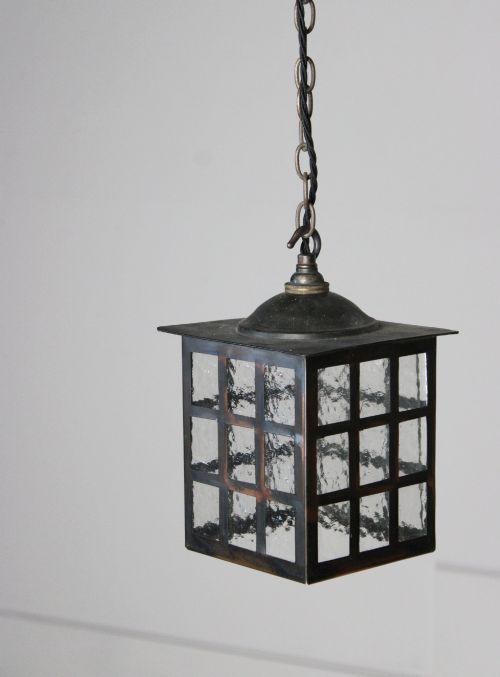
Listings feature 18th-century reverse glass mezzotints alongside 19th-century portrait miniatures and Edwardian copper frames.
Distinctions in quality and execution
The standard of execution in reverse glass painting and mezzotints dictates the visual depth, with superior examples exhibiting precise line work, controlled colour blending, and minimal pigment flaking.
Original framing significantly influences the desirability of a piece, as period frames matching the exact era of the glass art demonstrate greater integrity than later replacements.
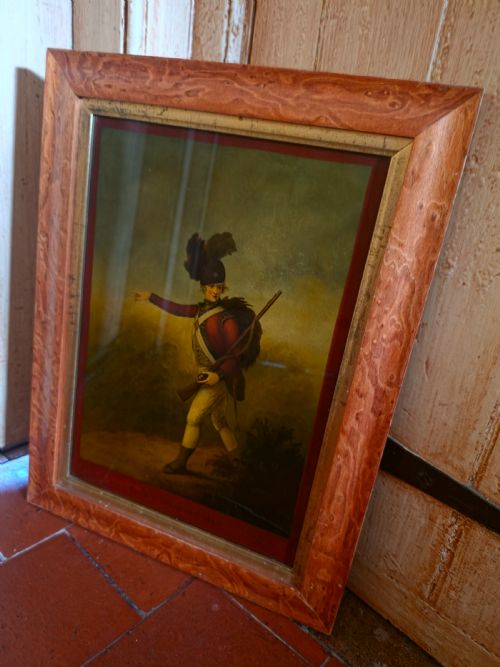
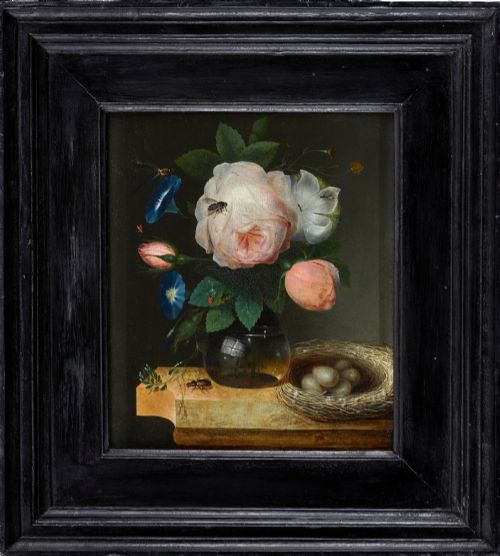
The complexity of the subject matter, whether a detailed military portrait or a finely rendered still life, separates standard decorative items from exceptional collector pieces.
Irene Christobelle Pownoll Williams·Sebastiaan Vrancx·Charles Spooner·Konstantin Stoitzner·Gaspar Peeter Verbruggen·Alexander Harwood·Richard Purcell·Robert Sayer
The Antique Framed Glass Art Glossary
- Reverse glass painting
- A technique where the artist paints directly onto the back of a glass sheet, building the image in reverse so it appears correctly oriented from the front. This method requires steady precision because mistakes cannot be painted over once applied.
- Mezzotint
- A printmaking process of the intaglio family where the copper plate is roughened to hold ink evenly, producing rich tones and subtle gradations. When placed under glass, these prints often received hand colouring.
- Silhouette
- A solid dark profile portrait, typically cut from paper or painted, popular during the Georgian era. Many fine examples were set behind convex glass with painted highlights.
- Shadow box
- A deep, glazed wooden frame designed to display three-dimensional objects or devotional figures in relief. This housing protects delicate interior materials from dust and handling.
- Convex mirror
- A round mirror with a curved glass surface that reflects a wide panoramic view of a room. Also known as a convex witch mirror, it often sits within a gilded or ebonised frame.
Antique Framed Glass Art: Frequently Asked Questions
Where should I hang these framed pieces?
Select interior walls away from direct sunlight and damp environments to protect fragile pigments, oils, and paper from fading.
Ensure the hanging fixings match the weight of the timber frames, particularly heavier pieces incorporating cast brass or copper elements.
How do I date a glass painting?
Examine the construction of the wooden frame, the type of glass used, and any inscriptions or signatures visible on the reverse.
Hand-blown glass often reveals subtle bubbles and waviness, while backing boards fastened with old handmade nails point towards earlier periods.
Are reverse glass paintings fragile?
The paint layer sits unprotected on the rear surface, making physical impacts to the back of the glass potentially disastrous.
When handling or moving these items, keep the rear securely covered and avoid pressing directly against the centre of the glass.