






19th Century Genre Painting Print
These 19th century genre painting print examples capture domestic scenes and everyday narratives that collectors prize for their rich period detail.
19th Century Genre Painting Print
A 19th century genre painting print encompasses framed artworks, oleographs, and chrystoleoms depicting daily life, human interactions, and intimate interior moments. These pieces reflect the Victorian appetite for narrative scenes, often focusing on children, animals, and courtships.
The selection on this page spans works originating from British, French, Belgian, and Italian schools, alongside decorative prints and watercolours. Buyers encounter everything from hand-finished oleographs to original oils and delicate chrystoleoms under glass.
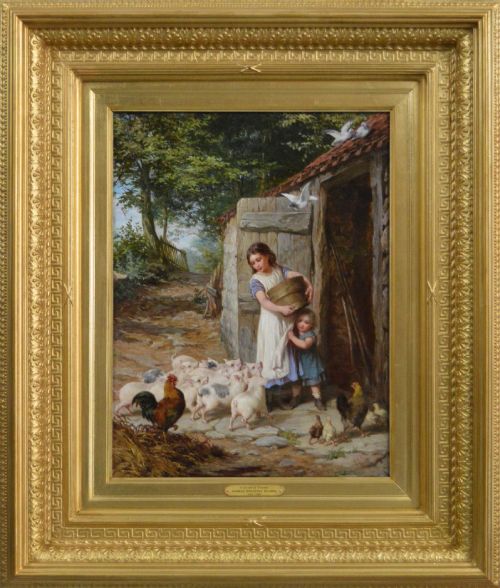
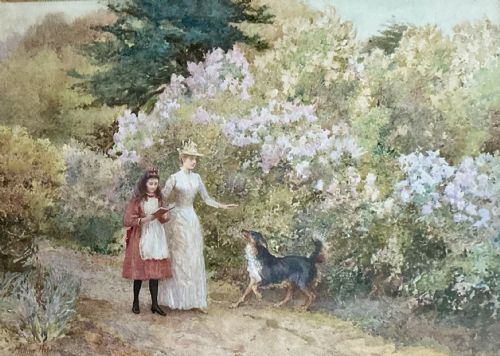
Domestic scenes involving children with animals, rural marriages, and leisurely pastimes dominate the visual subject matter. The aesthetic ranges from academic precision to charming Victorian illustration.
Materials and methods
Makers utilised paper, canvas, and glass as the primary supports for these images, often employing printing techniques like oleography alongside traditional watercolour and oil painting methods. Chrystoleoms involved applying hand-coloured prints behind convex glass to create depth.
Frames play a vital structural and aesthetic role, frequently constructed from wood with gesso ornamentation and finished in gold leaf or gilt. These traditional surrounds protect the delicate paper or canvas surfaces underneath.
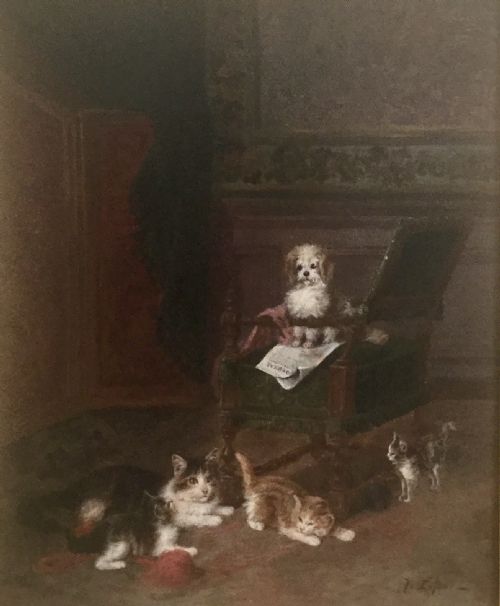
Pigs, chickens, and cats frequently share the canvas with nineteenth-century children.
Judging quality
Quality rests upon the clarity of the image transfer and the skill of any hand-finishing applied to the surface. Oleographs and prints with crisp registration and vibrant, stable pigments stand well above flat, faded reproductions.
The craftsmanship of the framing contributes significantly to the overall merit of the piece. Original gilt wood and gesso frames showing detailed moulding elevate the presentation compared to plain modern replacements.
George Augustus Holmes·Charles Burton Barber·Hendricus Joseph Dillens·Carlo Ferranti·Jules Le Roy
The 19th Century Genre Painting Print Glossary
- Oleograph
- A type of chromolithography designed to imitate an oil painting by reproducing the texture of canvas and brushstrokes. It gained popularity during the Victorian era for affordable domestic wall decor.
- Chrystoleum
- A process where a photograph or print is rendered transparent on glass, hand-painted from behind, and often convex in shape. This technique creates a luminous, multi-layered pictorial effect.
- Gesso
- A plaster-like mixture applied to wooden frames to provide a smooth base for gilding. Skilled artisans mould this material into intricate decorative reliefs.
- Genre painting
- Artwork that depicts aspects of everyday life by portraying ordinary people engaged in common activities. These scenes offer social history alongside visual charm.
19th Century Genre Painting Print: Frequently Asked Questions
What is a chrystoleum?
A chrystoleum is a convex glass picture created by placing a transparent print behind glass, applying hand-painting techniques to the rear, and sealing the layers together.
This method produces a distinct three-dimensional illusion that sets these pieces apart from standard flat prints on paper.
How do I care for these framed artworks?
Keep these pieces away from direct sunlight to prevent the fading of delicate watercolours and printed pigments on paper or canvas. Maintain stable indoor humidity levels to protect wooden frames and gilt gesso work from cracking.
Clean the glass surfaces gently with a dry microfiber cloth, avoiding harsh chemical sprays that might seep beneath the rebate.
Are these pieces original or reproductions?
The selection includes original watercolours and oils alongside period oleographs, prints, and chrystoleoms produced in the nineteenth century. Each format represents the reproduction and distribution methods popular during the Victorian period.
Examine the surface texture and support material closely to determine whether a piece is a hand-painted work or a printed multiple.
How can I identify a Victorian print?
Look for typical Victorian subject matter such as domestic animal scenes, courtships, and sentimental rural narratives. The framing materials, including gilt wood and moulded gesso, often correspond to nineteenth-century production standards.
Paper ageing, oxidation of pigments, and historical framing techniques provide further clues regarding the period of origin.