


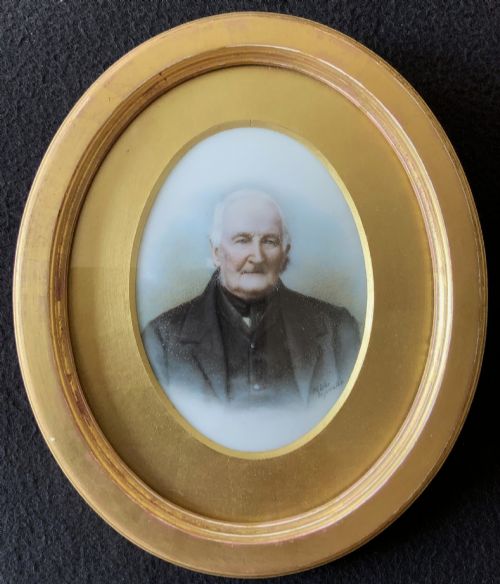
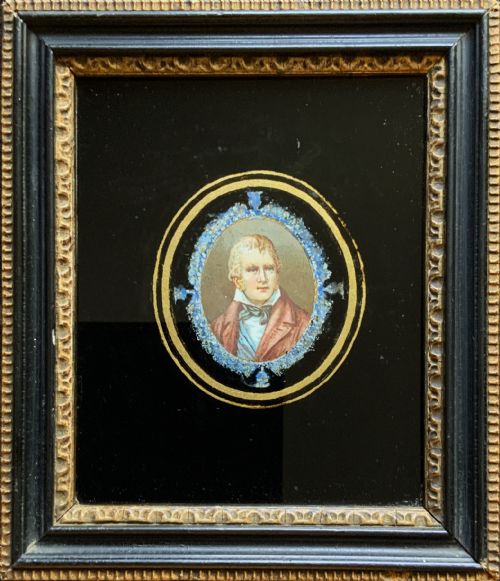


Gilded Frame Miniature
A gilded frame miniature brings together small-scale portraiture and lustrous metallic surrounds from the eighteenth and nineteenth centuries.
Gilded Frame Miniature
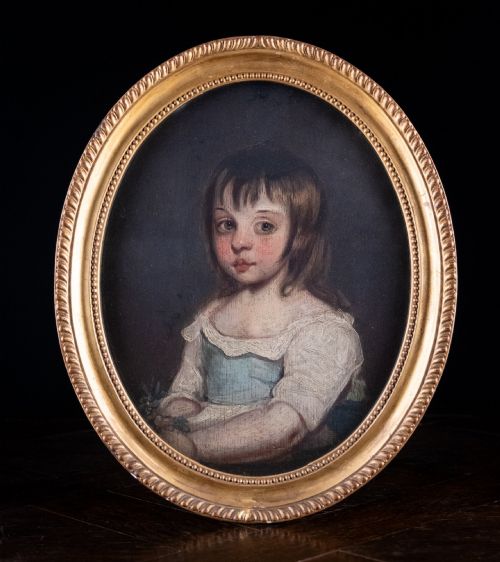
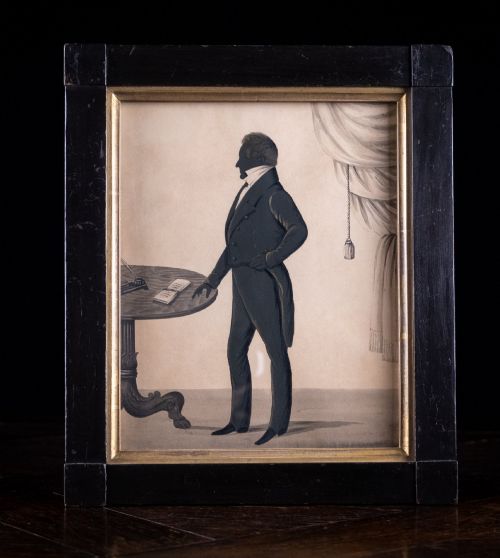
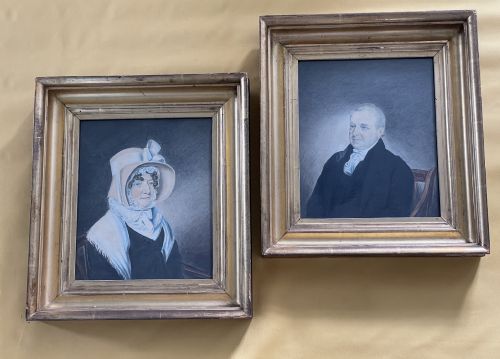
When you search for a gilded frame miniature, you encounter hand-painted watercolours, oils on glass, porcelain plaques, and delicate cut-paper silhouettes. These pieces span the Georgian, Regency, and Victorian eras, often taking oval or rectangular forms designed to sit intimately on a wall or tabletop.
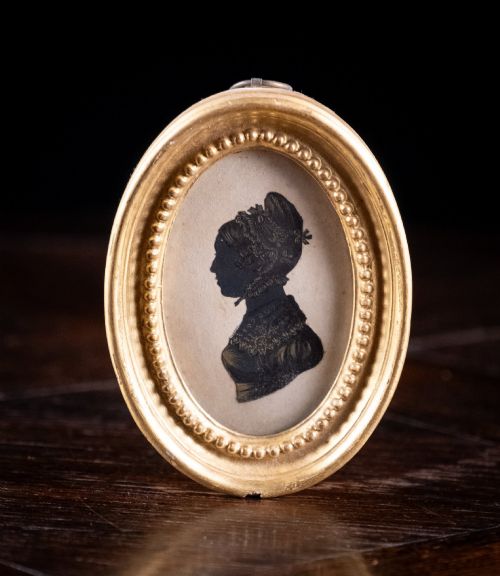
The selections here most commonly present as profile silhouettes highlighted in gold or detailed watercolour portraits of ladies and gentlemen. Alongside British school works, you find Indian Mughal pieces, French enamel plaques, and American folk art items housed in their original enclosures.
Makers and artists range from recorded profile-cutters like John Miers and George Atkinson to traditional portrait painters working on ivory, paper, or card. Each object preserves a distinct likeness or scene within a metallic or wood-gilt border.
Materials and Construction
Makers constructed these miniature works using paper, glass, porcelain, and ivory, applying watercolour, oil, or enamel pigments by hand. Silhouettes frequently incorporate cut paper embellished with added gold leaf and ink detailing.
The surrounding frames utilise wood, brass, giltwood, and gilded metal, often cast, carved, or assembled with protective glass coverings. Some incorporate rosewood or Hogarth mouldings to contrast with the bright metallic inner bezels.
Assessing Quality
The relationship between the artwork and its housing dictates merit, as pieces retaining their period glass, backing boards, and matching gilt mounts hold greater integrity. Signed works and attributed pieces by documented miniaturists elevate the standing of an item considerably.
George Atkinson·John Miers·Ozias Humphry·Nathaniel Bermingham·William Egley
The Gilded Frame Miniature Glossary
- Silhouette
- A solid profile portrait, typically cut from black paper or painted in monochrome on a contrasting ground. Many examples in this category feature delicate added gilt details to denote clothing and hair.
- Giltwood
- Wood that has been coated with a thin layer of gold leaf or gold paint. This material provides the bright, reflective border characteristic of many nineteenth-century miniature frames.
- Watercolour
- A paint consisting of pigment suspended in a water-based solution, commonly applied to paper, vellum, or card. It served as the primary medium for intimate portrait miniatures during the Georgian and Regency periods.
- Porcelain Plaque
- A flat ceramic tablet fired with painted enamel designs, often mounted directly into a decorative frame. These pieces offer durable, vibrant colours that resist fading over centuries.
Gilded Frame Miniature: Frequently Asked Questions
What materials make up these miniatures?
These pieces utilise watercolour, oil, enamel, and cut paper for the central artwork, mounted on glass, porcelain, or card supports. The enclosing frames combine wood, brass, and giltwood.
Protective glass and original metal bezels frequently accompany the artwork to shield the delicate pigments from dust and moisture.
How do I date a framed miniature?
Dating relies on the costume of the sitter, the painting technique, and the construction style of the frame. Regency pieces often display high-waisted dresses and delicate brass ribbon mounts, while Victorian examples show heavier moulding.
Handwritten notes on the reverse or recorded signatures of known artists also help establish an exact period.
Were these portraits worn or displayed?
Many miniature portraits were created to be hung in small groups on parlour walls or placed upright on desks and mantelpieces. Some smaller formats were designed as pocket tokens or lockets for personal remembrance.
The inclusion of hanging loops or easel backs on the frames indicates their intended mode of display.