


Gilded Frame Maritime Art
Gilded frame maritime art brings together coastal scenes, sailing ships and harbour views enclosed in ornate wood and gesso moulding.
Gilded Frame Maritime Art
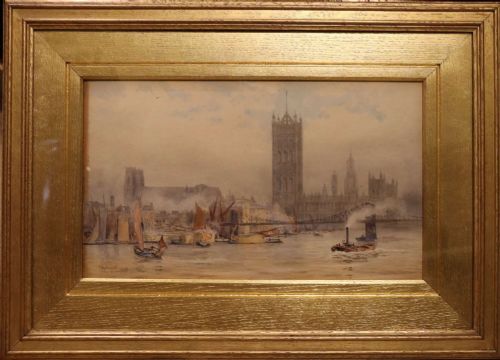
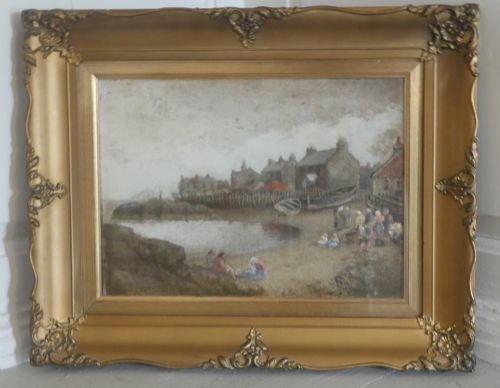
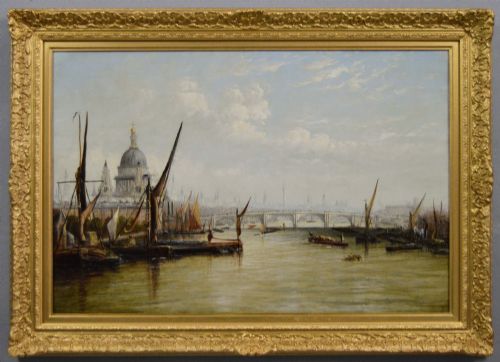
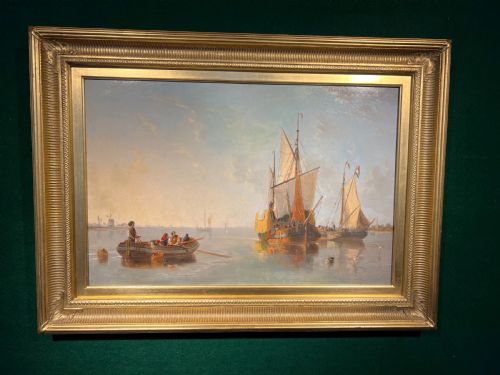
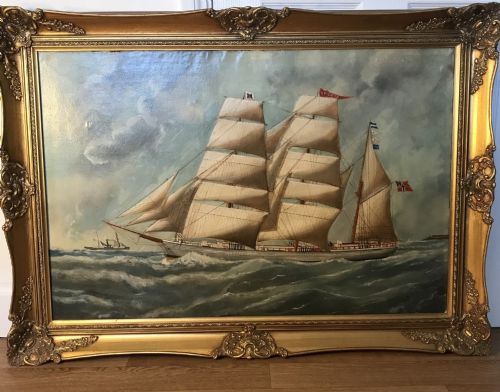
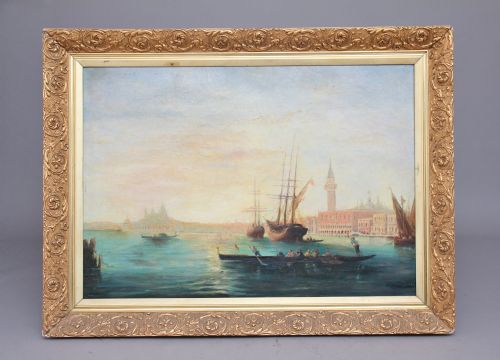
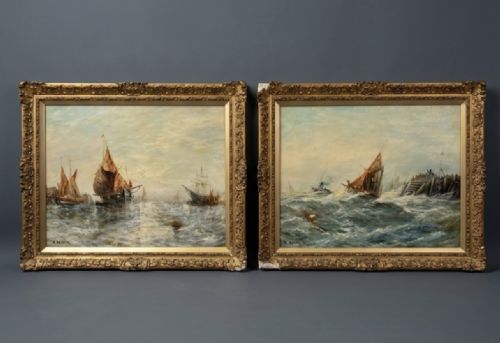
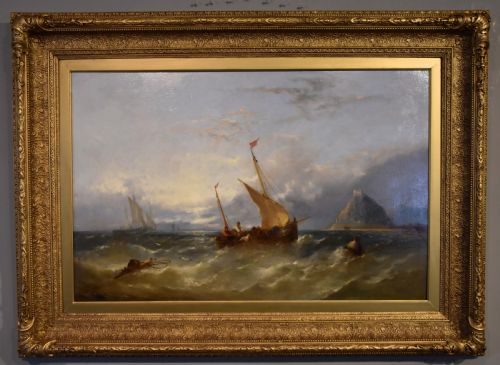
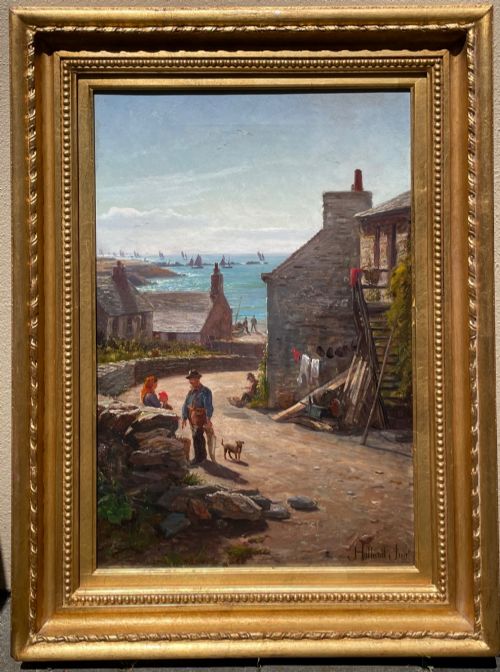
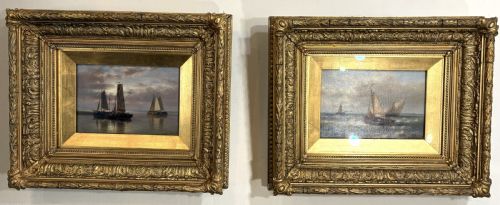
Gilded frame maritime art encompasses oil paintings and watercolours depicting coastal views, harbour scenes, rivers and sailing vessels from the nineteenth and early twentieth centuries. These works record naval vessels, merchant shipping and everyday maritime life across British, Dutch, Venetian and domestic waters. The paintings sit within decorative wooden frames finished with gilt or gesso, matching the period of the canvas inside.
The most common pieces on this page are nineteenth-century oil paintings on canvas or board, executed in Victorian realistic or impressionistic styles. Such works often portray specific locations like the Thames, the Venetian lagoon or regional coastal ports under changing atmospheric conditions. Their frames range from simple gilded mouldings to heavily ornamented gesso designs.
Materials and Technique
Artists painted primarily with oil paint on stretched canvas, wooden panels or occasionally board, applying pigments to capture the movement of water and light on sails. Watercolour on paper also appears among nineteenth-century works, often protected behind glass within matching frames. These mediums allowed painters to build deep tones for stormy seas and luminous hues for coastal sunsets.
Surrounding the artwork, the frames consist of carved or moulded wood coated in gesso before the application of gold leaf or gilt finish. Gesso provided a smooth, responsive surface for intricate corner ornaments and beaded details. This combination of oil on canvas and gilded wooden moulding formed a unified display standard for nineteenth-century fine art.
Several canvases capture dramatic moments of peril, recording historical shipwrecks beached against stormy coastal castles.
What Separates the Best from the Rest
Quality in gilded frame maritime art rests upon the dexterity of the brushwork and the accuracy of the maritime subject matter. Superior canvases display confident handling of light, shadow and water movement, coupled with a detailed understanding of rigging and hull construction. Lesser examples rely on formulaic compositions and stiff, repetitive waves.
The construction and originality of the frame also dictate the overall standard of the piece. Top-tier examples retain their original hand-carved or moulded gesso frames with crisp gilding intact, rather than later replacements. The harmony between the depth of the painting and the proportion of the surrounding moulding marks the distinction between standard decorative pieces and fine works of art.
John Wilson Carmichael·Abraham Hulk I·Thomas Bush Hardy·James Webb·Gustave de Breanski
The Gilded Frame Maritime Art Glossary
- Giltwood
- Wood carved and coated with a thin layer of gold leaf or metallic gilt powder. It provides a bright, reflective border that enhances the colours of an oil painting.
- Gesso
- A plaster mixture applied to wood frames to create a smooth base for subsequent gilding and decorative moulding. It allows for intricate relief patterns along the edges.
- Pierhead painting
- A specialised genre of maritime art depicting specific ships arriving at or departing from a port. These works were often commissioned by shipowners or captains.
- Marine art
- Artistic representations of the sea, ships, beaches and coastal architecture. The genre spans historical naval battles, commercial shipping and serene coastal landscapes.
Gilded Frame Maritime Art: Frequently Asked Questions
How do I identify the period of a maritime painting?
Examine the riggings of the ships, the clothing of figures on the shore, and the style of the canvas preparation. Nineteenth-century works typically feature detailed rigging accuracy and realistic atmospheric tones.
The surrounding frame often offers further clues, as Victorian gesso mouldings followed distinct decorative fashions that shifted from heavy classical revival styles toward simpler Edwardian profiles.
Are original frames important for value?
Original frames provide historical context and ensure the artwork is presented as the artist or early owner intended. A matching period frame completes the aesthetic unity of the piece.
While paintings can be reframed over time, finding an oil painting paired with its original giltwood or gesso frame remains desirable for collectors.
How should I clean a gilded frame?
Dust gilded frames gently with a soft, dry brush or a clean microfiber cloth. Avoid applying water, liquid cleaners, or modern chemical agents, which can strip the delicate gold leaf and gesso.
If the surface requires deeper attention, consult a professional conservator to prevent damage to the historic finish.
What subjects are common in maritime art?
Common subjects include bustling harbour scenes, sailing ships navigating rough seas, calm coastal estuaries, and iconic landmarks viewed from the water. Artists frequently painted regional British spots alongside Mediterranean and Dutch ports.
These depictions reflect both the commercial importance of shipping and the nineteenth-century fascination with coastal scenery.