



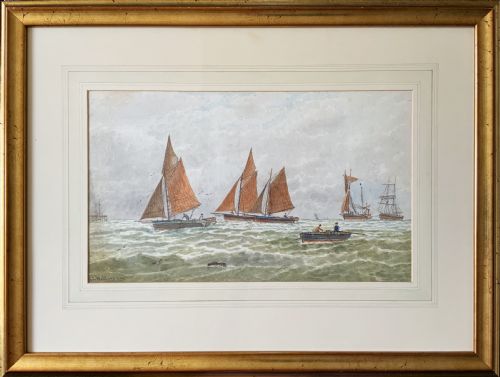


Coastal Maritime Wall Picture
A coastal maritime wall picture brings the sea, harbours and shipping into a room through Victorian and later works.
Coastal Maritime Wall Picture
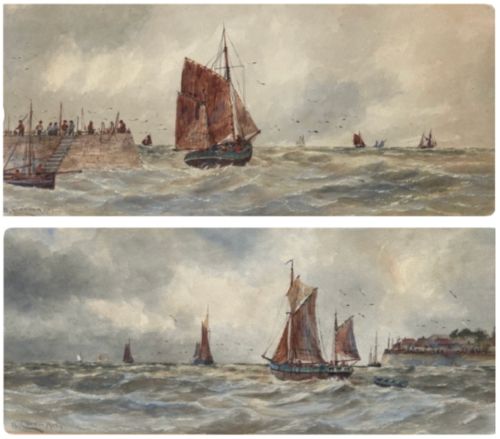
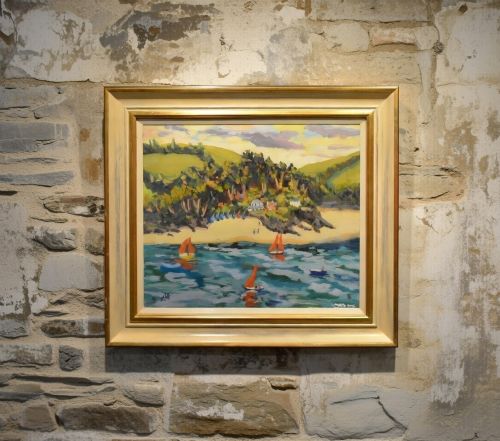
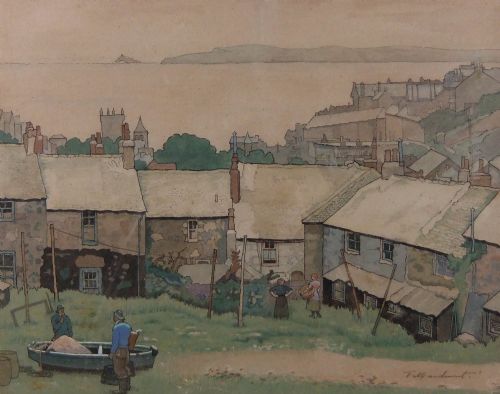
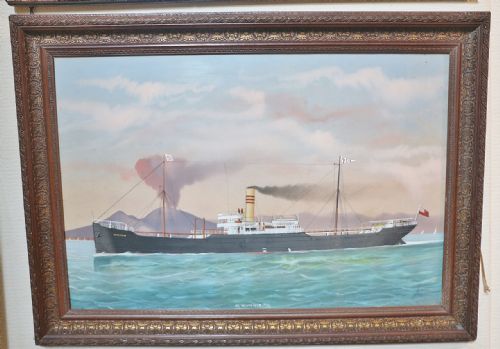
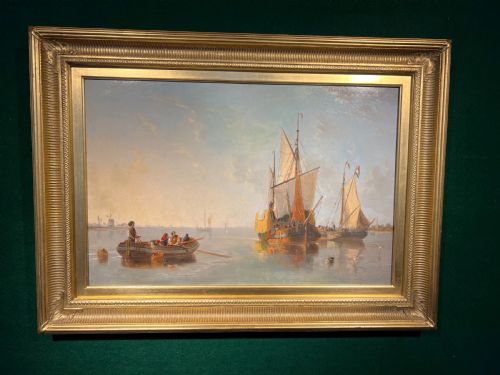
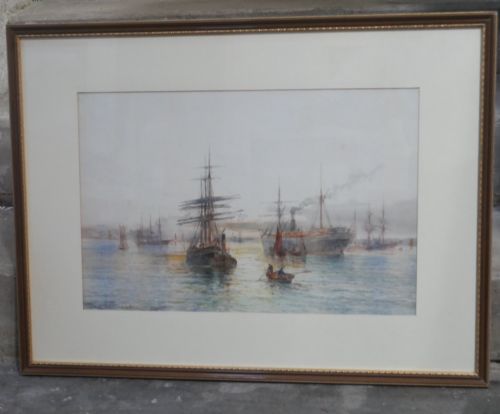
A coastal maritime wall picture represents harbours, shipping, lighthouses and coastal villages rendered in paint and paper. Buyers select these artworks to display the sea, shores and historic vessels within domestic spaces.
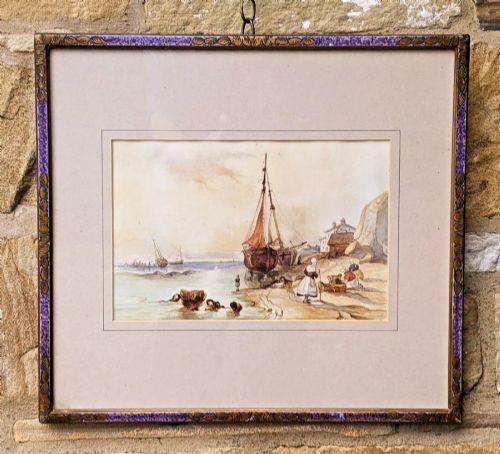
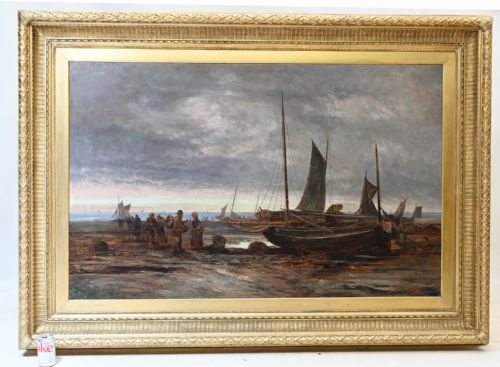
The versions most commonly met on this page span the nineteenth century through the mid-twentieth century. They appear as framed watercolours, oil paintings on canvas and board, and pastel drawings.
Many of these pieces record specific British and European coastal locations, from Cornish ports like Mevagissey and St Ives to northern rivers and Scottish firths. They range from modest watercolours to large oil paintings intended for substantial wall spaces.
Materials and technique
Artists built these works using oil paint on canvas or wooden board, and watercolour pigment applied to paper. Canvas supports permitted rich layers of oil paint suited to turbulent seas and skies, while paper accommodated the fluid washes typical of maritime watercolours.
Framed works often combine wood, glass and paper to protect the painted surface. Pastels on paper required protective glazing to preserve the delicate pigment particles from disturbance.
Several watercolours capture the exact moment low tide reveals boats resting on muddy estuaries.
Quality variations
Quality rests upon the artist's command of light, water and atmospheric perspective in depicting marine environments. Stronger works capture the movement of waves and the rigging of sailing ships with precise observation.
The handling of the medium distinguishes superior examples, whether through the confident brushwork of oil paintings or the controlled transparency of watercolour washes.
John Wilson Carmichael·George Stanfield Walters·Thomas Bush Hardy·Charles Napier Hemy·James Webb
The Coastal Maritime Wall Picture Glossary
- Watercolour
- A painting method where fine pigment is suspended in a water-soluble binder and applied to paper. It creates luminous washes well suited to coastal light and skies.
- Oil on canvas
- Pigment mixed with drying oil applied to a stretched woven fabric surface. This combination allows for deep texture and rich colour saturation in marine scenes.
- Seascape
- A work of art depicting the sea, coastlines and marine vessels. These subjects formed a major focus for nineteenth-century and early twentieth-century British painters.
- Pastel drawing
- An artwork made using dry pigment sticks composed of powdered colour and a binder. The resulting matte surface captures soft coastal mists and light.
Coastal Maritime Wall Picture: Frequently Asked Questions
What periods do these coastal paintings come from?
The works span the nineteenth century through to the mid-twentieth century. Victorian examples sit alongside Edwardian and post-war pieces.
Dates are often recorded in the titles or established through stylistic evidence associated with specific art schools.
How were these maritime pictures displayed originally?
Most works were framed in wood to protect the canvas, paper or board from environmental damage. They were intended for domestic display in parlours and drawing rooms.
Original framing elements sometimes accompany nineteenth-century oils and watercolours.
How do I identify a watercolour from an oil painting?
Watercolours are executed on paper under glass, showing translucent washes of pigment. Oil paintings use canvas or board supports with heavier, textured paint layers.
Oils often present a glossy or varnished surface, whereas watercolours rely on the surrounding glass for protection.
Are these paintings signed by the artists?
Many pieces feature artist signatures, initials or inscriptions naming specific locations in the title or margin. Some works remain unattributed to a named individual.
Signed watercolours and oils often link the piece to documented nineteenth and twentieth-century painters.