
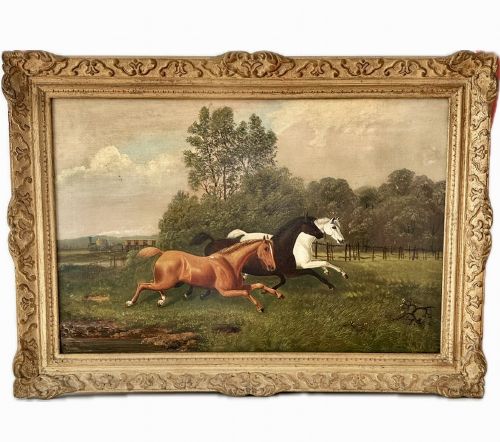

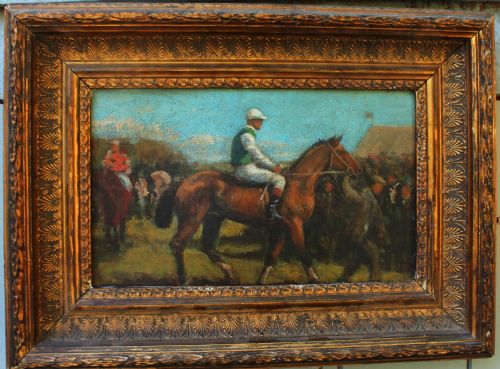


Gilded Frame Horse Art
These gilded frame horse art pieces bring nineteenth-century equestrian life and rural movement directly into your room through oil, canvas, and gold leaf.
Gilded Frame Horse Art
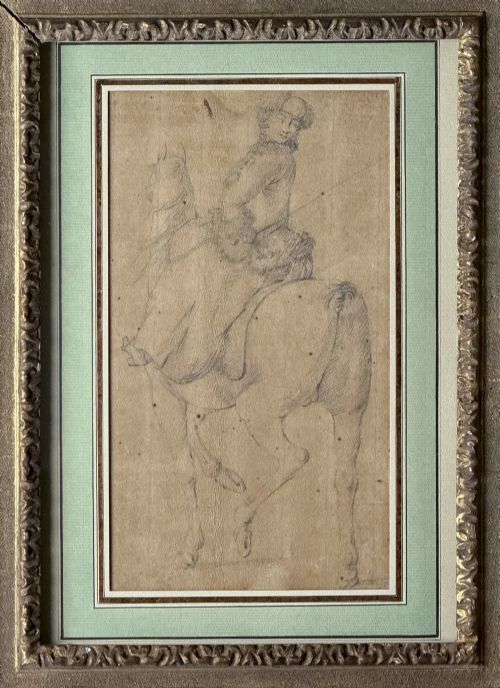
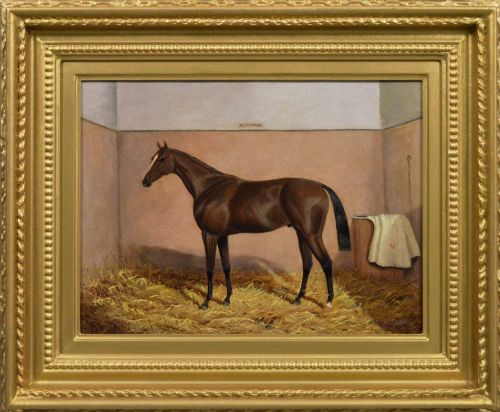
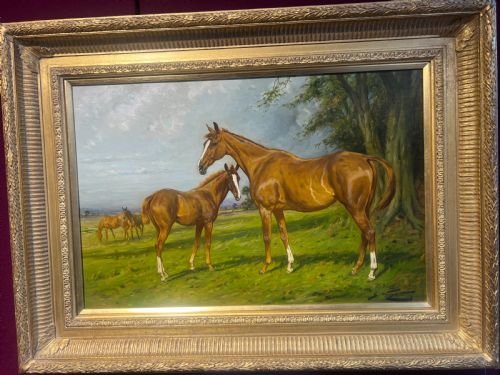
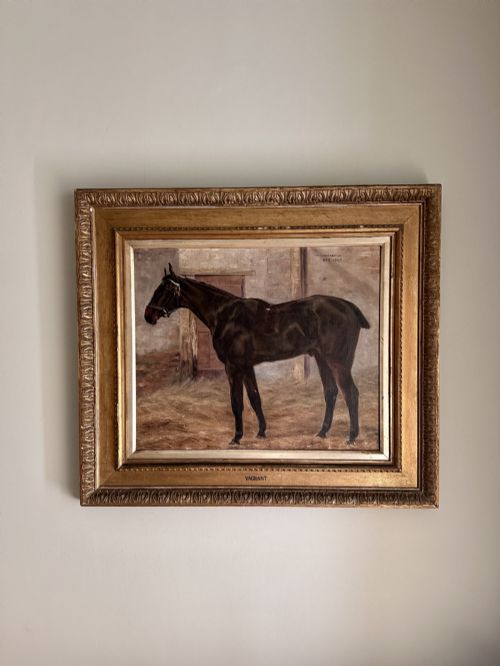
When you search for gilded frame horse art, you look at historical paintings and works on paper centred on equine subjects, enclosed in ornate wooden and gold leaf surrounds. The selections span Victorian sporting art, British impressionism, and rural realism alongside early twentieth-century studies.
The most common formats on this page are oil paintings on canvas and panel, supplemented by watercolours, drawings, and framed prints. Subjects range from named racehorses and coaching scenes to farmyard views and hunting portraits from the nineteenth century onwards.
How they were made
Makers built the support structures using timber frames overlaid with gesso and gold leaf to create the characteristic gilded border around the canvas or paper. Artists applied oil paint or watercolours using traditional brushes, capturing fine details in the horse's musculature and coat.
Protective layers of glass frequently covered watercolours and drawings, while oil paintings on canvas relied on stretchers and primed linen or cotton. The joinery of the wooden surrounds often involved mitred corners reinforced with blocks.
Several horses share the page with ducks, chickens, pigs, and goats, proving that historical farmyards were delightfully chaotic places.
What varies in quality
Quality rests in the precision of the animal's anatomy and the handling of light across the coat and landscape. Skilled artists render movement and texture with fluid brushwork, whereas lesser works rely on stiff outlines and flat colour fields.
The craftsmanship of the surrounding woodwork also dictates value, distinguishing hand-carved or moulded giltwood frames with deep relief from simpler modern replacements. The integrity of the canvas and the clarity of the underlying pigments determine the overall presence of the artwork.
Albert Clark·George Wright·Fred Fitzpatrick·Edward Priestley·C R Breytle·Harry Freckleton·John Frederick Herring Jnr·Abraham Cooper·George E Sharpe·Edward Brice Stanley Montefiore·Edwin Frederic Holt·Samuel Henry Alken·Isaac Cullin·George Cole·George Smith·Benedict Angell Hyland·Edward Lloyd·James Barenger·John Charles Maggs·Henry H Parker·Thomas Blinks·William Shayer Snr·James Edwin Meadows·JE Hood·Lois Wilton
The Gilded Frame Horse Art Glossary
- Giltwood
- Wood coated with gold leaf or gold paint. This finish creates a reflective, luminous border that enhances the colours within the painting.
- Canvas
- Heavy woven fabric stretched across a wooden frame to serve as a painting surface. Oil painters have utilised this durable material for centuries.
- Eglomise
- Gilding technique where gold or silver leaf is applied to the reverse side of glass. This process produces a mirror-like, decorative finish often seen on historical reproductions.
- Equestrian
- Pertaining to horses and horseback riding. This genre captures horses in racing, coaching, agricultural, and portrait settings.
- Provenance
- The documented history of ownership of an object. Clear records link specific paintings to historical estates, galleries, and collections.
Gilded Frame Horse Art: Frequently Asked Questions
How do I date a gilded horse painting?
Examine the style of the clothing, the type of carriage or harness, and the stretcher construction on the reverse of the canvas.
Pictorial evidence and framing materials often align with Victorian or Edwardian manufacturing techniques, helping to narrow the decade of creation.
What subjects appear in these frames?
The works depict named racehorses, coaching teams on major routes, hunting scenes, and horses working in agricultural farmyards.
Artists recorded these animals in stable interiors, open pastures, and active rural landscapes during the nineteenth and early twentieth centuries.
Are these works original or reproductions?
The inventory contains original oil paintings and watercolours alongside period framed prints and specific eglomise reproductions.
Checking the medium and the surface texture helps distinguish a painted canvas from a printed reproduction behind glass.
How should I hang a gilded frame?
Use secure picture hooks rated for the combined weight of the heavy wooden frame and the canvas.
Position the artwork away from direct sunlight and steady heat sources to protect the oil pigments and the delicate gold leaf finish.